
For homeowners planning a high-end home
Top 10 Features of Luxury Home Architecture

Sviatoslav JerdetchiiCEO & Founder of Craftex. Updated , 5 min read
The short answer
The features that make a home feel luxurious are mostly built in, not added later: daylight, proportion, bespoke joinery, quiet hidden services and finishes that age well.
- Plan light, ceiling heights and room flow before choosing finishes.
- Design joinery, storage and services together, so nothing looks added on.
- Spend on what you touch and hear every day: doors, floors, stone and silence.
- Fix the details before the build, because late changes cost the most.
Most people judge a luxury home by its marble and its gadgets. But walk into a truly good home and you notice other things. The doors close softly. The floors are quiet. The light falls where you want it. None of that was bought at the end. It was designed in from the start.
This guide sets out the ten luxury home features that matter most, with examples from homes we have designed and built in London. Planning your own home? Book a site visit and we will talk through what your property can take.
Ten luxury home features, in order of impact
The list starts with the features that shape the whole house. It ends with the details you feel every day.
- Daylight planned room by room
- Generous proportions and ceiling heights
- An entrance that sets the tone
- Zoned living instead of one open box
- A kitchen that works as hard as it looks
- Dressing rooms and bespoke joinery
- Bathrooms in natural materials
- Smart technology you don't see
- Outdoor space that works as a room
- Quiet, comfort and finishes that age well
1. Daylight is planned before anything else
Light is the first design decision, not the last. A good architect plans how daylight moves through the home over a full day.
In London, plots are narrow and neighbours are close. So light often comes from above: rooflights over stairs, glazed panels in terraces and light wells for lower floors. At the Pan Peninsula penthouse, floor-to-ceiling windows flood the rooms. We layered downlights with central pendants, so the rooms still glow after dark.
2. Proportions make a room feel generous
A room can be large and still feel cramped. Ceiling height, window size and the line of the walls make the difference.
High ceilings let a room breathe. Wide openings between rooms make a home feel bigger than its floor area. When a home is refurbished, proportion is often won by removing a wall or lowering a floor. That needs a structural engineer before the design is fixed.
Amazing experience with these guys. I trusted them my apartment in London and Business. They are always accurate, very professional, responsive and neat. They would always advice me right things for my best interest. I had luxury experience with them and I would definitely recommend Craftex to everyone.
3. The entrance sets the tone for the whole home
The hallway is the first room every guest sees. A good one gives a clear view through the home and a sense of calm.

At the Kensington Olympia penthouse, the hallway works like a gallery. Art, light and a long view lead guests into the living spaces.
4. Zoned living beats one open box
Open-plan living looks good in photos. In daily life, noise and cooking smells travel everywhere. Zoned living keeps the flow but gives each area its own space. Sliding doors, changes in ceiling height and joinery screens do the work.
At Pan Peninsula, we removed selected walls to open up the layout. The rooms still read as separate places to cook, eat and relax.
5. The kitchen works as hard as it looks
A luxury kitchen has to work for daily cooking and for guests. Larger homes often add a second, working kitchen or pantry behind the main one. The mess stays out of sight.
Materials matter here more than anywhere. Solid timber, natural stone worktops and quality hardware take daily use for years.
6. Dressing rooms and bespoke joinery show the craft
Made-to-measure joinery is where a home stops feeling bought and starts feeling made. It fits the walls exactly and hides storage in plain sight.
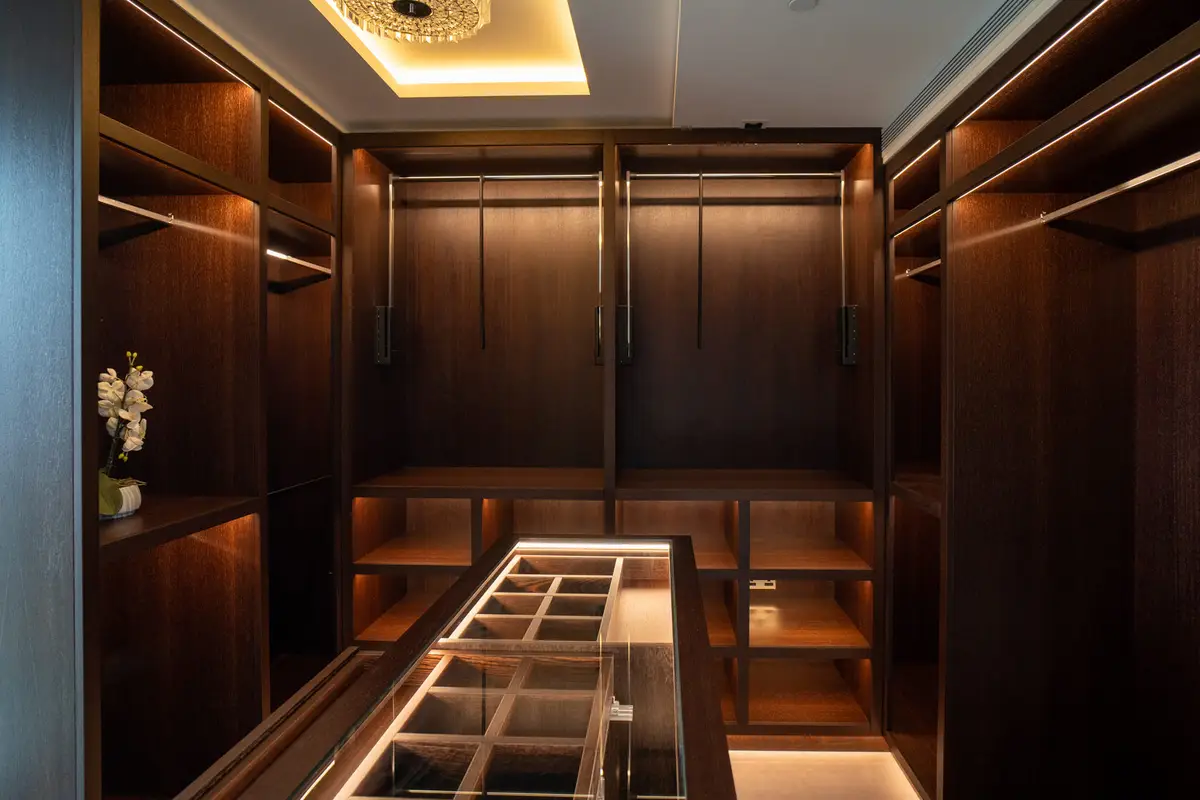
At Kensington Olympia, we created a dressing room next to the master bedroom. It has custom dark wood cabinets and its own new door from the bedroom. We also fitted bespoke wardrobes and floor-to-ceiling glass shoe shelving. Craftex began in 2016 as a carpentry and joinery firm, and we still make this work in-house.
7. Bathrooms use natural materials that last
The bathroom is a room you use every day, close up. Stone, quality brassware and good lighting make it feel calm. Hidden storage keeps surfaces clear.
Natural stone needs careful detailing for waterproofing, falls and joints. So it should be drawn in detail before it is ordered.
8. Smart technology should stay out of sight
The best home technology is the kind you never notice. Lighting, heating and audio-visual systems should be simple to use and hidden in the walls and ceilings.
At Kensington Olympia, we installed new smart lighting. We built recesses in the stone and timber panelling so the televisions sit flush with the wall. Planning cable routes early avoids chasing walls after they are finished.
9. Outdoor space works as another room
In London, a terrace, balcony or small garden can feel like an extra room. It needs shelter, lighting, planting and good surfaces underfoot.

At Herbert Crescent, the terrace has timber decking, planters and walk-on glass panels. At Pan Peninsula, we renewed the balcony decking so the owners can enjoy the views.
10. Quiet, comfort and lasting finishes tie it together
The last feature is the one you feel without noticing. Doors close softly. Floors don't creak. Rooms stay at an even temperature. Joints in timber and stone are tight and clean.
This comes from careful building, not expensive products. At Herbert Crescent, every finish was agreed from samples before work started on site. Then the details were held to tight tolerances in every room.
London homes need these features designed in early
Many prime London homes are period buildings, and some are listed. If a home is listed, works that affect its character or appearance need listed building consent. So the features above must be designed around the building, not forced into it.
Bigger features take more planning too. Basements, roof terraces and structural openings involve engineers and often the neighbours. Read our guide to luxury home design costs before you set the budget.
One team turns features into a finished home
Luxury features fail at the joins: between the architect's drawing, the joiner's workshop and the electrician's cables. With high-end residential architects and builders in one team, those joins are planned together. Good construction project management then keeps them under control on site.
Our minimum design order is £15,000, and we take on construction projects from £100,000. Around 60% of our labour is in-house. Want these features in your home? Book a site visit and we will show you what your property can take.
Before you brief your architect
- List the features you will use every day, not just the ones that impress.
- Check the structure, listed status and planning limits of the home.
- Design joinery, lighting and services at the same time.
- Agree finishes from real samples before work starts.


