What Is Commercial Construction? Everything You Need to Know
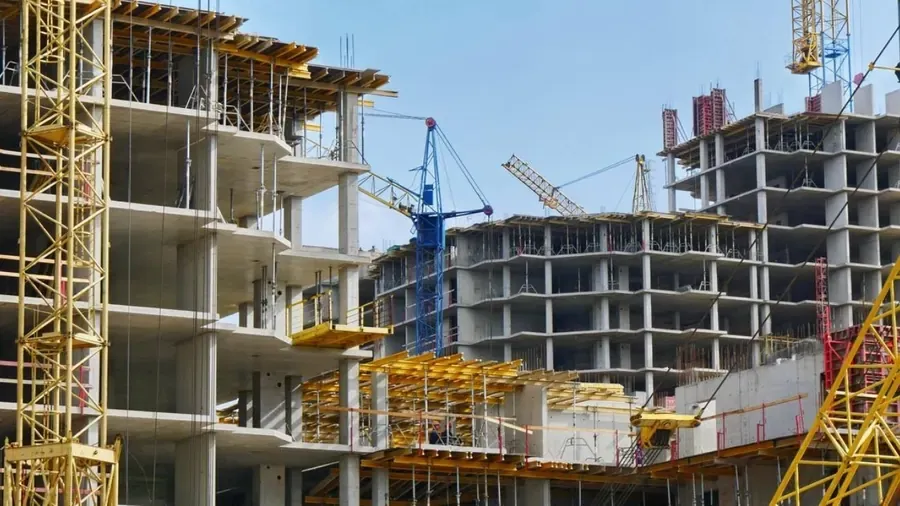
People assume commercial construction is simply residential construction at a larger scale. Bigger footprint, more workers, longer programme. The same fundamentals, just amplified.
That assumption is what gets clients into trouble.
Commercial building work operates differently in almost every respect - in how projects are procured, how risk is allocated, how the regulatory framework applies, and how the consequences of getting decisions wrong unfold. A missed planning condition on a domestic extension creates inconvenience. The same oversight on a commercial scheme in Central London can freeze a programme for months and generate six-figure losses.
This guide covers what commercial construction actually is, the types of projects it encompasses, how the process works from first brief to handover, and what to look for when appointing a contractor to deliver it.
What Is Commercial Construction?
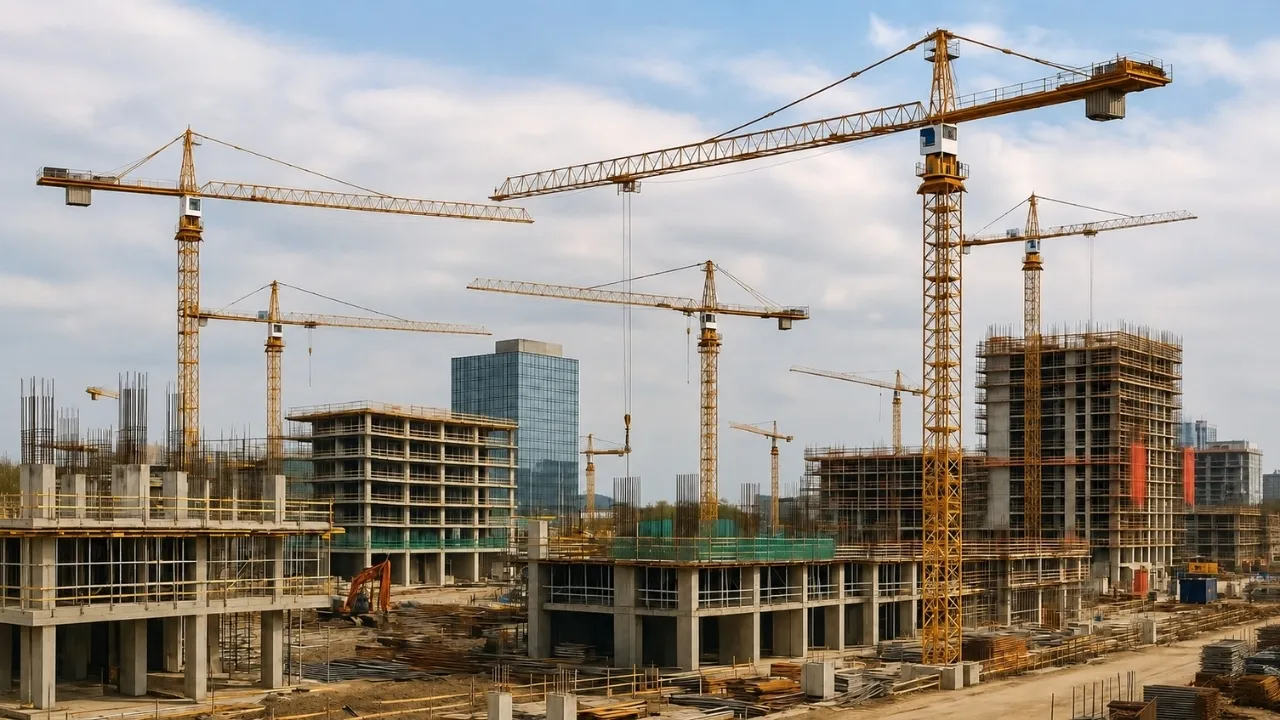
Commercial construction refers to the design, procurement, and build of structures intended for business, institutional, or non-residential use. This spans an enormous range of project types - from a 2,000 sq ft office fit-out in the City to a full-scale data centre in Docklands, from a warehouse conversion in East London to a hospitality fit-out on Bond Street.
What unifies all of these is purpose: the building or space is being created to serve a commercial or operational function rather than to house people in a domestic setting. The client is typically a business owner, developer, institutional landlord, or investor - not an individual homeowner.
The distinction matters practically because it shapes everything downstream: the contract form used, the procurement route, the regulatory requirements, the team structure, and the expectations around programme, quality, and cost management.
Types of Commercial Building Projects
Commercial builds cover a far wider range of project types than most people initially expect.
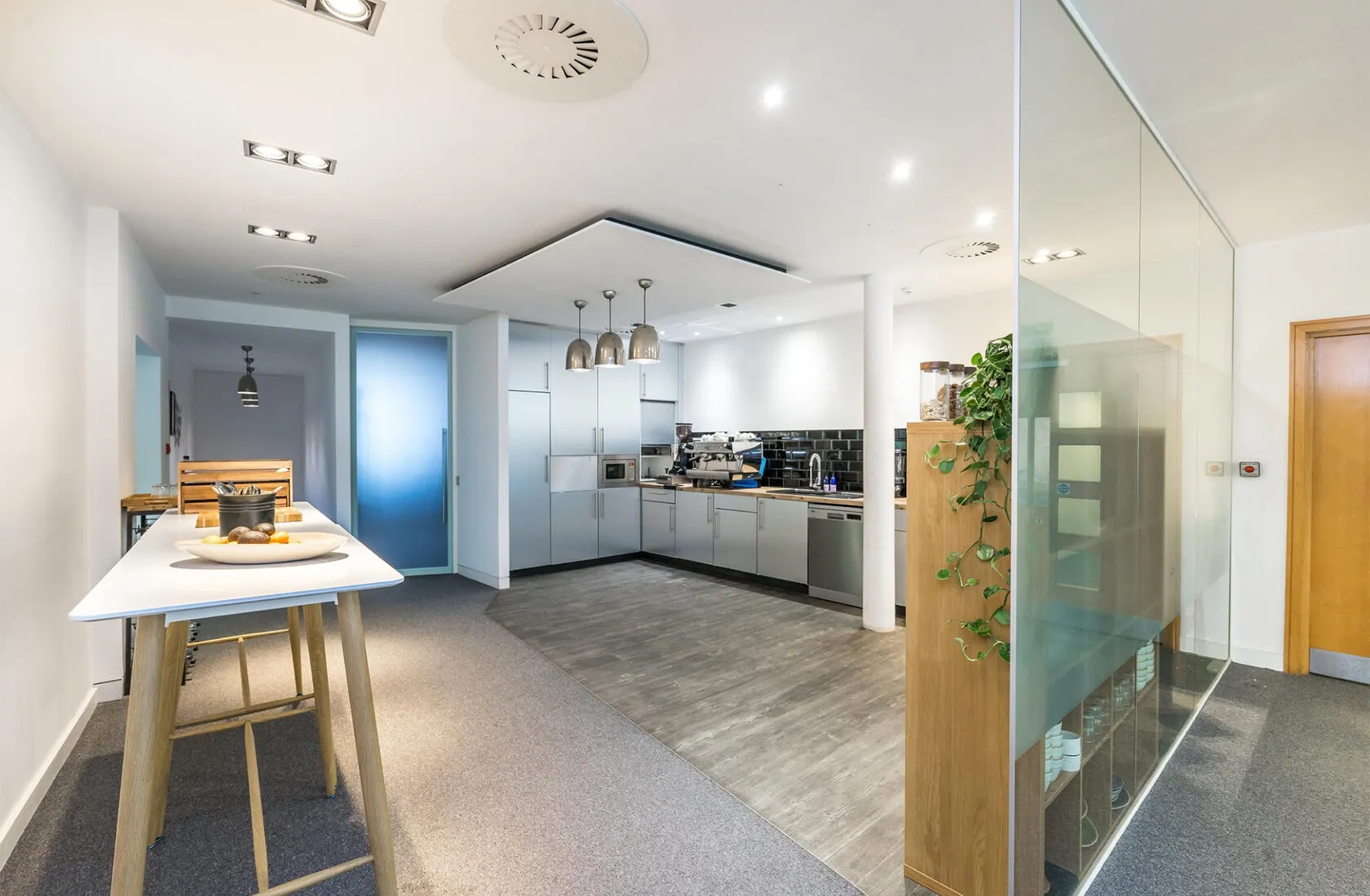
Offices and Workspaces - Cat A and Cat B fit-outs, co-working spaces, and new-build commercial office schemes. Demand in London is driven by lease events, hybrid working reconfiguration, and ESG requirements pushing landlords to improve EPC ratings before re-letting.
Warehousing and Industrial - Warehouse refurbishment, logistics hub construction, and industrial storage facilities. Growing e-commerce demand has driven significant investment in last-mile distribution, with increasing requirements for automated systems integration and temperature-controlled environments.
Data Centres and Tech Infrastructure - One of the fastest-growing commercial segments in the UK. Data centre builds require highly specialised MEP integration - power density, redundant cooling systems, structured cabling, and physical security - with failure tolerance essentially zero.
Conversions and Adaptive Reuse - Commercial-to-residential conversions, warehouse-to-office transformations, and property redevelopment. London's planning incentives for adaptive reuse have made many redundant commercial buildings candidates for intelligent conversion.
Hospitality and Leisure – Restaurant and hospitality fit-outs, bar fit-outs, hotel refurbishments, wellness spaces and leisure facilities. These projects combine aesthetic ambition with operational complexity: commercial kitchens, specialist ventilation, licensing requirements, and opening deadlines where delays cost revenue directly.
Healthcare and Clinic Fit-Outs - GP surgeries, dental practices, and private clinics. Clinical environments require precision compliance with infection control standards, medical gas and vacuum infrastructure, and careful management in live medical buildings.
Retail - High-street fit-outs and flagship store refurbishments. In London's competitive retail environment, programme adherence and snag-free finishes are non-negotiable.
How Commercial Construction Differs From Residential Work

The differences run deeper than scale.
Contract structure. Commercial projects are almost always governed by formal written contracts - typically JCT or NEC forms - that define risk allocation, variation procedures, extension of time entitlements, and defects liabilities with legal precision. Informal arrangements that work on domestic refurbishments create serious exposure on commercial schemes.
Regulatory requirements. Commercial buildings must comply with a more extensive regulatory framework. Building Regulations Approved Documents A through to S apply, with particular attention to fire safety (Part B), energy performance (Part L), and access for disabled users (Part M). CDM 2015 applies to all commercial projects with more than one contractor.
Programme sensitivity. On a domestic project, a two-week delay is frustrating. On a commercial lease expiry refurbishment, the same delay means a business cannot move in - triggering licence fee costs, double rent exposure, and sometimes contractual penalties.
Stakeholder complexity. A commercial project typically involves the client, their solicitors and agents, a design team, the principal contractor, multiple specialist subcontractors, a building control inspector, and often a tenant whose requirements must be accommodated alongside the landlord's brief.
MEP integration. Mechanical, electrical, and plumbing systems in commercial buildings are significantly more complex than in domestic settings. Data centres, clinical environments, and high-specification offices require careful coordination of competing services - with clashes between structural, mechanical, electrical, and data installations creating programme risk if unresolved before work begins.
The Six-Stage Commercial Build Blueprint
The commercial construction process on most UK projects follows a sequence of six stages. Understanding this sequence helps clients know where decisions are made, where risk accumulates, and where their involvement is most critical.
Stage 1: Brief, Feasibility, and Cost Planning
Before any design work begins, the project brief needs to be defined with enough precision to test feasibility. What is the building going to be used for? What area is required? Is the budget realistic relative to current market rates and the specification being sought?
This is the stage most clients underinvest in. A brief developed too loosely produces a design that requires reworking, a cost plan that cannot be relied on, and a programme that starts with avoidable uncertainty baked in.
For an office fit-out in Central London, current Cat B rates typically run from £80 to £160 per sq ft depending on M&E complexity, finish quality, and acoustic performance. Getting a realistic cost envelope agreed before design begins is the most important protective step a client can take.
Stage 2: Design and Planning
The design stage develops the brief into buildable drawings and specifications. For projects requiring planning permission - new builds, changes of use, or extensions exceeding permitted development thresholds - the planning process runs in parallel or as a precursor to detailed design.
London's planning environment has specific challenges. Projects within conservation areas, near listed buildings, within strategic view corridors, or on sites with complex ownership structures face scrutiny that requires an experienced design team. Pre-application discussions with the local planning authority are almost always worthwhile on larger London projects.
The Building Safety Act 2022 has added Gateway obligations for higher-risk commercial buildings. For qualifying schemes, Gateway 2 approval from the Building Safety Regulator is required before construction starts - and with the current backlog of applications, this needs to be factored into programme planning from day one.
Stage 3: Procurement
Procurement is the process of appointing the contractor and specialist subcontractors. The procurement route determines how risk is shared between client and contractor.
Design and Build gives the client a single point of accountability and transfers more risk to the contractor. The contractor can influence the design to suit their delivery method, which can reduce cost - but clients need precise Employer's Requirements to avoid quality dilution.
Traditional (Design-Bid-Build) keeps design and construction separate. The client retains more design control but carries more programme risk.
For most commercial fit-outs and refurbishments in London, design-and-build produces the best balance of programme certainty and cost control - particularly where the programme is anchored to a fixed lease event.
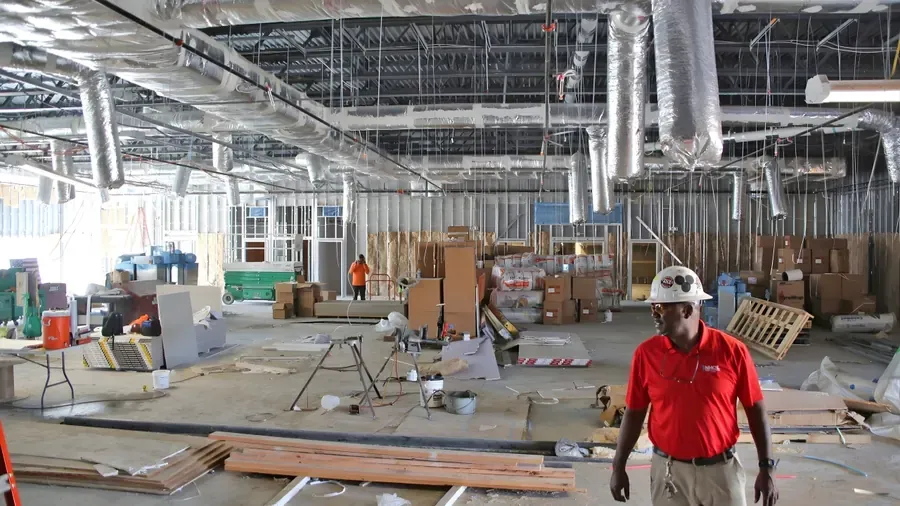
Stage 4: Construction Phase
In London specifically, the construction phase carries complexity that contractors without London experience routinely underestimate.
Access and logistics are constrained in ways that simply do not apply outside Central London. Restricted delivery windows, weight limits, minimal laydown areas - materials need to be pre-staged, deliveries coordinated to the hour. Party Wall Notices under the Party Wall etc. Act 1996 must be served on neighbouring owners before work begins where construction affects shared or adjacent walls. Failure to do so creates legal exposure that can halt a project mid-programme.
Working in occupied buildings - which applies to a large proportion of London commercial refurbishments - requires phasing that minimises disruption to neighbouring tenants. Noise-intensive works need to be sequenced within permitted hours. Dust, vibration, and access routes all require active management.
Cost control during construction is equally critical. Variations accumulate quickly on complex builds. Every scope change needs to be formally instructed and priced before execution. Projects managed informally arrive at the final account with disagreements that are expensive and time-consuming to resolve.
Stage 5: MEP, Commissioning, and Testing
Mechanical, electrical, and plumbing systems require systematic commissioning - a formal process of testing that each system performs to its design specification under operating conditions.
For data centres, commissioning involves staged power testing at increasing loads, cooling system verification under heat load, and full infrastructure testing before any client equipment is installed. For offices, it includes HVAC balancing, lighting control verification, access control testing, and BMS setup.
Commissioning is the stage most commonly compressed under programme pressure - and the stage where cutting time has the most expensive downstream consequences. A data centre that trips at 60% load, or an office where the air handling unit cannot maintain temperature under full occupancy, creates problems far more expensive to address post-handover than pre-handover.
Stage 6: Handover and Post-Completion
Practical completion is issued when the space is ready for occupation. It is a legal event: risk transfers from contractor to client, the defects liability period begins, and retention is partially released.
The handover package includes as-built drawings, operation and maintenance manuals, warranties, test certificates, and - under the Building Safety Act's golden thread requirements - the full compliance documentation set.
The defects liability period (typically 12 months on commercial contracts) is the window during which the contractor must return and remedy defects at no cost. Clients who do not actively manage this period often find that contractors deprioritise outstanding items once they have moved on to their next project.
Key Regulations Every Commercial Client Needs to Know
CDM 2015. Applies to all commercial projects with more than one contractor. The client must appoint a Principal Designer and Principal Contractor in writing, and ensure a Construction Phase Plan is in place before work starts. These carry legal weight - non-compliance is a criminal offence.
Building Regulations. Set minimum standards for structure, fire safety, energy efficiency, acoustic performance, and accessibility. A building without a completion certificate cannot be legally occupied.
The Building Safety Act 2022. Introduced new statutory obligations for clients, designers, and contractors - including dutyholder roles, Gateway approvals for higher-risk buildings, and golden thread documentation requirements throughout the building's life.
The Party Wall Etc. Act 1996. Any commercial project in a dense London environment that involves work on or near a shared wall, or excavations within six metres of a neighbouring structure, triggers Party Wall Act obligations. Notices must be served before work begins.
Planning Permission. Changes of use, extensions that exceed permitted development thresholds, and work on listed buildings or within conservation areas require planning permission. In London, Article 4 Directions restrict permitted development rights significantly compared to the rest of the UK.
Conclusion
Commercial construction is complex - but most project failures are not caused by what happens on site. They are caused by decisions made poorly before work begins. Get the brief, procurement, and team right, and the build follows.
At Craftex, we have delivered over 150 commercial construction projects across London, from data centre fit-outs to warehouse conversions. If you have a project in mind, contact us and we will tell you straight what it takes to deliver it properly.