
For developers and investors buying land in England
Green Field Sites vs Brownfield Sites: Key Differences

Sviatoslav JerdetchiiCEO & Founder of Craftex. Updated , 7 min read
The short answer
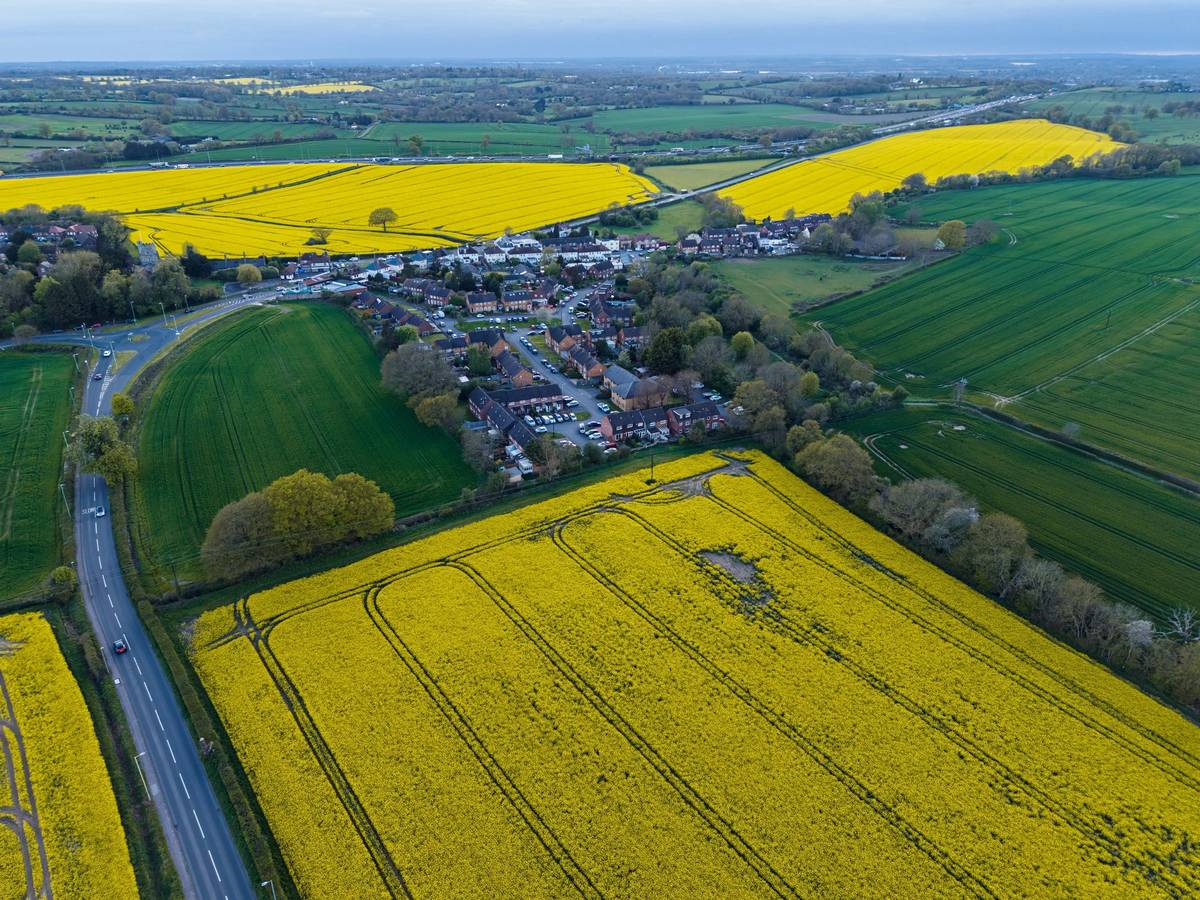
Greenfield sites, also written green field sites, are land that has not been previously developed, such as farmland, fields and open land. Brownfield sites are previously developed land, such as old yards and buildings, which the 2026 NPPF asks plans to use as much as possible.
- Inside towns and villages, the NPPF says development should be approved on either kind of land, unless the harm substantially outweighs the benefits.
- Outside settlements, redevelopment of brownfield land is a listed route; greenfield land needs another route, such as a plan allocation or unmet need.
- Brownfield ground can carry clean-up costs, and companies may claim Land Remediation Relief on qualifying spend.
- Both kinds carry biodiversity net gain, and a greenfield site may also need new roads, drainage and services.
Greenfield sites, also written green field sites, are land that has not been previously developed, such as farmland and fields. Brownfield sites are previously developed land, which national policy asks plans to use as much as possible.
Two sites on the table, one green and one brown? This guide is for developers and investors buying land in England. It sets out the definitions, the 2026 planning stance, the clean-up and the tax relief, the costs, and which to buy.
We find off-market development sites across London and the UK. Each one is tested before you offer: the planning chance, a build cost priced by our own team, and a residual appraisal. Been sent a site, green or brown? Ask for a free first view.
Green field sites and brownfield land: definitions
The National Planning Policy Framework (NPPF) defines previously developed land, the planning name for brownfield. It is "land which has been lawfully developed and is or was occupied by a permanent structure". That includes the curtilage and fixed surface infrastructure.
The NPPF has no definition of greenfield. The government's land use statistics say both terms "do not have a consistent and specific definition". They broadly link greenfield with land in non-developed use.
The NPPF definition also leaves some land out. Land last used by farm or forestry buildings is not previously developed. Nor are gardens, parks, recreation grounds and allotments in built-up areas. Land where old remains have blended into the landscape is excluded too.
| Point | Greenfield site | Brownfield site |
|---|---|---|
| What it is | Land not previously developed | Land lawfully developed and occupied by a permanent structure |
| Typical examples | Fields, farmland, barn yards, gardens in built-up areas | Disused yards, empty commercial buildings, derelict buildings |
| NPPF route outside settlements | Needs a listed route, such as a plan allocation (S5) | Redevelopment is a listed route, S5(1)(d) |
| Ground risk | Check drainage and ground conditions | Contamination, old foundations, basements |
| Tax relief on clean-up | Rarely relevant | Land Remediation Relief, for companies |
For the brownfield side in depth, read our guide to what a brownfield site is and how to buy one.
Green Belt and grey belt are not greenfield
Greenfield describes the land. Green Belt is a planning designation, drawn on the local plan map to keep land permanently open. A Green Belt can hold fields, whole villages and old developed sites.
Green Belt covers around 12.5% of England's land area, by official statistics for March 2026. Outside it, greenfield land is judged under the general policies in the next section. Inside it, the tighter Green Belt policies apply first.
Grey belt is part of the Green Belt. The NPPF glossary defines it as Green Belt land, previously developed or "any other land". In either case, it does not strongly serve three of the Green Belt purposes. So a greenfield site in the Green Belt can still be grey belt.
Our guides explain what Green Belt land is and when you can build on it, and grey belt land and its tests. Major housing on Green Belt land must also meet the Golden Rules, including up to 50% affordable homes.
Planning stance: how the 2026 NPPF treats each
The NPPF published on 17 August 2026 sorts sites by where they are, not by colour. Policy S4 covers land inside settlements, and policy S5 covers land outside them.
Inside a settlement, S4 says "Development proposals within settlements should be approved". The exception is where the harm substantially outweighs the benefits. A settlement includes towns, villages, other built-up areas, and land allocated or permitted for building.
Outside settlements, S5 lists the only kinds of development that should be approved. Redevelopment of previously developed land is one of them, including a change of use to homes. A greenfield site needs a different route from the list.
| S5(1) | Route | Fits greenfield, brownfield or both |
|---|---|---|
| (c) | Reuse or replacement of an existing lawful building | Both |
| (d) | Redevelopment of previously developed land | Brownfield |
| (e) | Limited infilling within groups of houses | Both |
| (h) | Homes within walking distance of a well-connected station | Both |
| (i) | Land allocated for that purpose in the development plan | Both |
| (j) | Evidenced unmet need, well related to a settlement | Both |
Route (j) applies to housing where the council lacks a five year supply, or its Housing Delivery Test is below 75%. Anything outside the list needs exceptional circumstances under S5, paragraph 4.
Chapter 12 then tilts the balance to brownfield. Policy L1 asks plans to meet as much need as possible on previously developed land. Policy L2 gives substantial weight to remediating derelict, contaminated or unstable land, and to using vacant buildings better.
Councils also keep brownfield land registers. A site on a register can be given permission in principle, which settles the use before the details.
Not sure which route a site fits? Send us the address for a free first view of its planning position.
We used Craftex for a shop-to-flat conversion in Chelsea — turning an old retail space into two rental units. Access wasn’t the easiest, but the guys handled it well, no drama. Quote was clear, no hidden extras, and they actually stuck to it, which is rare. Finish came out solid, exactly what we needed for rentals. Joe (PM) kept things ticking and communication was always on point. All in all, smooth job — would use them again for sure.👍
Remediation and Land Remediation Relief
Brownfield ground can hide old foundations, basements, buried services and contamination. A greenfield site rarely carries that history, though drainage and ground conditions still need checking. Order a ground investigation before you agree a price on either.
Land Remediation Relief helps with the brownfield clean-up. HMRC describes it as "a deduction of 100%, plus an additional deduction of 50%". It is a corporation tax relief, so it is for companies only.
The relief has strict conditions:
- Bought in that state. The company acquired the land already contaminated, or long-term derelict.
- Derelict for long enough. Derelict land must have stayed derelict since 1 April 1998, or since the company first acquired it, if that came earlier.
- Not the polluter. No relief if the company, or a connected party, caused the problem.
- A cash option. A loss-making company can swap the loss the relief creates for a credit of 16% of it.
The Treasury consulted on reforming the relief from 13 July to 21 September 2026. The consultation page still says the government is analysing feedback.
Buying a site with a contamination history? Send us the address and any ground report. We test the build cost alongside what the ground report shows.
Costs: where greenfield and brownfield budgets differ
Neither kind of site is cheaper by default. The cost lines are different, so compare them line by line, not by the label.
| Cost line | Greenfield site | Brownfield site |
|---|---|---|
| Ground | Ground investigation, drainage | Ground investigation, clean-up, old foundations and basements |
| Clearance | Little, unless there are farm buildings | Demolition and removal of existing structures |
| Infrastructure | May need new roads, drainage and utility connections | May reuse existing connections; check capacity |
| Biodiversity net gain | 10% gain, unless exempt | 10% gain, unless exempt |
| Planning risk | Needs a route if outside a settlement | Use and change of use evidence |
| Tax relief | Rarely relevant | Land Remediation Relief, for companies |
Biodiversity net gain applies to both. Developers must deliver a 10% gain. Since 6 August 2026, sites of 0.2 hectares or less are exempt, unless the work affects priority habitat on site.
A brownfield building can also carry a planning cost of its own. On our Allitsen Road feasibility study, a derelict former members' club in St John's Wood, the question was change of use. The case study puts it plainly: "The council needs sustained proof that the club use has ended."
We do not publish a rate for remediation or site works here. Ground costs change with each site investigation. Our own team tests the build cost before you offer, as on the Allitsen Road study at £6.0M GDV.
Which to buy: greenfield or brownfield
The better site is the one with a clear route to consent and costs you have priced. The colour of the land matters less than where it sits and what is under it.
Start with location. Inside a town or village, policy S4 supports development on either kind of land. Outside, a brownfield site has its own route in S5(1)(d). A greenfield site there depends on an allocation, unmet need or another listed route.
Then look at the ground and the buyer. A brownfield clean-up may qualify for relief if you buy through a company. A greenfield site may need roads, drainage and a biodiversity plan before the first home.
Rob Barton, our Development Director, took 10,000+ homes through planning in his previous housebuilding roles. For the purchase itself, read our guide to buying land with or without planning permission.
Comparing a field with an old yard? Send us both and ask for a free first view. A director checks the planning route on each before you commit to an offer.
Before you buy a greenfield or brownfield site
- Inside or outside a settlement, as the local plan draws it
- Green Belt, grey belt or neither, on the policies map
- The S5 route a greenfield site would rely on, if outside a settlement
- A ground investigation, and who caused any contamination
- Whether a company buys, for Land Remediation Relief
- Biodiversity net gain: site area, habitat and exemptions
- Roads, drainage and utility capacity


