
For landlords of industrial units
Industrial Unit Refurbishment to Let: EPC, Scope, Cost and the Void

Sviatoslav JerdetchiiCEO & Founder of Craftex. Updated , 7 min read
The short answer
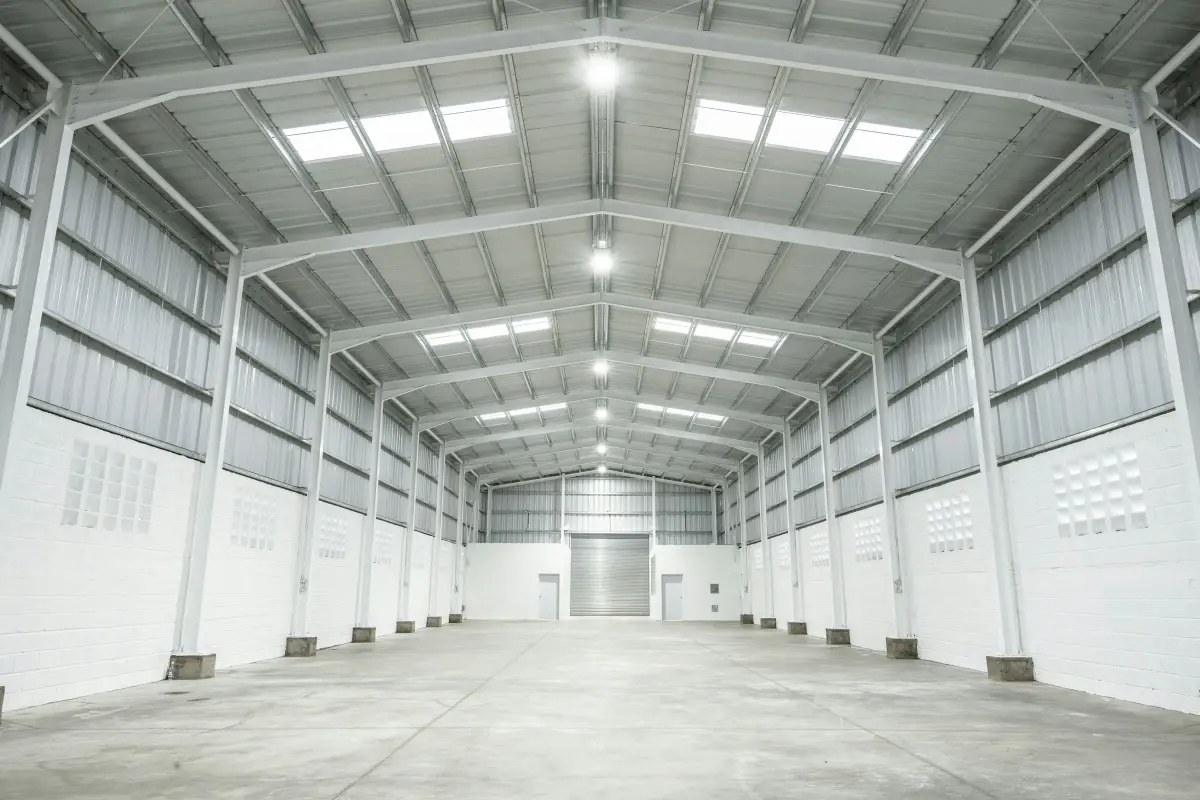
Refurbishing an industrial unit to let means reaching at least EPC E, fixing what tenants check first, and finishing inside the void, before empty rates start.
- EPC E is the legal minimum to let today. EPC B from 2031 for units over 1,000 m² is proposed, not law.
- On our 2026 rates, a light refurbishment starts near £9.50 per sq ft and a unit with offices and welfare reaches £90, ex VAT.
- Empty industrial units pay no business rates for 6 months, then usually full rates.
- Survey and price before the tenant leaves, so the works fit inside those 6 months.
Industrial unit refurbishment to let has one job: get the unit back on the market at EPC E or better, before empty rates start. Fix what tenants check first. On our 2026 rates that costs from about £9.50 per sq ft for a light refurbishment, ex VAT.
This guide is for landlords and asset managers with a unit between tenants. It is written by the team behind our industrial unit refurbishment service, which designs and builds the works. It covers the legal floor, the scope, the cost and the clock. Unit already empty? Discuss your project and send us the EPC.
What industrial unit refurbishment to let has to achieve
A refurbishment before a re-let is not a fit-out for a known tenant. You don't know who will take the unit or what they will make in it. So the work has to pass three tests at once.
First, the unit must be lawful to let. Second, it must look ready to the agent and the tenant's surveyor. Third, it must be finished while the unit still costs you little to hold.
Get the order wrong and the unit sits empty twice: once during the works, and again while agents explain why it is not letting.
EPC and MEES: the legal floor for letting an industrial unit
The MEES regulations stop you letting a commercial unit in England or Wales rated F or G, unless you have registered an exemption. EPC E has applied to new leases, renewals and extensions since 1 April 2018. Since 1 April 2023 it applies to every existing lease too.
| Date | Rule | Status |
|---|---|---|
| 1 April 2018 | No new lease, renewal or extension below EPC E | In force |
| 1 April 2023 | No continuing letting below EPC E | In force |
| 2027 | EPC C step | Dropped on 18 June 2026 |
| 2031 | EPC B for buildings over 1,000 m², where cost effective | Proposed, not law |
The rules cover leases of more than 6 months and less than 99 years on buildings that legally need an EPC. A certificate lasts 10 years. Not having one to show a prospective tenant can cost £500 to £5,000, based on rateable value.
Breaching MEES costs more. For three months or more, the penalty is the greater of £10,000 or 20% of rateable value, up to £150,000.
What changed in 2026
On 18 June 2026 the government published an interim response. It proposes EPC B from 2031 for rented buildings over 1,000 m², where cost effective. Buildings below 1,000 m² stay at EPC E. The 2027 EPC C step will not go ahead.
It is a proposal. It needs secondary legislation, and on 30 October 2026 no full response had been published. Still, a unit over 1,000 m² refurbished now will be tested again before 2031. Do the works once, to a standard that will still let then.
Unheated units and exemptions
The EPC rules apply to a building where energy is used to condition the indoor climate. GOV.UK also exempts industrial sites and workshops that use little energy. So an unheated storage shed may sit outside MEES today. Add heating in the refurbishment and it can come back in.
Exemptions exist, such as the seven-year payback test, but each must be registered and most last five years. Our guide to commercial EPC cost covers the certificate and the works that move the rating.
The scope that gets an industrial unit let
Agents and tenants' surveyors walk an industrial unit in roughly the same order. They look up at the roof, then at the lights, the doors, the floor, the welfare block and the power supply. That is also the order in which a warehouse refurbishment usually spends its budget.
- Roof and rooflights. Leaks, tired sheets and yellowed rooflights end viewings early. See our guide to commercial roof replacement cost before you decide between repair, overclad or replace.
- Lighting. LED high-bays with controls are usually the first measure to model for the EPC. They also make the unit look bigger and cleaner on the viewing.
- Heating and ventilation. Heat the office, welfare and any work area people stand in. A whole-shed system may not suit every tenant.
- Welfare and a small office. Clean WCs, a kitchen point and a modest office let the unit to a wider range of tenants.
- Floor, doors and loading. Repair the slab, re-line it, and service or replace the loading doors.
- Power and fire safety. Confirm the supply capacity, then test or renew the fire alarm and emergency lighting.
Survey first: asbestos and Building Regulations
Older units can contain asbestos, for example in cement roof sheets. HSE expects a refurbishment and demolition survey before major work. The area must be empty while it is done, so book it in the first days of the void.
Building Regulations still apply to an empty unit. Replace or renovate more than 50% of a roof or wall, and the whole element must meet Part L, where technically, functionally and economically feasible. Insulating a roof you re-sheet anyway is cheaper than doing it twice.
In units over 1,000 m², new or bigger heating, lighting or ventilation can trigger consequential improvements to the rest of the building. Moving partitions or escape routes brings in the fire rules in Approved Document B, Volume 2.
Craftex has completed a range of both small and large-scale projects on our commercial property with exceptional precision and quality. Dmitriy consistently delivers courteous, prompt service and has shown great flexibility in accommodating last-minute changes to plans and timelines. I highly recommend Craftex for their professionalism and outstanding workmanship.
Industrial unit refurbishment cost in 2026
Our rates below are for a typical 5,000 sq ft unit, ex VAT and fees. Your figure depends on the building, its condition and the services it needs.
| Scope | What it covers | £ per sq ft | £ per m² |
|---|---|---|---|
| Light refurbishment | Decoration, LED lighting, floor repairs, small electrical and fire alarm work | £9.50 to £28.50 | £102 to £307 |
| Standard refurbishment | Power, heating and ventilation upgrades, designed lighting, WCs and welfare, loading doors | £28.50 to £62 | £307 to £667 |
| Offices and welfare | Offices, kitchen, changing rooms, production space and full services | £37 to £90 | £400 to £969 |
On those rates, a light refurbishment of a 5,000 sq ft unit comes to about £47,500 to £142,500. A standard one comes to about £142,500 to £310,000. That is our calculation, before VAT.
Racking, sprinklers, power supply upgrades and asbestos removal are priced per project, after a survey. The supply upgrade depends on the network operator, so ask for its timescale early.
VAT and who pays
Work to an existing commercial building is normally standard-rated, so 20% VAT sits on top. Letting is normally VAT-exempt. If you have opted to tax the building, you can normally recover the VAT on the works.
If the outgoing tenant owes dilapidations, agree the schedule before you design the refurbishment. Then you pay for each item once.
Keep the void short: empty rates, programme and timing
The void is where a refurbishment pays for itself or doesn't. An empty unit pays no business rates for its first 3 months. Industrial premises such as warehouses get a further 3 months. After that, the owner usually pays full rates, whether the builders are in or not.
The 13-week rule has applied in England since 1 April 2024. A short let no longer restarts the clock. Our guide to business rates on empty commercial property covers the other options.
A programme that fits inside six months
Most of the delay sits before the works, not during them. Surveys, the EPC model, pricing and building control can take longer than the build. So start them while the tenant is still in, at the break notice or the dilapidations inspection.
On site, a focused scope moves quickly. At Banbury, in 2018, as Focus Internal Ltd, our team added 148 sq m of staff facilities and storage in 4 weeks. In Hackney we redesigned and installed every engineering system in a 120 m² unit in 4 weeks.
Leave the tenant room to fit out
Tenants plan around what you leave them. At Drake's railway arch in Bethnal Green, nothing could be fixed into the arch. So we built a self-supporting structure and sized the services for a five-year lease.
A clean, compliant shell with capacity in the supply lets to more tenants than a unit fitted for the last one. The tenant's own industrial fit-out then starts faster, and so does the rent.
Refurbishing an industrial unit to let in six steps
- Get a fresh EPC and its recommendation report. Ask the assessor to model the measures you are considering before you commit.
- Ask your letting agent what tenants in your area ask for. Eaves height, power and yard space can't change, so spend where it moves the rent.
- Commission a measured survey and an asbestos survey. Do it in the first weeks of the void, or earlier with the tenant's consent.
- Price the scope against the bands above. Ask for a fixed figure and a programme, with racking and supply upgrades shown separately.
- Line up the consents. Building control for roof, services and escape route changes, plus any consent your own superior lease requires.
- Build inside the relief window. Aim to hand the unit to the agent before month six.
We do this for landlords across London and the rest of the UK. Our landlord compliance team keeps the certificates in order after the let. Send us the EPC and floor plan and discuss your project with us.
Before the unit goes back on the market
- A valid EPC at E or better, or a registered exemption
- Roof and rooflights watertight, with no open defects
- Lighting, fire alarm and emergency lighting tested and certified
- Asbestos register updated after the works
- Building control completion for any notifiable work
- Photos and a floor plan ready for the agent's particulars


