Dilapidations Explained: What Commercial Tenants Owe at the End of a Lease
Short answer: dilapidations are the breaches of a lease's repair, decoration and reinstatement obligations that a landlord can claim for when the lease ends. The landlord sends a schedule listing what it says you should have done, usually with a costed demand, but the law caps the damages at the loss to the landlord's interest, and a well-prepared tenant can often reduce the claim a long way.
The bill usually arrives when you're least able to deal with it: after you've moved, while you're paying rent on the new place and the fit-out invoices are still coming in.
The good news is that most of what decides a dilapidations claim is fixed long before the lease ends: by what you agreed in the lease and the licences, by the condition you took the premises in, and by how you deal with the works and the paperwork in the last year. This guide explains the process from the tenant's side, with the builder's view of what the works actually involve. It isn't legal or valuation advice: use a solicitor and a building surveyor for your own claim.
What dilapidations means
The word covers three kinds of obligation in a commercial lease:
| Obligation | What it usually means | Typical items |
|---|---|---|
| Repair | Keep the premises in the repair the lease requires, and hand them back that way | Damaged ceilings, worn floor finishes, defective doors, broken fittings, plant you're responsible for |
| Redecoration | Redecorate at set intervals and usually in the last year of the term | Walls, ceilings, joinery, sometimes with the landlord approving colours |
| Reinstatement | Remove your alterations and put the premises back as they were, where the lease or a licence requires it | Partitions, meeting rooms, kitchens, raised floors, extra cabling, signage |
There's also statutory compliance: some leases make the tenant responsible for bringing parts of the premises into line with legislation, which can widen the claim.
What you owe depends on the wording of your lease, any licences for alterations, and any schedule of condition attached to the lease. Nothing in dilapidations law replaces reading those documents.
Terminal and interim claims
A terminal claim is made at or after the end of the lease. That's the one most tenants meet, and the one the court's pre-action protocol is written for.
An interim claim is made while the lease is still running, usually where the landlord thinks the premises are being let go. For leases granted for seven years or more with at least three years left, the Leasehold Property (Repairs) Act 1938 restricts the landlord's ability to claim damages or forfeit for disrepair without the court's permission. Your solicitor will tell you whether it applies.
The legal cap: section 18 of the Landlord and Tenant Act 1927
This is the most important rule for tenants. Section 18(1) says damages for breach of a repairing covenant can't exceed the amount by which the value of the landlord's reversion has been reduced by the breach. In plain terms, the landlord can't recover more than it has actually lost.
It also says no damages can be recovered for failing to leave the premises in repair if the premises would, at or shortly after the end of the lease, be pulled down or structurally altered in a way that would make those repairs valueless.
So if the landlord plans to strip the floor back to shell and refurbish, the cost of repairing your ceiling tiles may be worth very little in damages. That's why the landlord's intentions for the building matter so much, and why the protocol requires them to be taken into account.
The cap applies to the repairing obligations. Reinstatement and redecoration claims are argued on their own terms, though the same question of the landlord's real loss runs through the protocol.
How a claim works: the dilapidations protocol
The court's Pre-Action Protocol for claims for damages in relation to the physical state of commercial property at termination of a tenancy sets out the steps the court expects before anyone issues proceedings.
- Schedule of dilapidations. The landlord sends a schedule setting out the alleged breaches, the works to remedy them and, if relevant, its costings, separated into repair, reinstatement and redecoration. It should be sent within a reasonable time, generally within 56 days after the lease ends.
- Endorsement. The landlord or its surveyor confirms the works are reasonably required, the landlord's intentions for the property have been taken into account and the costings are reasonable.
- Quantified demand. Sent within the same timescale, setting out and substantiating the sum claimed, whether VAT applies, and a reasonable date for your response. The protocol says the figures should be limited to the landlord's likely loss, which is not necessarily the cost of the works, and shouldn't include works likely to be superseded by the landlord's plans.
- Your response. Usually within 56 days of the quantified demand, item by item on the landlord's schedule, endorsed by you or your surveyor.
- Meeting. The parties are expected to meet, usually within 28 days of your response, to narrow the issues.
- Alternative dispute resolution. The parties should consider it before going to court.
- Quantification of loss. Before issuing proceedings, the landlord should back its loss with a formal diminution valuation, an account of actual spend, or both.
In practice most claims settle with a payment well before court. The protocol is what makes both sides show their workings.
Do the works or pay?
Before the lease ends you usually have a choice: carry out the works yourself, or leave and negotiate a cash settlement.
Doing the works can make sense when:
- the lease or a break clause requires you to give back the premises in a certain state (see below);
- you can do the work for less than the landlord's surveyor would price it;
- the items are clear-cut reinstatement of your own alterations.
Paying can make sense when:
- the landlord plans to refurbish or redevelop, so many items would be superseded;
- the programme to do the works would mean paying extra rent;
- the claim is weak on the section 18 cap.
Either way, get the works priced properly. The landlord's schedule is priced by the landlord's side; a builder's price for the actual scope gives your surveyor something real to negotiate with.
Break clauses: where dilapidations become dangerous
If you're leaving early under a break clause, read its conditions carefully. Some breaks are conditional on giving vacant possession, paying all rent due, or complying with covenants. Leaving partitions, furniture or rubbish behind can be argued to mean you didn't give vacant possession, and a failed break can leave you on the hook for the rest of the term. This is a legal question for your solicitor, but the practical fix is the builder's: plan the strip-out and clearance with time to spare before the break date.
How to keep the bill down from day one
Most of the money in a dilapidations claim is decided years before the lease ends.
When you take the lease
- Attach a schedule of condition with photographs, so you aren't asked to hand back premises in better repair than you received them.
- Negotiate reinstatement terms: which alterations stay, and whether removal is automatic or only "if the landlord asks".
When you fit out
- Keep each licence for alterations and note what it says about reinstatement. See our guide to the licence for alterations.
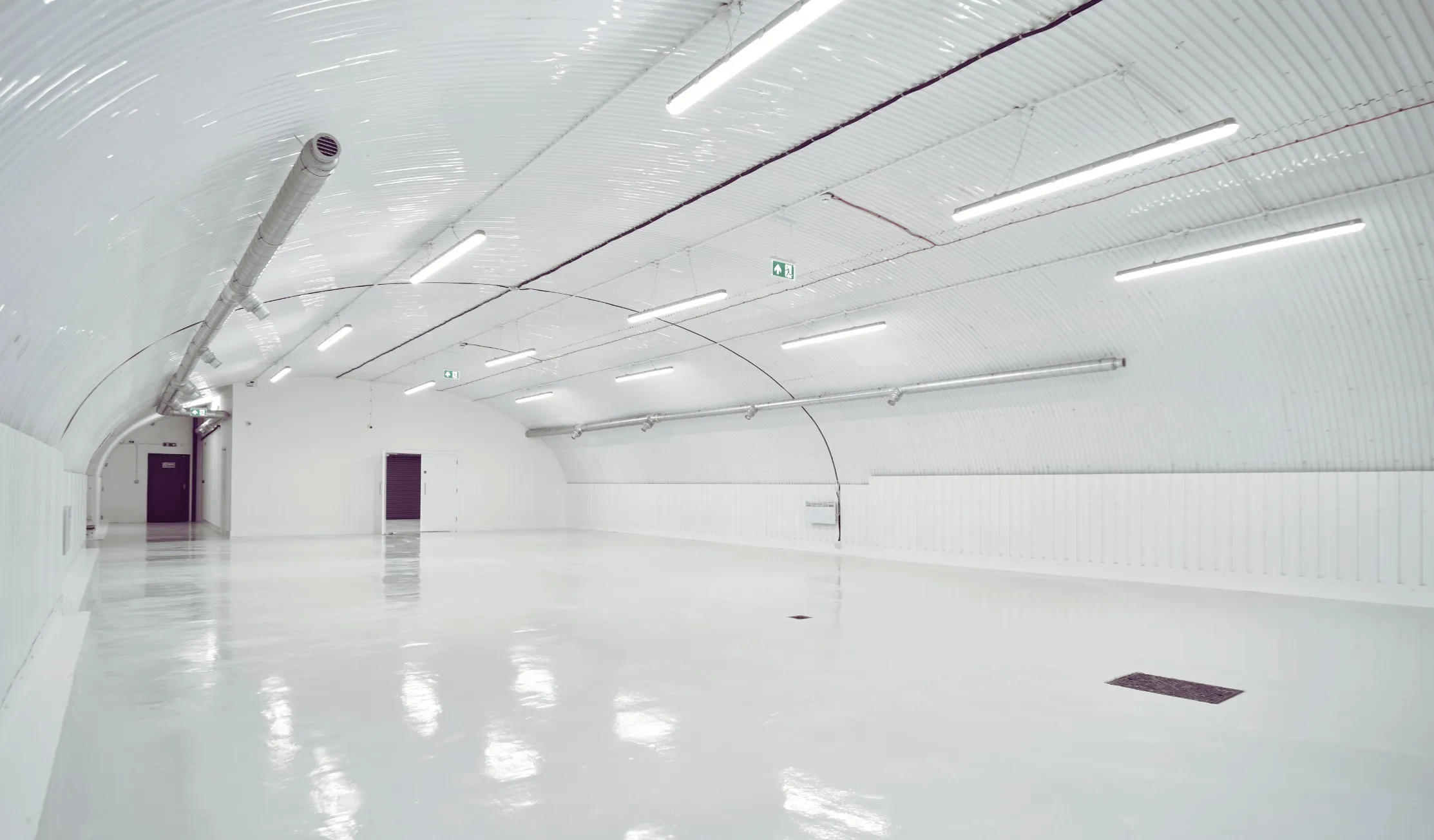
- Design for removal where you can. At Drake's railway-arch warehouse, where the client planned a five-year tenancy and nothing could be drilled into the arch, we built a fully self-supported internal structure: freestanding partitions and independent service frames, with no fixings into the arch itself.
- Keep as-built drawings, certificates and the health and safety file.
During the lease
- Maintain and redecorate as the lease requires. Small repairs done on time are cheaper than a schedule item at the end.
In the last 12 to 18 months
- Get your own surveyor's view of likely liability.
- Ask the landlord about its plans for the building.
- Decide early whether you'll do the works or negotiate, and price them.
- If you're moving, run the dilapidations programme alongside the new fit-out, not after it.
Moving out and moving in at the same time
Lease ends rarely line up neatly. At Beaumont House in Kensington our client had five weeks before their old lease expired and more than 150 staff to move. We refurbished 750 sq m of new offices in three weeks and managed the move itself, moving the furniture and office equipment in at the end of the programme. When the exit and the new fit-out are planned together, neither has to wait for the other. Our office relocation checklist covers the move side in more detail.