VAT on Commercial to Residential Conversions: The 5% Rate, the Zero Rate and Getting VAT Back
Short answer: when a builder converts a non-residential building, such as an office, shop or pub, into homes, the building work is normally charged VAT at 5% instead of 20%. If the developer then sells the new homes freehold or on a lease of more than 21 years, that first sale can be zero-rated, which lets the developer reclaim the VAT it paid on the conversion.
Those two rules, used together, are one of the biggest legitimate savings in UK development. They are also easy to lose through poor paperwork, the wrong contract structure or an option to tax that nobody switched off. This guide explains how each piece works, who qualifies and where schemes go wrong.
The three VAT rates that matter on a conversion
| Rate | What it applies to | Where the rule sits |
|---|---|---|
| 20% (standard) | Professional fees, most refurbishment of existing homes, goods that are not building materials | General VAT rules; VAT Notice 708 |
| 5% (reduced) | Building work and materials for a "qualifying conversion", including non-residential to residential, a changed number of dwellings, and conversion to a house in multiple occupation | Schedule 7A, Group 6, VAT Act 1994; VAT Notice 708 section 7 |
| 0% (zero) | The first grant of a major interest in a new dwelling by the person converting a non-residential building | Schedule 8, Group 5, VAT Act 1994; VAT Notice 708 section 5 |
A "major interest" is the freehold or a lease of more than 21 years (in Scotland, a lease of at least 20 years). A shorter lease or a rental does not count.
The 5% rate on the building work
HMRC's construction manual lists the conversions that qualify for the reduced rate. For an investor, the ones that come up most are:
- Non-residential to residential. A building that has never been lived in, such as an office, shop, warehouse or bank, converted into one or more homes.
- Changed number of dwellings. A house split into flats, or flats knocked back into a single house. The number of homes must be different afterwards.
- Conversion to a house in multiple occupation. A single home or a non-residential building converted into bedsit accommodation. Adding bedrooms to an existing HMO does not count.
- Conversion to a relevant residential purpose. For example, a building turned into a care home or student accommodation used solely for that purpose.
Three practical points decide whether you actually get the 5%:
- It is the builder's supply that is reduced-rated. A VAT-registered contractor charges 5% on the conversion work and the building materials it supplies and fits. Materials you buy yourself from a merchant are charged at 20%.
- Not everything on the invoice qualifies. Carpets, fitted bedroom furniture and other goods that are not building materials stay at 20%, and HMRC says the installation of those goods is standard-rated too.
- Professional fees are always 20%. Architects, surveyors, consultants and project supervisors charge the standard rate. This is one reason a single design and build contract needs careful drafting: the design element and the construction element can carry different rates.
The zero rate on the first sale
The person who converts a non-residential building into a dwelling, and then makes the first grant of a major interest in it, can zero-rate that sale. HMRC calls this "person converting" status. Without it, a sale of a home is simply exempt from VAT.
The difference matters because of input tax:
- A zero-rated sale is a taxable supply. The developer can register for VAT and reclaim the VAT charged by the builder, the architect, the surveyors and everyone else on the scheme.
- An exempt sale is not. VAT on the costs of making it is generally not recoverable.
So the developer converting an office block into flats for sale pays 5% to the builder, 20% to the consultants, and can reclaim both when the zero-rated sales go through. The developer splitting a house into flats pays 5% to the builder but, because selling flats in a building that was already residential is normally exempt, usually cannot reclaim it.
What counts as non-residential
Offices, shops, pubs, warehouses and other buildings never used as a home are non-residential. VAT Notice 708 adds one important extension: "Non-residential buildings include residential buildings that have not been lived in for at least 10 years."
That 10-year rule lets an investor who buys a long-empty house, converts it and sells it zero-rate the sale. HMRC accepts a letter from a council Empty Property Officer as proof on its own; otherwise it looks at electoral roll, council tax and utility records.
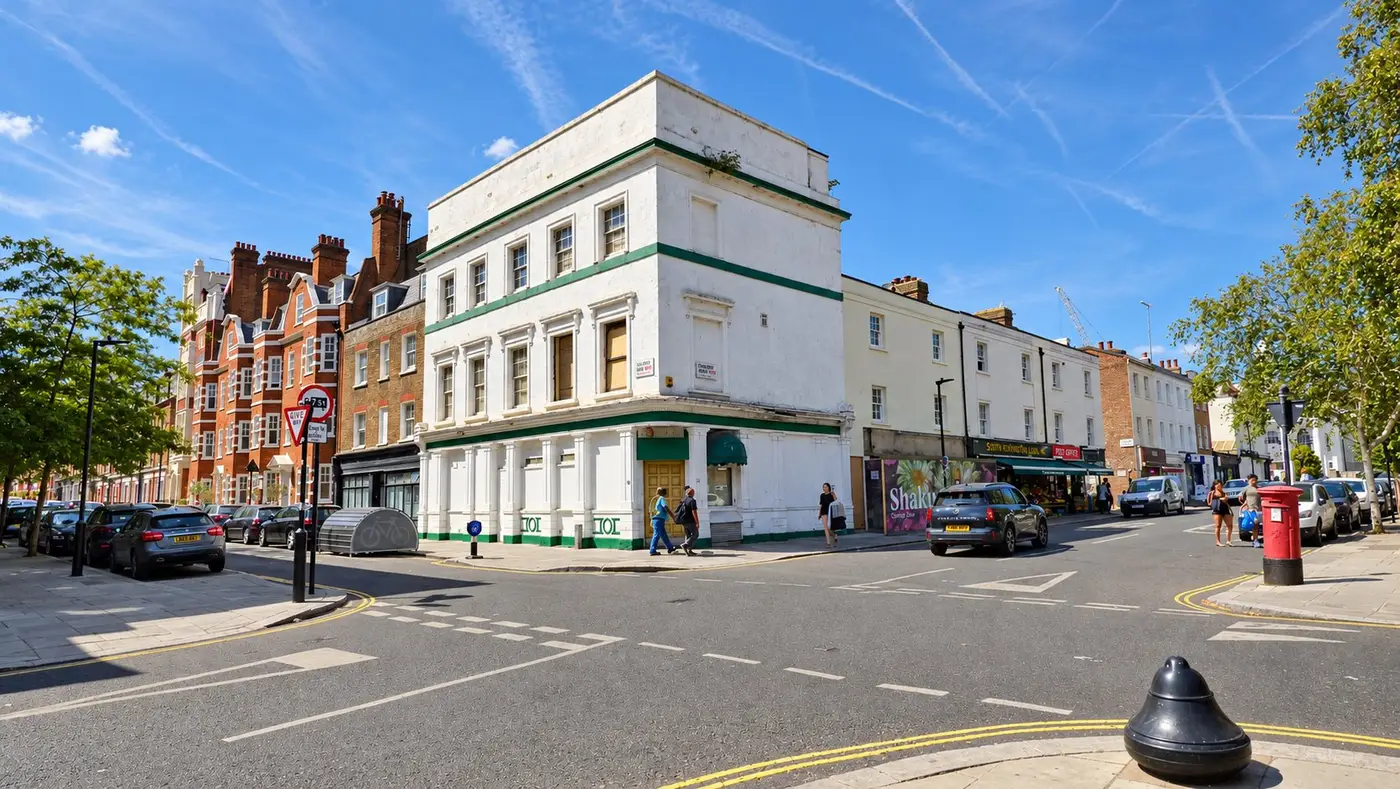
Mixed buildings need care. A former pub with a flat upstairs, for example, has a residential part and a non-residential part, and the VAT treatment can differ floor by floor. We see this pattern often: the former pub and private members' club at Allitsen Road in St John's Wood, where our feasibility study tested four design options for up to seven apartments, is exactly the kind of building where the last use of each part has to be pinned down before anyone prices the scheme.
The option to tax trap
Many commercial buildings have been "opted to tax" by a previous owner. Once a building is opted, its sale and rents are standard-rated, so a buyer can face 20% VAT on the purchase price itself.
The rules give developers a way out. An option to tax does not apply to a building that will be converted into dwellings, as long as the buyer gives the seller a certificate on form VAT1614D. VAT Notice 742A is strict on timing: the certificate must be given "before the price for the grant to the recipient by the seller is legally fixed", which in practice means before exchange of contracts.
Miss that step and the buyer may pay VAT on the land that it cannot later recover against exempt or zero-rated sales. Put the certificate in the heads of terms.
Worked example
Illustrative example only, with round numbers. It is not a real scheme and ignores every cost except those shown.
A developer company buys a vacant office building and converts it into flats for sale on long leases.
| Item | Net cost | VAT charged | Recoverable? |
|---|---|---|---|
| Conversion works by the main contractor | £2,000,000 | £100,000 (5%) | Yes, if the first sales are zero-rated |
| Architect, engineers, surveyors | £200,000 | £40,000 (20%) | Yes, same condition |
| Kitchens and fitted wardrobes bought separately | £100,000 | £20,000 (20%) | Yes, same condition |
Without the reduced rate, the building contract alone would carry £400,000 of VAT instead of £100,000. With the zero-rated sales, the developer reclaims the £160,000 it was charged in total. If the same developer had instead converted a house into flats, the build would still be at 5%, but the sales would normally be exempt and that VAT would usually stay as a cost.
Who qualifies, and the pitfalls
| Situation | 5% on the works? | Zero-rated first sale? | Common pitfall |
|---|---|---|---|
| Office, shop or warehouse converted into flats for sale | Yes | Yes, by the person converting | Selling on leases of 21 years or less |
| House split into flats | Yes (number of dwellings changes) | No, sale normally exempt | Assuming VAT on costs can be reclaimed |
| Home empty for 10 years or more, converted or renovated | Yes, if a qualifying conversion | Yes, if treated as non-residential | No evidence of the 10 years |
| Building converted then let on short tenancies | Yes | No major interest granted | VAT on costs becomes a cost |
| Conversion to an HMO | Yes | Depends on the building's history | Adding rooms to an existing HMO does not qualify |
| Opted commercial building bought for conversion | Yes | Yes | VAT1614D not given before the price is fixed |
Getting the paperwork right
- Ask your tax adviser to confirm the liability before tender, so the contractor prices at the right rate and you can show HMRC why.
- Keep evidence of the building's last use: planning history, business rates records, photographs, leases.
- Register for VAT in time. A developer making zero-rated sales can register and reclaim VAT on costs incurred before the first sale, within HMRC's limits.
- Separate the design fee from the build where they carry different rates, and make sure invoices show the rate per element.
- Check planning first. The VAT reliefs follow the physical conversion. Whether you need full planning permission, prior approval under Class MA or a change of use consent is a separate question, covered on our change of use and permitted development and prior approval pages.
How this fits into a Craftex conversion
We run conversions from feasibility to handover with an in-house construction team, so we see the VAT questions early: the last use of each floor, the split between design and construction, and the sequence of planning, exchange and works. Our commercial to residential conversion service covers the build, and our development feasibility and site appraisal work sets out the costs your tax adviser needs before you commit. For the build cost side, read our guide to commercial to residential conversion cost, and for the wider tax picture our guide to stamp duty for property investors.
If you are weighing up a scheme, our free Investor & Developer guide explains how we work with investors from site to sale.