Best Land Promoters and Developers for Landowners in the UK: How to Choose Who Gets Your Planning
The best land promoter or developer for your land is the one whose way of getting paid keeps it on your side of the table, who has the money and the planning record to see an application through refusal and appeal, and who will agree a minimum price and firm deadlines in writing. Who that is depends on your site: a large greenfield field, an urban brownfield plot and a building in a London conservation area each attract a different kind of partner.
Below are the six tests we'd run, the main types of land partner compared side by side, and an honest view of where Craftex fits. We work with landowners in London and across the UK.
First: which deal are you actually choosing?
Before you compare firms, decide the structure. It changes which firms are even in the running.
- Option agreement. A developer pays an option fee, funds planning, then buys your land at market value less an agreed discount.
- Promotion agreement. A promoter funds planning, the land is sold on the open market, and the promoter takes its costs back and a pre-agreed share.
- Joint venture. You put the land into the scheme and share in the development profit, and its risk.
- Outright sale, with or without a planning overage.
Our guide to option vs promotion agreement vs joint venture explains each in detail, and how to sell land to a developer covers the sale route step by step.
The 6 tests for a land partner
1. Is it on your side when the price is set?
Under an option, the developer is also the buyer, so every pound off the land price is a pound in its pocket. Under a promotion agreement, the promoter is paid from the sale price, so it wants the highest price too. Neither is wrong; just know which one you're signing.
2. Can it fund planning to the end?
Planning on a large or contentious site can take years and may need an appeal. Ask how many applications the firm is funding now, what happens to your land if it runs out of money, and whether it has committed to appeal a refusal. Check filed accounts.
3. What does its planning record look like on sites like yours?
A strong record on greenfield allocations says little about a brownfield site in a London borough, and the reverse. Ask for consented sites of a similar size and type, the time each took, and whether any were refused.
4. Will it commit to the terms that protect you?
The terms that matter most to a landowner:
- A minimum price or floor, so a weak market can't push the sale below it.
- A cap on deductible costs, so the promoter's spending doesn't eat your proceeds.
- Planning obligations with dates: when the application goes in, and whether a refusal is appealed.
- A longstop date, so your land isn't tied up indefinitely.
- Your approval of the buyer and the price on a promotion sale.
5. Who builds, and does that matter to you?
If you only want a sale, it doesn't. If you're considering a joint venture or keeping part of the scheme, who builds decides your returns. A partner with its own construction team can price the build early and stand behind that price; one that tenders it later can't.
6. Who will you deal with?
Land deals run for years. Ask who will be your contact, what they've done before, and who signs off decisions. Then meet them.
Land partner types compared
| Land promoter | Strategic land company | Housebuilder land team | Planning consultant on a fee | Craftex | |
|---|---|---|---|---|---|
| Usual deal | Promotion agreement | Option or promotion | Option or purchase, sometimes conditional on planning | You pay a fee and keep the land | Option, promotion, purchase or joint venture, depending on the site |
| Who pays for planning | The promoter | The company | The housebuilder | You | Us, or shared, depending on the structure |
| Aligned on price? | Yes: both want the highest sale price | Depends on the deal | Not fully: it's also the buyer | Yes, but the risk is all yours | Depends on the structure; we explain the trade-off before you choose |
| Builds the scheme? | No: sells the consented land | Usually no | Yes, usually to its own house types | No | Yes: in-house construction department |
| Typical sites | Larger greenfield and edge-of-settlement land | Larger sites, often long-term | Sites that fit its build programme | Any | Schemes from £3M to £150M GDV, urban and brownfield included |
| Watch for | Costs cap, minimum price, sale process control | Long option periods; weak planning obligations | Discount size; valuation mechanism | Fees spent with no guarantee of consent | Check we've done your type of site; ask who leads it |
Why the buyer's side of the table matters
Landowners usually negotiate against people who have bought hundreds of sites. It helps to have someone on your side who has done the buying.
Our Development Director, Rob Barton, spent over 20 years in managing director and land director roles at plc housebuilders, including Berkeley Homes as a regional managing director, Countryside and St Modwen. In his previous career he acquired more than £225M of land, took planning for more than 10,000 homes and was directly responsible for delivering more than 4,000. His previous schemes include Acton Gardens (2,340 homes) and St Andrew's Park in Uxbridge (1,340 homes). Those were his roles at those companies; they are not Craftex projects and those companies are not Craftex clients.
What that experience means for a landowner talking to us:
- We know how the discount in an option is worked out, because that's the number a land team defends to its own board.
- We know what moves a valuation: consented unit numbers, affordable housing, CIL and Section 106, abnormals and sales rate. Our development appraisal guide shows the maths.
- We can tell you when a promotion agreement will serve you better than selling to us. On some sites it will.
Red flags in a land offer
- A headline price with no appraisal behind it.
- No minimum price, or a minimum price set far below any realistic value.
- Uncapped deductible costs.
- Long option periods with no duty to submit a planning application.
- Pressure to sign an exclusivity agreement before you've taken advice.
- No answer to "what happens if planning is refused?"
Always take independent advice from your own solicitor and land agent before you sign heads of terms. Who pays for that advice is part of the negotiation.
What our work looks like
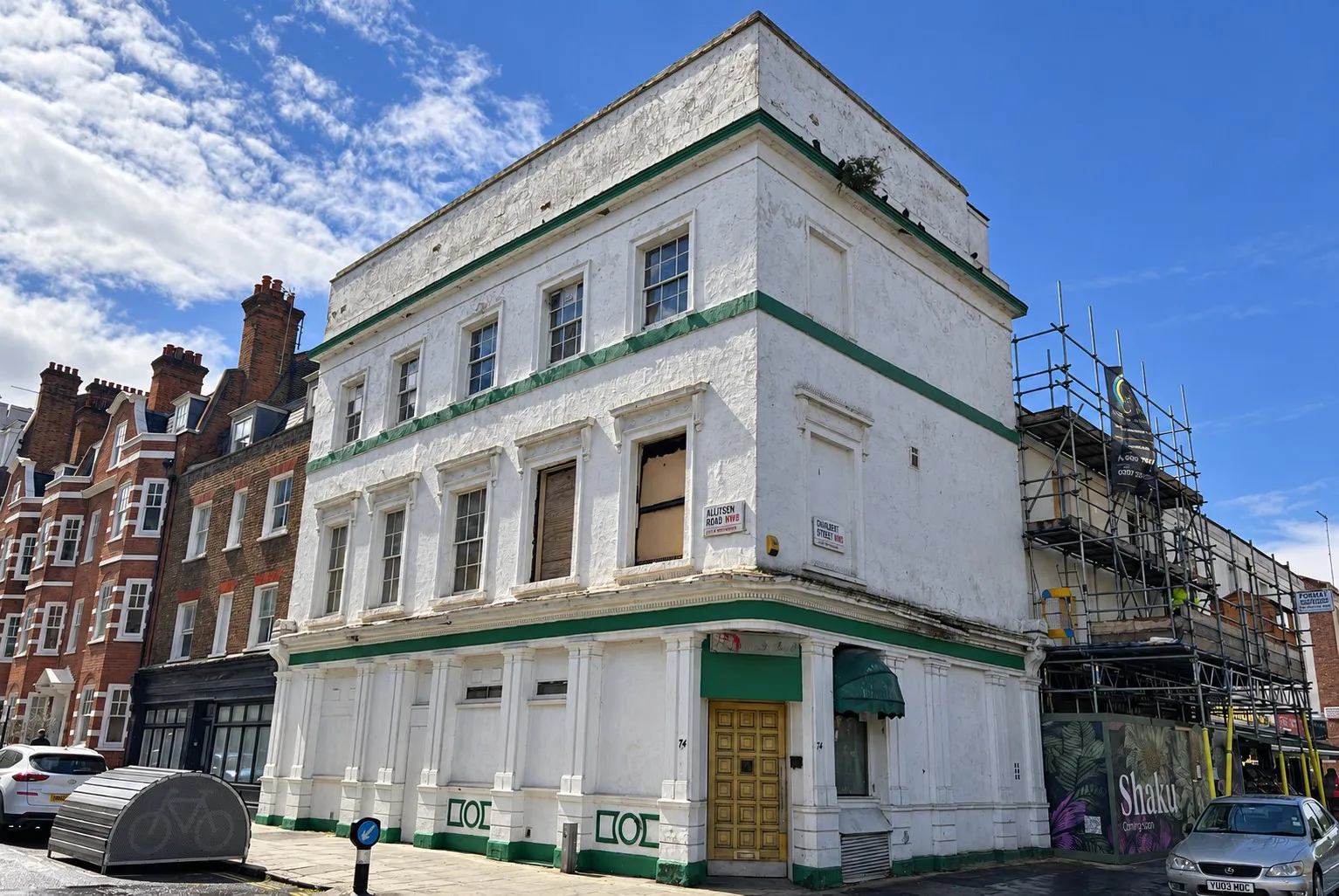
- Allitsen Road, St John's Wood: four design options for a vacant 458 m² building in a conservation area, from four to seven apartments, each tested against planning policy, structure and viability, so the owner could choose a direction with the trade-offs in front of them.
- Portsoken House, Aldgate: a £2.2M warehouse-to-office conversion, 1,550 m² in seven months, built while the rest of the building stayed let. The same construction team prices our development schemes.
- Slingsby Place, Covent Garden: strip-out and structural works behind retained façades, led by our Preconstruction Director Martin Hickey as Project Director.
Where Craftex is not the right fit
- Very small sites. Our development work starts at £3M GDV. A single building plot is better served by a local agent or builder.
- You want a cash sale this month at today's value. That's an agent's job, or an auction.
- A large rural site that will only come forward through a new local plan allocation over many years. A specialist strategic land promoter with a portfolio approach may suit that better. We'll tell you if we think so.
- You want planning only and will never sell or build. Then a planning consultant on a fee is the simpler route; our planning service can do that too, but you don't need a development partner for it.
See our land acquisition, option and promotion service for how we structure deals with landowners.