Best Planning Consultants for Developers in London and the UK: How to Choose the Right Planning Team
For a developer, the best planning consultant is the one that knows the borough, can tell you which version of your scheme is likely to be approved, and tests that scheme against viability and buildability before it goes in, not after. Planning permission that doesn't pay, or can't be built as drawn, isn't worth having.
This guide compares the main types of planning team a developer can hire in London and the UK, the six criteria that separate them, and where a development partner with in-house planning, like Craftex, fits and doesn't.
What developers need from planning (and homeowners don't)
A householder needs a permission. A developer needs a permission that produces a land value. That changes the job:
- The number of homes or square metres consented drives the appraisal.
- Affordable housing, CIL and Section 106 come straight off the land value.
- Design changes made at committee can add cost the appraisal never saw.
- For taller residential buildings, fire safety is assessed at planning stage, and the design must survive building control later.
So the questions to ask a planning team are about outcomes and numbers, not just about how many applications it submits.
The 6 criteria that matter
1. Local knowledge, borough by borough
London has 32 boroughs and the City, each with its own local plan, design expectations and committee culture, on top of the London Plan. Ask for recent consents in the same borough and, ideally, the same type of scheme.
2. Honest pre-application advice
A good consultant will tell you what the officers are likely to resist before you pay for a full design. Ask how it approaches pre-application advice and what it has told clients not to submit.
3. Viability tested alongside policy
Affordable housing negotiations in London often turn on viability evidence. A planning team that works with a live appraisal, not a one-off report, can show you the effect of each design change on the land value. Our CIL and Section 106 guide explains the obligations it has to price.
4. Design and buildability in the same conversation
Many schemes get consent and then change at the technical design stage because the structure, services or fire strategy don't work as drawn. That can mean a Section 73 or a fresh application. For buildings of 18 metres or seven storeys with at least two homes, a fire statement goes in with the planning application (planning gateway one), and the Building Safety Regulator later approves the detailed design before work starts. Our guide to the Building Safety Act and Gateway 2 explains the timings.
5. Appeals and conditions
Refusals happen. Ask whether the team handles appeals itself and how it deals with pre-commencement conditions, which can hold up a start on site for months. See our planning appeal guide.
6. How it's paid and whose side it's on
A fee-based consultant is paid whether or not you get consent. That's normal, but ask for a fee per stage, a clear scope, and what's excluded (surveys, specialist reports, appeals).
Planning team types compared
| Independent planning consultancy | Planning team in a large multidisciplinary consultancy | Architect-led planning | Planning solicitor | Development partner with in-house planning (Craftex) | |
|---|---|---|---|---|---|
| Core strength | Policy, negotiation, submissions | Breadth: planning plus specialist reports under one roof | Design quality and presentation | Legal agreements, appeals, challenges | Planning, design, cost and construction in one team |
| Viability work | Often via a separate viability adviser | Often in-house | Rarely | No | Live appraisal and cost plan from our own preconstruction team |
| Buildability check | Not usually | Sometimes, through engineers | Partly | No | Yes: our construction team prices what is being designed |
| How paid | Fee | Fee, often higher | Fee, often part of the design fee | Hourly or fixed | Fee, percentage, co-investment or full risk, depending on the deal |
| Best for | Developers with their own design and cost teams | Large, complex schemes needing many reports | Design-sensitive sites | Section 106, appeals, judicial review | Owners and developers who want one team from appraisal to completion |
| Watch for | Fees for reports outside the scope | Seniority of who actually works on your scheme | Planning strategy led by design preferences | Not a substitute for planning strategy | Check our record on your type of scheme and borough |
Who would plan your scheme at Craftex
- Rafael Porzycki, Head of Design & Planning, 15 years in design and planning.
- Rob Barton, Development Director. In his previous career Rob held managing director and land director roles at plc housebuilders, including Berkeley Homes as a regional managing director, Countryside and St Modwen. He took planning for more than 10,000 homes and was directly responsible for delivering more than 4,000, on schemes including Acton Gardens (2,340 homes) and St Andrew's Park in Uxbridge (1,340 homes). Those were his roles at those companies, not Craftex projects. For a developer it means planning strategy is set by someone who has run large consents from land deal to delivery.
- Martin Hickey, Preconstruction Director, more than 50 years in construction. Checks that what's being consented can be built and priced.
- Joe Crawford, Operations Director, 37 years, projects of up to £135M in previous roles.
What it looks like in practice
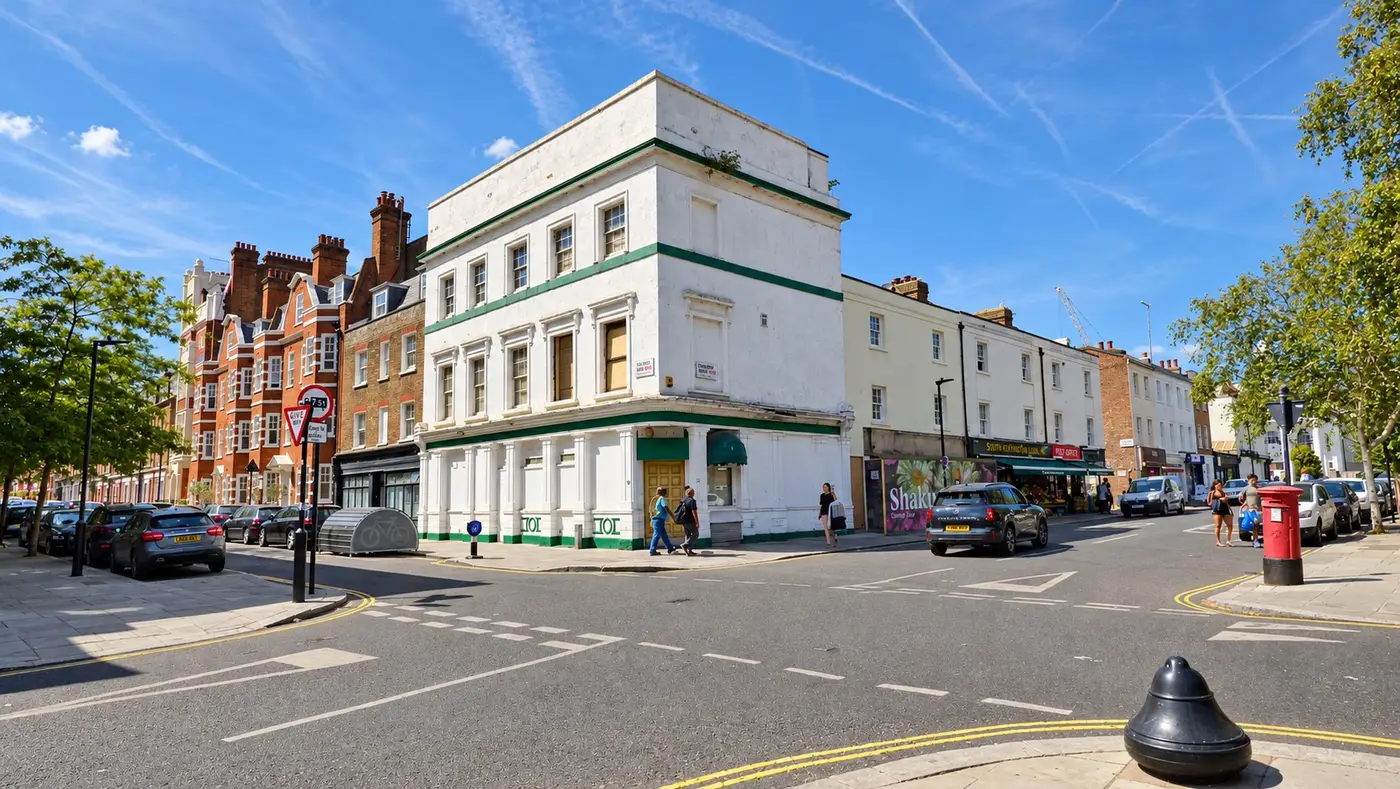
- Allitsen Road, St John's Wood. A vacant corner building in the St John's Wood Conservation Area, opposite two Grade II listed properties. Our planning review cross-referenced the Westminster City Plan, the London Plan and national policy. We developed four options, from a four-apartment light-touch conversion to a seven-apartment scheme using the roof and basement, each tested against space standards, structure and viability.
- Drake's warehouse conversion. A 500 m² railway-arch warehouse where nothing could be drilled into the arch: freestanding partitions, independent service frames and a full MEP strategy kept the build compliant and approved.
- Portsoken House, Aldgate. A £2.2M warehouse-to-office conversion, 1,550 m² in seven months, built around tenants who stayed in occupation.
Where Craftex is not the right fit
- Householder applications and small extensions. We work on development schemes from £3M GDV; a local planning consultant or architect will serve you better and cost less.
- You already have a design and cost team and only need someone to write and submit the planning statement. An independent planning consultancy is the natural choice.
- High-stakes legal challenges. A judicial review or a complex public inquiry needs a planning solicitor and counsel. We can work alongside them, not instead of them.
How to choose in five steps
- Write down the scheme you hope for and the minimum you'd accept.
- Shortlist two or three teams of different types from the table.
- Ask each for a short view on the site's planning route and its main risks.
- Ask who will attend meetings with officers, and how many schemes they're running.
- Compare scope and fees stage by stage, including what happens after a refusal.
Our planning consultancy service and planning overview set out how we take schemes through consent in London and the UK.