Development Appraisal Explained: GDV, Costs and Residual Land Value
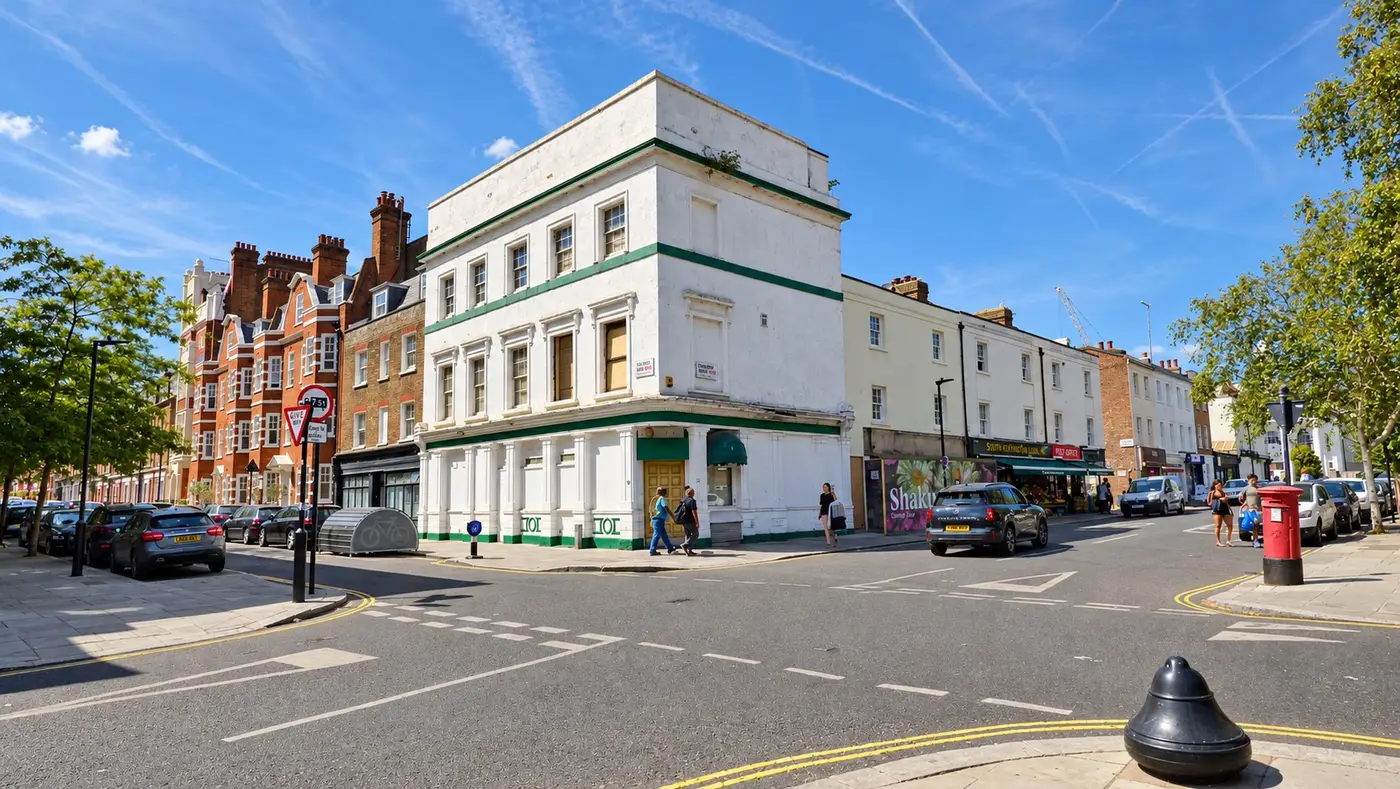
A development appraisal works out whether a scheme makes money, and what the land is worth to it. Start with the gross development value (GDV), what the finished scheme would sell or let for. Subtract every cost of getting there: building, fees, the council's contributions, sales costs, finance and a profit for the developer. What remains is the residual land value, the most a developer can pay for the site and still make a normal return.
That's the whole idea. The rest of this guide is about getting each line right, because small errors in any of them make large errors in the land value.
The formula
Line by line
1. Gross development value (GDV)
What the finished scheme is worth. For homes for sale, it's the sum of the expected sale prices, unit by unit, based on comparable sales nearby, adjusted for size, floor, outlook and specification. For let or commercial space, it's the rent capitalised at an investment yield.
GDV is the line most often inflated. A sales agent's best-case figure is not a valuation. Use evidence: recent sales of similar new homes in the same area, per square metre, not asking prices.
2. Build costs
The cost of constructing the scheme: demolition or strip-out, substructure, frame, envelope, services, finishes, external works and the contractor's preliminaries and overheads. Early appraisals often use a rate per square metre; better ones price the scheme element by element.
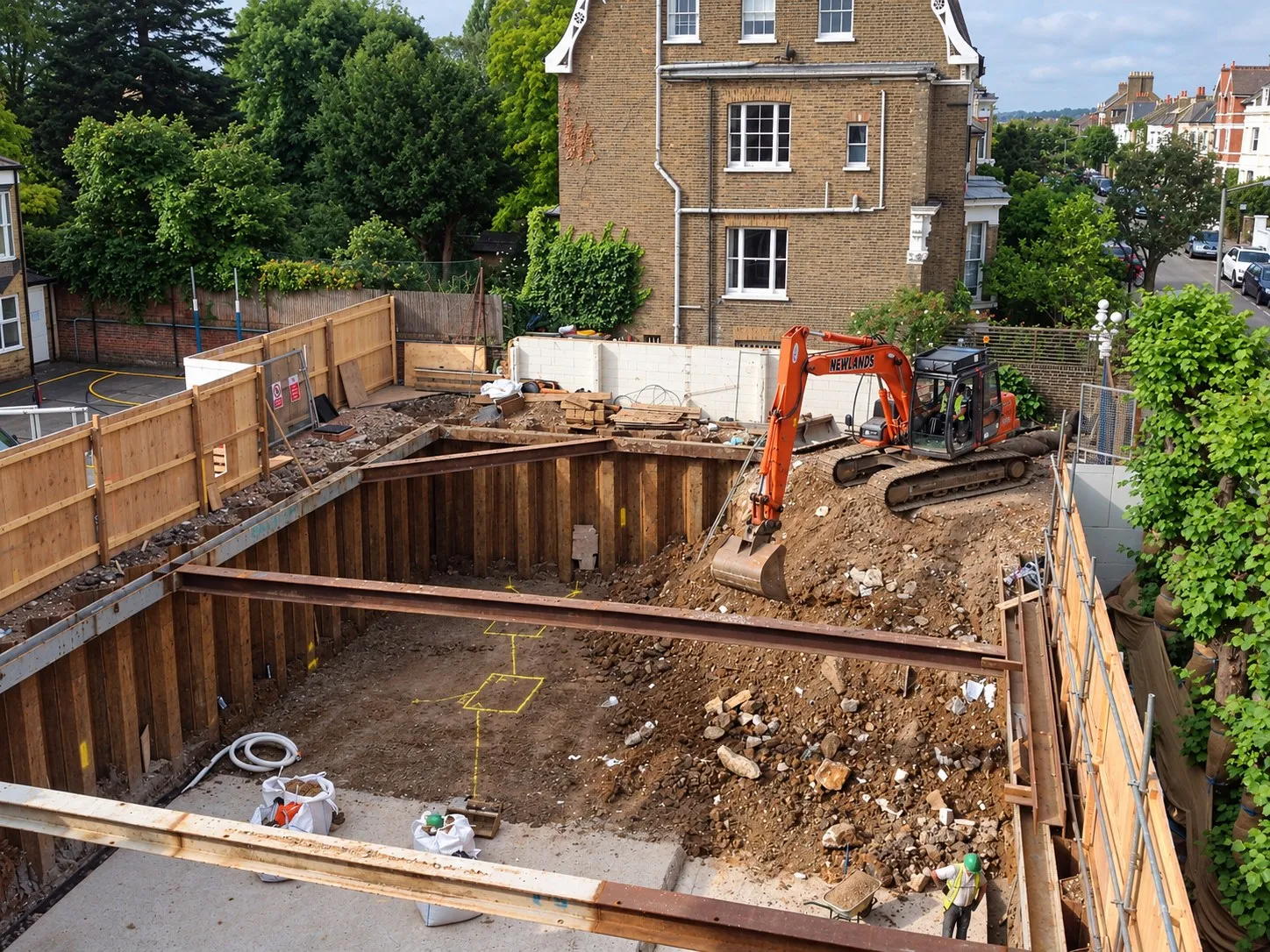
On London sites, the costs that catch appraisals out are rarely the obvious ones. Basements, party walls, access for a constrained site, utility connections, and the building safety requirements on taller schemes all belong in the budget from the first version.
3. Contingency
An allowance for the unknown, because there's always some. The less surveyed and designed the scheme, the bigger it needs to be.
4. Professional fees
Architects, engineers, planning consultants, surveyors, project management and the rest. Usually estimated as a percentage of build cost at early stages.
5. Planning obligations
What the council takes or requires as a condition of consent:
- Community Infrastructure Levy (CIL): a charge per square metre of new floorspace. In London there's a Mayoral CIL on top of the borough's own.
- Section 106 obligations: affordable housing, plus contributions and works the scheme needs (highways, carbon offsetting, local training).
Affordable housing is often the single largest planning cost on schemes of ten or more homes, which is why it sits at the centre of London viability debates.
6. Sales and marketing
Agents' fees, marketing, legal costs on each sale, and any show-flat or incentives.
7. Finance
Interest and arrangement fees on the money borrowed to buy the land and build. It depends on the programme as much as the rate: a scheme that takes six months longer costs six months more interest.
8. Developer's profit
The return that makes the risk worth taking, usually expressed as a percentage of GDV (or of cost). National planning guidance on viability says that, for testing local plan policies, 15–20% of GDV may be considered a suitable return to developers. Lenders and investors set their own minimums, and riskier schemes need more.
Profit isn't greed in an appraisal. It's the price of the risk. A scheme that only works with no profit doesn't work.
A worked illustration
These figures are made up to show how the arithmetic behaves. They're expressed as units of 100, not pounds, and aren't a guide to any real costs.
| Line | Base case | GDV falls 5% | Build costs rise 10% |
|---|---|---|---|
| GDV | 100 | 95 | 100 |
| Build costs, including contingency | 50 | 50 | 55 |
| Fees, planning obligations, sales and finance | 17 | 17 | 17 |
| Developer's profit (17% of GDV) | 17 | 16.2 | 17 |
| Residual land value | 16 | 11.8 | 11 |
| Change in land value | −26% | −31% |
Look at the last row. A 5% fall in sales values takes about a quarter off the land value. A 10% rise in build costs takes nearly a third. That's the gearing in every development appraisal: the land value is what's left over, so it absorbs every error elsewhere.
It's also why landowners and developers so often disagree on price. They're usually not arguing about the land. They're arguing about GDV and build cost.
Residual value, hope value and benchmark land value
Three terms that get mixed up:
- Residual land value is what the appraisal says the land is worth for a particular scheme with planning.
- Hope value is what a buyer pays for land that might get permission, less than the residual because the risk of refusal is priced in. See land value uplift.
- Benchmark land value is used in planning viability. National guidance builds it from the land's existing use value plus a premium for the landowner. If a scheme's residual value falls below that benchmark, the council may accept less affordable housing.
In London, schemes that meet the affordable housing threshold can take a fast-track route without a viability assessment. Under a temporary measure announced in March 2026, schemes on private land that provide at least 20% affordable housing (by habitable room, with at least 60% of it social rent) can use that route if their applications are validated by 31 March 2028.
Seven common appraisal mistakes
- GDV from asking prices, not achieved sales.
- Build cost from a generic rate, with no allowance for the site's real constraints.
- No contingency, or a token one on an unsurveyed building.
- CIL and Section 106 forgotten or under-estimated.
- The programme too short, so finance looks cheaper than it will be.
- Profit squeezed to make the land value work.
- One scheme tested, when a different mix or one more floor could change everything.
Appraisal, feasibility study and valuation: what's the difference?
- A development appraisal is the financial model above.
- A feasibility study wraps it in the evidence: planning context, design options tested against policy, and costs for each, so the appraisal rests on a scheme that could actually be consented and built.
- A valuation for a lender or a sale is a formal opinion of value by a registered valuer, done to professional valuation standards. An appraisal informs decisions; a valuation is what a bank will lend against.
At Allitsen Road in St John's Wood, our team developed four design options for a vacant corner building in a conservation area, and the answer ranged from four apartments up to seven. Each option has a different GDV, a different build cost and so a different land value. That's what a feasibility study adds to an appraisal: the right scheme to appraise. Read the Allitsen Road study.
How we appraise sites
We build as well as appraise, so our build costs come from our own construction team, priced unit by unit rather than from a generic rate. That's the line most appraisals get wrong. Our development feasibility study and site appraisal starts with a free first look and, if it's worth going further, tests design options, costs and value side by side.
We take development schemes from £3M to £150M GDV. If you're deciding whether to sell, read how to sell land to a developer.