Development Management Fees Explained: How Development Managers Get Paid
Development managers are paid in one of five ways: a fixed fee, a percentage of the scheme's cost or value, a monthly retainer, a success fee tied to milestones such as planning, or a share of the profit on top of a lower base fee. Many appointments combine two of these, and the structure matters more than the headline number because it decides what the development manager is rewarded for.
A development manager runs a property scheme on behalf of the owner: appraisal, planning strategy, the design team, funding support, procurement, construction oversight and the exit. The owner keeps the land and the decisions. The development manager does the running. How that work is paid for shapes the relationship for years, so it is worth understanding before any appointment is signed.
This guide explains the common structures across the UK market, what is normally included, the costs that sit outside the fee and the questions to ask. It does not quote rates: fee levels vary with the size, complexity and risk of each scheme, and any figure without that context would mislead.
The five fee structures
| Structure | How it works | Rewards the DM for | Watch out for |
|---|---|---|---|
| Fixed fee | An agreed sum for a defined scope, often paid in stages | Delivering the agreed scope | Scope creep and extra-fee claims if the scheme changes |
| Percentage fee | A percentage of construction cost, total development cost or GDV | The size of the scheme | A fee that grows as costs grow |
| Retainer | A monthly fee for as long as the appointment lasts | Time spent | Long programmes cost more; little link to results |
| Success fee | Payment on milestones, such as a planning consent or practical completion | Hitting the milestone | What counts as success must be defined precisely |
| Base fee plus profit share | A lower fee plus a share of profit above an agreed hurdle | The scheme's final result | The waterfall and the hurdle need careful drafting |
Fixed fee
The cleanest structure for an owner who knows what it wants. The development manager prices a defined scope, often in stages that match the scheme: appraisal, planning, procurement, construction, handover. The risk is that schemes rarely stay still. The appointment needs a clear way to deal with changes in scope.
Percentage fee
Common and easy to understand. The important detail is what the percentage is applied to. A percentage of construction cost rewards a bigger build. A percentage of total development cost includes land and fees. A percentage of gross development value rewards the finished value. Each produces a very different number on the same scheme, and only the last one links the fee to the outcome the owner cares about.
Retainer
Suits ongoing advice, an owner with several assets, or the early stage when the shape of the scheme is not yet known. On a long scheme it can add up, so it is often switched to a fixed or percentage fee once the scheme is defined.
Success fee
Ties part of the fee to a result, most often a planning consent. It aligns interests at the stage where risk is highest. The appointment must state what success means: an outline or detailed consent, with or without a signed Section 106 agreement, and whether a consent that is later challenged still counts.
Base fee plus profit share
The development manager accepts a lower fee in exchange for a share of the profit above an agreed return to the owner, sometimes called a promote. It is the closest structure to a partnership and needs the most careful drafting: the hurdle, the order of payments and what happens if the scheme is sold early. Our guide to joint venture agreement key terms covers the same mechanics.
What a development management fee normally covers
The fee pays for the development manager's own time and expertise. Typically that includes:
- Preparing and updating the development appraisal and the business plan.
- Setting the planning strategy and managing the application to a decision.
- Appointing, briefing and coordinating the design team.
- Supporting the owner's funding applications and dealing with lenders.
- Running procurement and recommending the build contract.
- Overseeing construction: cost, programme, quality and changes.
- Reporting to the owner each month.
- Managing handover, sales or letting agents and the exit.
The costs that sit outside the fee
This is where owners are most often surprised. The development manager's fee rarely includes:
- Other consultants: architect, planning consultant, engineers, cost consultant, surveyors, the principal designer.
- Statutory fees: the planning application fee, building control or Building Safety Regulator charges, the Community Infrastructure Levy and Section 106 obligations.
- Surveys and reports: measured, topographical, ground, asbestos, ecology, daylight, transport.
- Legal and agency fees: purchase, funding documents, sale or letting.
- The construction contract itself.
- VAT on all of the above where it applies. Take tax advice on what can be recovered.
Ask for a single schedule that lists every cost and shows who pays it.
Development manager, project manager, monitoring surveyor: who does what
These roles are often confused, and fees are easier to compare once they are separated.
- Development manager: acts for the owner across the whole scheme, from appraisal to exit, and makes recommendations on commercial decisions.
- Project manager: usually focuses on delivering the design and construction stages to time, cost and quality. See construction project management.
- Employer's agent: administers a design and build contract on the owner's behalf.
- Monitoring surveyor: acts for a lender or investor, not the owner, checking that their money is well spent. See development monitoring surveyor explained.
A full development management appointment often covers the project management role as well. Make sure you are not paying twice for the same work.
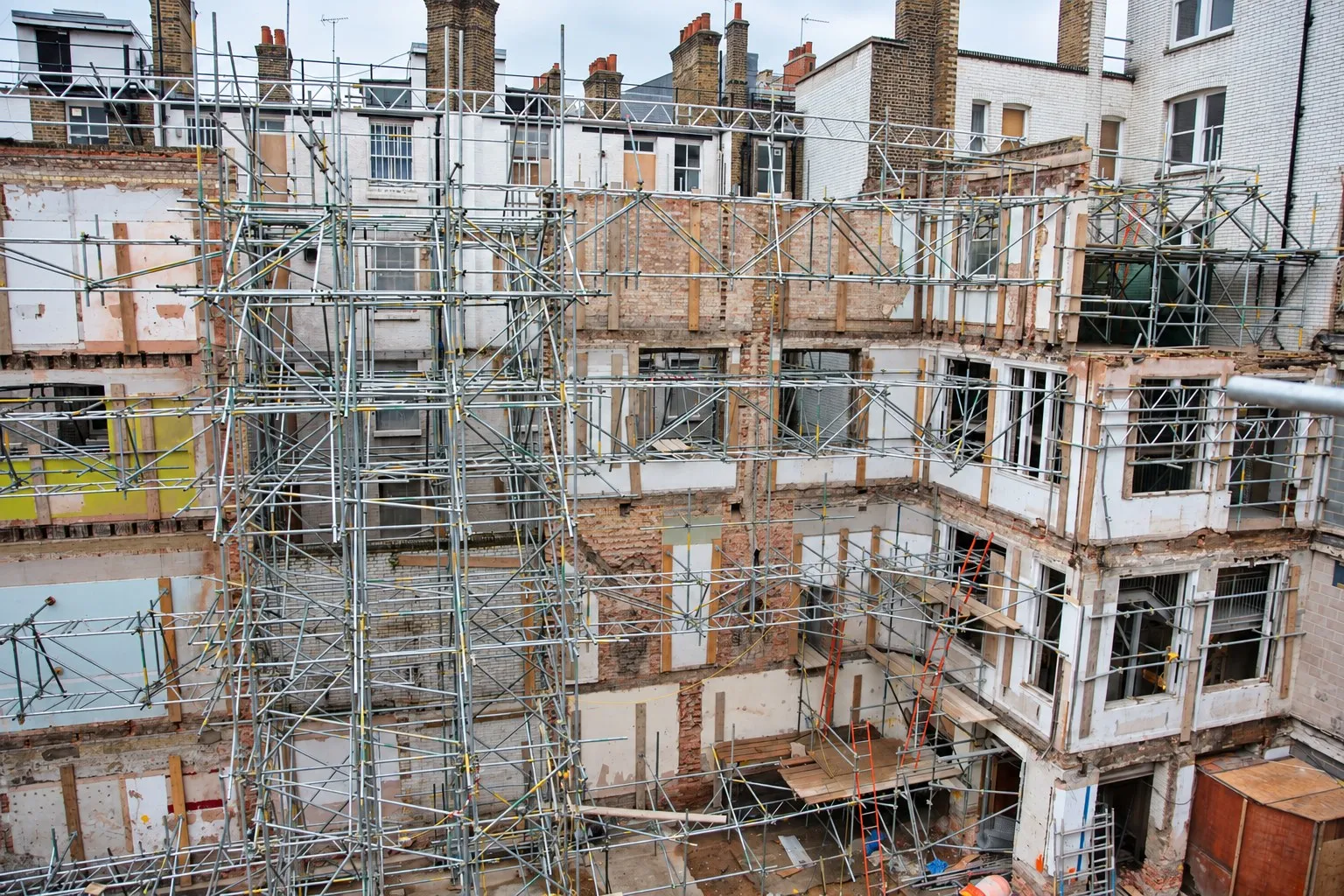
When the development manager also builds
Some firms offer development management and construction under one roof. That removes the gap between the person planning the scheme and the people building it, but it changes what the owner should ask for:
- The development management fee and the construction contract priced separately and openly, so each can be checked.
- Open-book costing, so the owner can see what the build costs.
- Independent checks where a lender or investor needs them, such as a monitoring surveyor.
- A clear statement of which decisions remain the owner's.
At Craftex this is how our development management works: we run the scheme from appraisal to handover and build it as design and build contractor, with the construction contract priced separately. We agree the fee basis with each owner at the start, because the right structure depends on the scheme and the stage. Depending on the stage, we can also co-invest or take a percentage rather than a fee.
Questions to ask before you sign
- What exactly is in the scope, and what is excluded?
- What is the fee applied to, and how will it change if the scheme changes?
- Which other consultants will I need to appoint and pay?
- What does the success fee depend on, precisely?
- If there is a profit share, what is the hurdle and the order of payments?
- Who is the named person running my scheme, and how much of their time will it get?
- How and when can either side end the appointment, and what is paid if it ends early?
- Does the development manager receive any other payment from the scheme, such as commission from consultants or contractors?