Development Finance Explained: How a Property Scheme Gets Funded
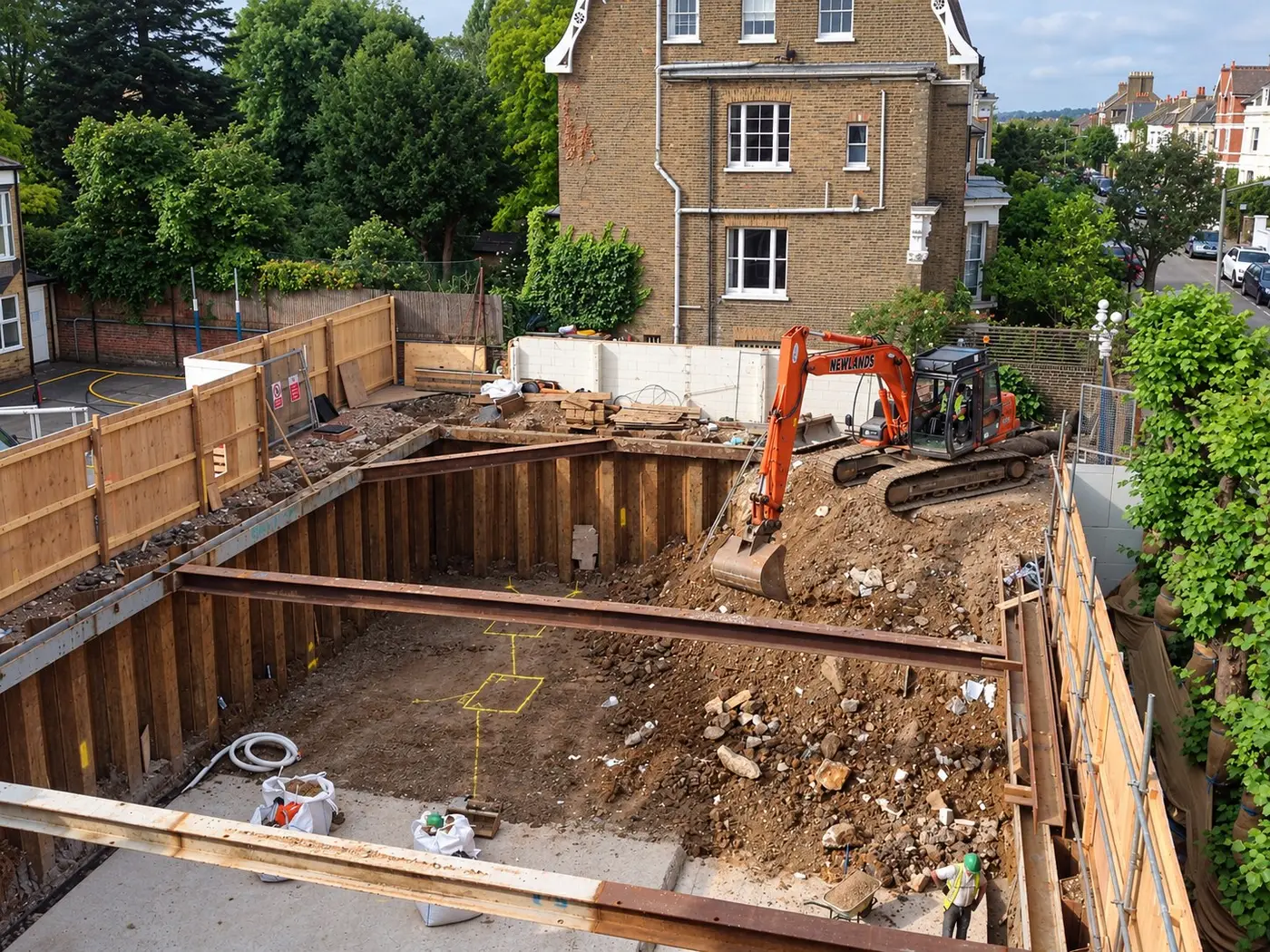
Short answer: development finance is a short-term loan that pays for building a property scheme, released in stages as the work is done and repaid from the sale or refinancing of the finished building. It usually sits alongside the developer's own equity, and sometimes a second, more expensive layer of debt, so the total cost of the scheme is covered from land purchase to completion.
Development finance is not a mortgage. A mortgage lends against a building that exists. A development loan lends against a building that does not exist yet, which is why the lender cares so much about who will build it, for how much, and how long it will take.
This guide explains how the layers fit together, how money is released, what a lender looks at and what the contractor has to provide. It is general information, not financial advice. Rates, fees and lending limits change with the market and with each lender, so this guide describes how the pieces work rather than quoting them.
The capital stack in one picture
Every scheme is paid for by a stack of money. The layers are repaid in order, from the top down, and the higher the risk of a layer, the more it costs.
| Layer | Who provides it | Repaid | Risk to the provider | Cost to the developer |
|---|---|---|---|---|
| Senior debt | Banks, specialist lenders, debt funds | First | Lowest | Lowest |
| Stretch senior | Specialist lenders | First, as one larger loan | Higher than senior | Higher than senior |
| Mezzanine | Specialist lenders, private capital | After senior debt | Higher | Higher |
| Preferred equity | Investors | After all debt, before ordinary equity | High | High, often with a share of profit |
| Equity | The developer and partners | Last | Highest | Shares the profit |
The total cost of the scheme normally includes the land, the build, professional fees, statutory costs such as the Community Infrastructure Levy, the cost of the finance itself, sales and letting costs, and a contingency.
The main types of finance
Senior development loan
The core loan. It is secured with a first legal charge over the site and usually covers part of the land and most or all of the build cost. Lenders size it against two measures: the loan as a share of total costs (loan to cost) and the loan as a share of the finished value (loan to gross development value, or LTGDV). The lower of the two usually wins.
Stretch senior
A single, larger senior loan that reaches higher up the stack. It saves the complexity of two lenders but costs more than a standard senior loan.
Mezzanine finance
A second loan that sits behind the senior lender, secured with a second charge or over the shares of the development company. It reduces the equity the developer must put in. The senior lender has to agree to it, and the two lenders sign an agreement setting out who gets paid first and who can step in if things go wrong.
Equity
The developer's own money, or money from partners such as a family office or a joint venture investor. It goes in first and comes out last. Equity is what makes a lender comfortable: it shows the developer has something to lose. Our guide to joint venture agreement key terms covers how equity partners share profit and control.
Bridging loan
A short-term loan used to buy a site quickly, often before planning permission, or to fund light works. It is usually refinanced into a development loan once consent is granted.
Development exit finance
A loan taken at or near completion to repay the development loan, giving the developer more time to sell or let without paying development loan costs.
How the money is released
A development loan is not paid out in one sum. The usual pattern:
- Day one. Part of the land price is funded at completion of the purchase, if the lender funds land at all. The developer's equity typically goes in first.
- Monthly drawdowns. Each month the contractor values the work done. The lender's monitoring surveyor visits the site, checks the work and the costs, and recommends a drawdown. The lender then releases the money.
- Interest. On many development loans the interest is rolled up and paid at the end rather than monthly, because the scheme earns nothing until it is finished.
- Repayment. On sale of the units or refinancing of the building, the lender is repaid first, with interest and fees, then any mezzanine, then the equity.
Because money arrives in arrears against work done, the contractor's valuations and the monitoring surveyor's sign-off are what keep a scheme moving. Our guide to the development monitoring surveyor explains that role in detail.
What a lender looks at before saying yes
- The appraisal. Is the gross development value backed by evidence from comparable sales or lettings? Are the costs realistic? See GDV and residual land value explained.
- Planning. Is consent granted, are the conditions manageable, and are the Section 106 and levy costs in the numbers?
- The developer's experience. Has the borrower, or the team behind it, delivered similar schemes?
- The contractor. Its track record, financial standing, insurance and the contract it will sign.
- The build contract. A fixed-price design and build contract with clear scope gives lenders the most cost certainty. Long lists of provisional sums and exclusions do the opposite.
- The programme. Realistic, with time for approvals such as the Building Safety Regulator's gateways on higher-risk residential buildings.
- The contingency. Enough to absorb the unknowns of the site, especially on refurbishment and conversion work.
- The exit. Who will buy or rent the finished scheme, and is there evidence?
What the contractor has to provide
Lenders lend against the build, so they look closely at the builder. A contractor working on a funded scheme should expect to provide:
- A priced contract with a clear scope, programme and payment schedule.
- Monthly valuations that the monitoring surveyor can check line by line.
- Insurance certificates, including public liability, employer's liability and contract works cover.
- Collateral warranties or third-party rights in favour of the lender, so the lender can rely on the contractor's obligations.
- Step-in rights, so the lender can keep the contract going if the borrower defaults.
- Regular reporting on progress, risks and changes.
Craftex holds public liability and employer's liability insurance of £10,000,000 each, with professional indemnity available on request. Our construction project management team reports cost and programme in a form funders can follow.
Regulated or unregulated?
Most development loans are made to companies for schemes that will be sold or let, and sit outside the Financial Conduct Authority's mortgage rules. A loan secured on property that the borrower or their family will live in can be regulated, with different protections and requirements. If the scheme includes a home for the borrower's own family, take advice before choosing a lender.
Common reasons funding falls over
- The appraisal values do not survive the lender's own valuation.
- The build price is not fixed, or the contractor cannot show its track record.
- Planning conditions that must be met before work starts are not cleared.
- The developer cannot fund its share of equity on day one.
- The programme has no room for approvals, utilities or the unexpected.
Most of these are avoidable if the cost, programme and design are worked out properly before the application, which is the job of a feasibility study. See our development feasibility and site appraisal service.