For anyone pricing a build in London
Why Is Construction So Expensive in the UK? Where Every Pound Goes

Sviatoslav JerdetchiiCEO & Founder of Craftex. Updated , 4 min read
The short answer
Construction is expensive in the UK because a builder's price carries far more than labour and materials: site running costs, overheads and margin, safety duties and the price of risk.
- Preliminaries, the cost of running the site, are high in London and priced by the week.
- Each layer of subcontracting adds its own overheads and margin.
- Regulation and safety duties add design checks, specialist input and time.
- An unclear brief adds a risk premium to every quote you receive.
Most clients have the same moment. The quotes come back, and every one of them is higher than expected. The natural thought is that builders are greedy.
So why is construction so expensive in the UK? Pricing building work in London is part of our own job, so we see the inside of the number. Most of it is not profit. It is labour, materials, site running costs and the price of risk.
This guide shows where the money goes, and which parts you can actually bring down. Quote higher than you expected? Book a site visit and we will price the whole job, so you can see where the cost sits.
Why construction is so expensive: four forces
Four costs drive most UK building prices. In the last few years they have all moved up at the same time.
- Labour. Skilled trades are short, and the good ones are busy.
- Materials. Some prices jumped sharply in the last 12 months.
- Site running costs. Management, scaffolding, welfare, access and safety, all priced by the week.
- Risk. Every unclear item in your brief gets a margin for the unknown.
The Federation of Master Builders asked the public in 2025. 85% said the cost of hiring a builder had gone up. They were right.
Where your build cost goes
A builder's price is not labour plus materials plus profit. It has more layers than most clients expect.
| Part of the price | What it pays for |
|---|---|
| Labour | Trades on site: their wages, travel, tools and training |
| Materials | Everything built in, plus delivery, storage and waste |
| Subcontract packages | Specialists such as M&E, steel and roofing, each with its own margin |
| Preliminaries | Site management, scaffolding, welfare, security, temporary power, skips |
| Design and compliance | Engineers, building control, fire and safety duties |
| Insurance | Contract works, public and employer's liability |
| Overheads and margin | Office, estimating, finance and the profit that keeps the firm alive |
Each layer is real cost. When one firm hands work to another, and that firm to another, each adds its own overheads and margin. That stacking is one of the hidden reasons UK building is expensive.
Around 60% of our labour is our own in-house team. We do that partly to cut out layers on the internal trades. Specialist work like M&E and steel still goes to specialists.
A lower price is not always the better buy. One office client wrote in a Google review:
"Not the cheapest quote we got, but the end result shows why…"
Preliminaries and London logistics
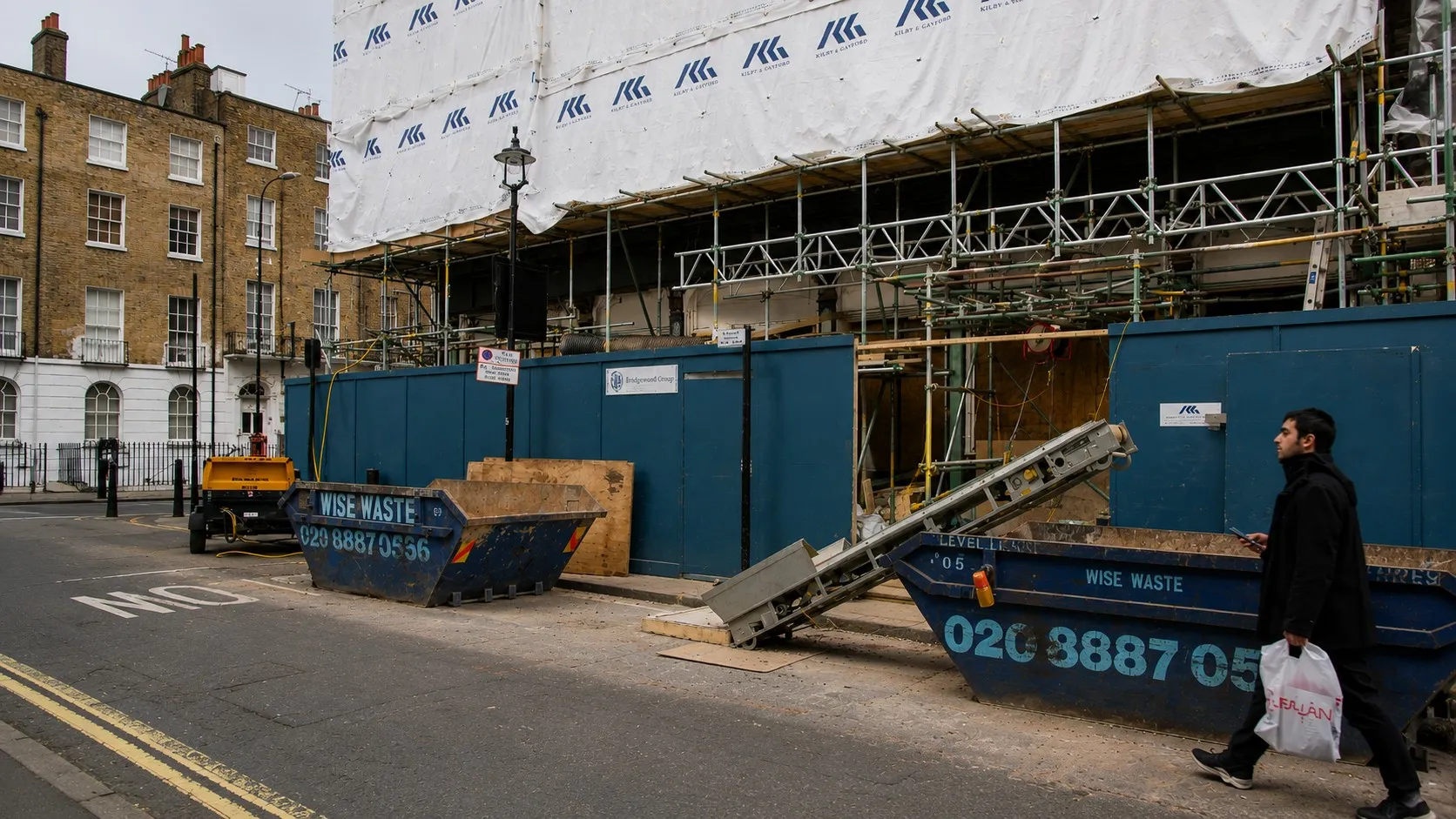
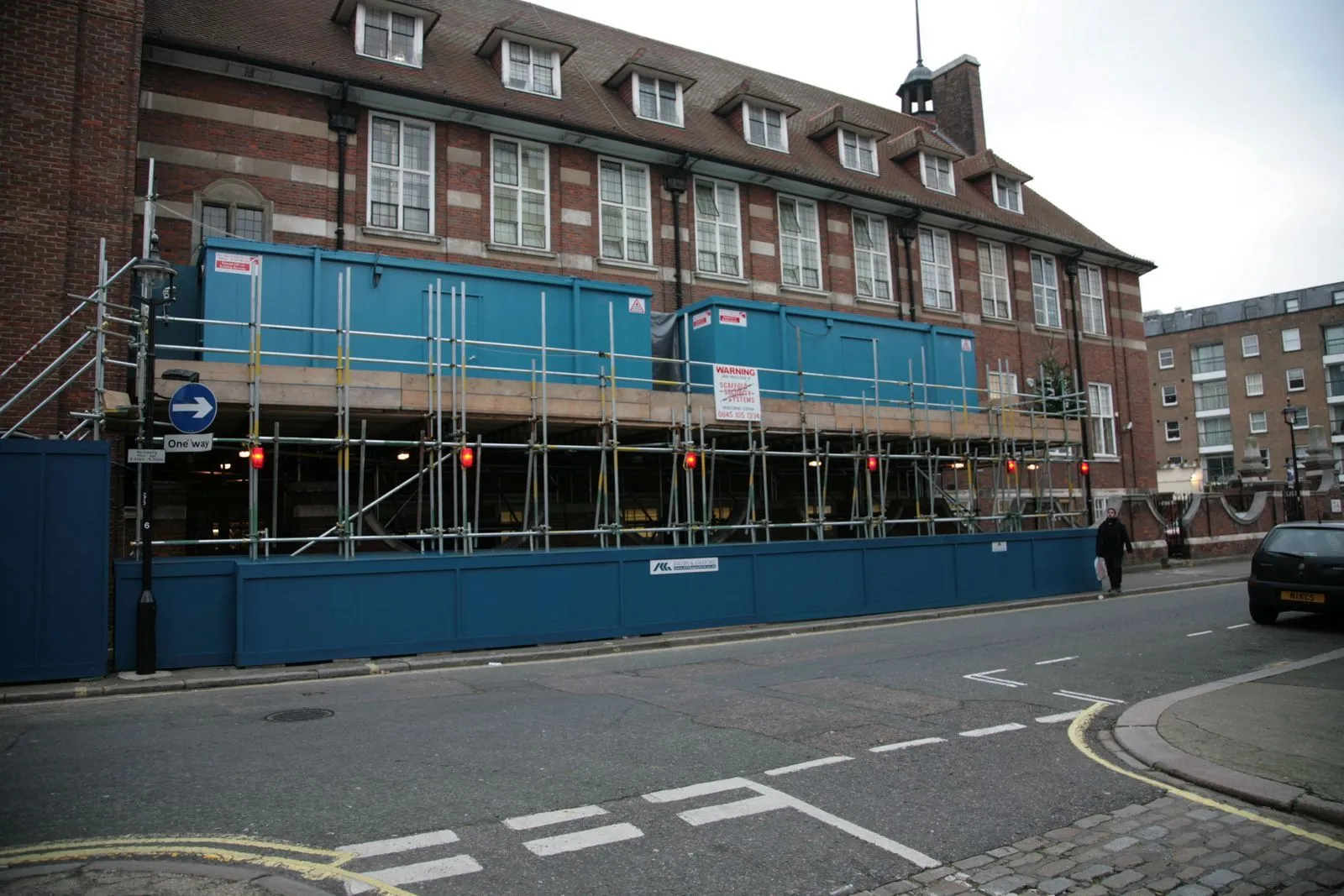
Preliminaries are the cost of running the site, not building the building. In London they are high.
- Access. Narrow streets, no parking, timed deliveries and loading bays.
- Neighbours. Party wall matters, noise limits and working hours.
- Space. Little room to store materials, so more small deliveries.
- Permits. Scaffold and hoarding licences, parking suspensions, skips.
- Plans. Many boroughs ask for a construction logistics plan before work starts.
All of this is priced by the week. A longer programme means higher preliminaries. Our guide to the construction logistics plan in London explains what boroughs ask for.
Regulation and safety duties
Building safety rules have tightened, and that is right. It also adds work and cost.
The Building Safety Act 2022 created a new regulator and new duties for higher-risk buildings. Design checks, fire safety information and sign-offs take more time and more specialist input than before.
On every job, the CDM 2015 regulations set health and safety duties for the client, the designers and the contractor. Clients have duties too, and many do not know it. Our guide to CDM 2015 client duties sets them out.
None of this is optional. A quote that leaves it out is not cheaper. It is incomplete.
Risk: the price of an unclear brief
This is the cost you control most directly.
When a contractor cannot see something, it prices the risk. Missing surveys, unfinished drawings, "client to confirm" finishes, an old building nobody has opened up. Each one adds a margin for the unknown, or a provisional sum that grows later.
Margins in the industry are thin. The biggest UK contractors averaged just over 3% pre-tax profit in 2026. And construction had more company insolvencies than any other industry in the year to August 2026. Firms that under-price risk do not last. So the careful ones price it in.
Our guide on why construction projects go over budget shows how that risk turns into overruns.
Labour, materials and what you control
Two parts of the price move with the market: labour and materials. Skilled trades are short, and some materials, such as structural steel, rose sharply in the last year. Our guide to the rising cost of construction labour and materials has the latest figures and ways to protect your budget.
The parts you control are risk and waste: a finished design, a surveyed building, a stable scope and decisions on time. Cheap is not the goal. A complete price is.
Most of a high quote is real cost, but part of it is the price of what nobody has checked yet. Quote higher than you expected? Book a site visit and get a price for the whole job, built from the building in front of us.