Construction Logistics Plans in London: What Developers Must Plan For
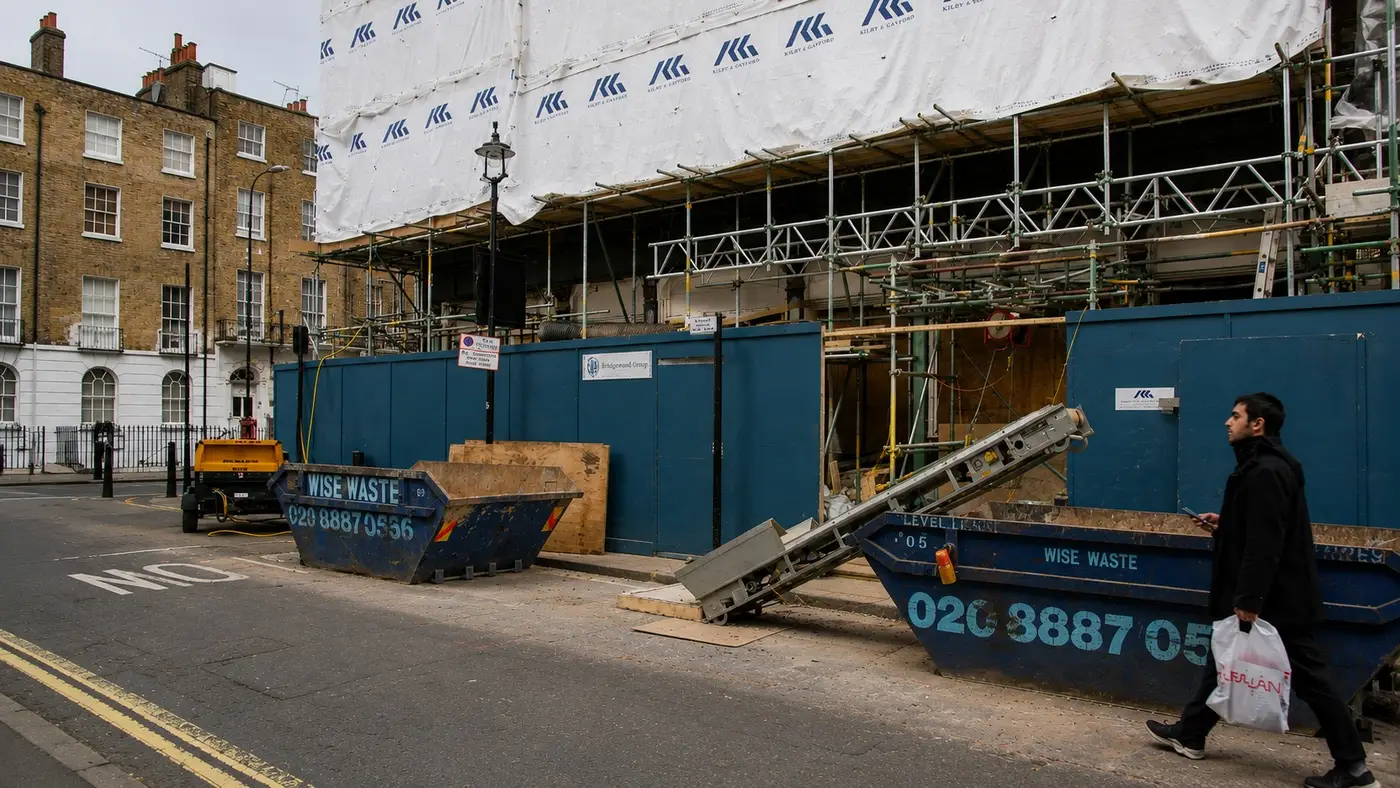
A Construction Logistics Plan (CLP) sets out how materials, waste, plant and workers will get to and from a construction site, and how the impact on the roads, neighbours and people walking and cycling will be kept down. In London, the London Plan (Policy T7) says CLPs will be required and must follow Transport for London guidance: an outline CLP goes in with the planning application, and a detailed CLP is approved before work starts, usually to discharge a planning condition.
Treat it as paperwork and it becomes the thing that stops your site. Treat it as the first programme document and it saves weeks.
Outline CLP vs detailed CLP
TfL's Construction Logistics Planning guidance (version 1.2, April 2021, adopted nationally through CLOCS) splits the plan in two.
| Outline CLP | Detailed CLP | |
|---|---|---|
| When | With the planning application | Pre-construction, at discharge of conditions |
| Who writes it | Developer and design team, often with a transport consultant | Developer with the appointed contractor |
| Level of detail | Expected activity, routes, main constraints, likely measures | Programme by phase, vehicle numbers, booking, holding areas, monitoring |
| How it binds | Commitments written into the Section 106 agreement or conditions | Approved by the council, then implemented and monitored on site |
| Status | Fixed with the permission | A living document, reviewed before each new phase |
Medium and higher impact developments need both. Smaller schemes often cover logistics in the Transport Assessment, but a council can still ask for a detailed CLP where the site has specific problems: a narrow street, a school next door, a bus route or a red route.
What a CLP has to contain
The TfL guidance gives a structure that most London boroughs expect to see:
- Introduction. The developer, the site, who wrote and approved the plan, and its objectives.
- Context and constraints. Planning policy, local access, community considerations and scaled maps of the site and surroundings.
- Programme and method. The construction phases, from demolition and enabling works to fit-out.
- Routing and site access. Strategic and local routes, roads to avoid, and site plans showing gates, loading and holding areas.
- Measures to reduce impact. Each one labelled as committed, proposed or considered.
- Vehicle movements. Estimated trips by phase, with holding and unloading capacity.
- Implementation, monitoring and updates. Who checks compliance, what is recorded and how the plan changes.
The measures are where the plan earns its keep: delivery booking systems, consolidation centres, off-peak deliveries, holding areas off the street, shared deliveries with neighbouring sites, and using rail or water where the site allows it. Policy T7 asks development proposals to consider rail and water for materials, and to keep safe access for people walking and cycling at all times during construction.
The London rules your logistics plan must respect
CLOCS and FORS
The CLOCS Standard (Construction Logistics and Community Safety) covers how sites, vehicles and drivers are managed to reduce road risk. CLPs normally commit the developer to require CLOCS compliance through procurement, typically with fleet operators holding FORS Silver accreditation. Write it into the building contract, or it won't happen.
Direct Vision Standard and HGV Safety Permit
Since 28 October 2024, any HGV over 12 tonnes driving in Greater London needs an HGV Safety Permit, which requires a Direct Vision Standard rating of three stars or the fitting of the Progressive Safe System. Operators running a vehicle without a valid permit face a penalty charge of up to £550. Your suppliers' fleets, not just your contractor's, must comply.
Non-Road Mobile Machinery (NRMM)
London has its own emission standards for construction plant with engines between 37 kW and 560 kW. Under the Mayor's NRMM rules:
| Date | Standard |
|---|---|
| From 1 January 2025 | Stage IV throughout Greater London |
| From 1 January 2030 | Stage V throughout Greater London |
| From 1 January 2040 | Zero-emission machinery only |
Constant-speed engines, such as generators, already need to meet Stage V across London. Most sites must register all in-scope machinery on the online NRMM Register, which is also the only route for exemptions. Check the plant list before the site set-up is priced, because hiring compliant machinery late is expensive.
Highways licences
Hoardings, scaffolding, skips, materials on the pavement, crane oversail and parking bay suspensions each need permission from the highway authority or the owner of the airspace. On a borough road that's the council; on a red route it's TfL. Build their lead times into the programme. Crane oversail over a neighbour's land needs their agreement, usually by licence, separately from any party wall procedure.
Why the CLP is a cost and programme document
Every line in a CLP has a price. A delivery window of 9.30 to 3.30 means fewer drops per day. A ban on waiting vehicles means a holding area or a consolidation centre. A narrow gate means smaller loads and more trips. A requirement for a banksman at every movement means labour on the preliminaries.
That's why the outline CLP written for planning should be tested by someone who will actually build the scheme. A plan that promises the council an impossible delivery regime gets written into the Section 106 agreement, and the contractor inherits it. Bringing the builder in at that stage is what a pre-construction services agreement is for.
What good London logistics looks like on site
We've delivered work where the neighbours never stopped trading, and the logistics plan is what made it possible.
- At Portsoken House in Aldgate the rest of the building stayed let, so the reception was rebuilt at nights and at weekends and the other tenants were never interrupted.
- On Savile Row, we refitted Drake's flagship store over 12 weeks while it stayed open, with every delivery and work schedule planned around trading.
- On Herbert Crescent in Knightsbridge, a 450 m² prime residential refurbishment, we controlled noise and access and protected the neighbours and the building throughout the 32-week programme.
The common thread: the access, delivery and noise plan was agreed before work started, and someone on site owned it every day.
Developer's CLP checklist
- Outline CLP drafted with input from someone who will build the scheme.
- Delivery hours, holding areas and vehicle sizes tested against the programme.
- CLOCS compliance and FORS Silver written into the building contract.
- Every supplier's HGVs checked for the Direct Vision permit.
- Plant list checked against London NRMM standards, and the site registered.
- Highways licences and parking suspensions in the programme with their lead times.
- Crane oversail and scaffold licences agreed with neighbours.
- Monitoring: who records vehicle movements, complaints and breaches.
- Detailed CLP updated before each new phase.
On our design and build projects, and where we run construction project management for a client, the logistics plan is written alongside the programme and priced into it. For schemes still at land stage, our development management team tests access and logistics in the first appraisal, before the scheme is fixed.
Planning a development on a tight London site? Send us the address. We'll look at the site, the access and what it will take to build.
Get my free site appraisalDownload the free Investor & Developer guide