Class E Use Class Explained: What It Covers and What It Doesn't
Class E is the "Commercial, Business and Service" use class in England. It groups shops, cafés and restaurants, offices, professional services, gyms, clinics, nurseries and light industry into one class, so a building can move between any of those uses without planning permission.
That flexibility is real, but it has edges. Pubs, takeaways and cinemas sit outside it. A planning condition can switch it off. And moving from Class E to homes is a different question altogether.
What Class E includes
Class E was created on 1 September 2020, when the Use Classes Order was rewritten. It replaced the old A1, A2, A3, B1 and parts of D1 and D2. The legislation splits it into lettered parts, and you will see these on decision notices and leases:
| Part | Use (principally to visiting members of the public, unless stated) | Typical London examples | Old class |
|---|---|---|---|
| E(a) | Display or retail sale of goods, other than hot food | Shops, showrooms | A1 |
| E(b) | Sale of food and drink mostly consumed on the premises | Cafés, restaurants | A3 |
| E(c)(i) | Financial services | Bank branches | A2 |
| E(c)(ii) | Professional services (not health or medical) | Estate agents, solicitors' shopfronts | A2 |
| E(c)(iii) | Other services appropriate in a commercial locality | Hairdressers, beauty salons, dry cleaners | A1 / A2 |
| E(d) | Indoor sport, recreation or fitness (no motorised vehicles or firearms, not a swimming pool or skating rink) | Gyms, climbing walls, studios | D2 |
| E(e) | Medical or health services (not attached to the practitioner's home) | Clinics, dentists, physiotherapy | D1 |
| E(f) | Crèche, day nursery or day centre | Nurseries | D1 |
| E(g)(i) | Offices for operational or administrative functions | Offices of any size | B1(a) |
| E(g)(ii) | Research and development of products or processes | Labs, R&D space | B1(b) |
| E(g)(iii) | Any industrial process that can be carried out in a residential area without harming amenity | Light industrial, makers' space | B1(c) |
The E(g) uses all carry the same test: the use must be one that can be carried out in a residential area without detriment to amenity because of noise, vibration, smell, fumes, smoke, soot, ash, dust or grit.
What is not in Class E
Several common town-centre uses were deliberately left out in 2020 and became "sui generis" (a class of their own). Changing to or from them needs planning permission:
- pubs, wine bars and other drinking establishments
- hot food takeaways
- cinemas, concert halls, live music venues, dance halls and bingo halls
Other uses sit in neighbouring classes. Class F.1 covers learning and non-residential institutions such as schools, galleries, museums, libraries and places of worship. Class F.2 covers local community uses, including a small shop selling essential goods (no more than 280 m², with no similar shop within 1,000 metres), community halls, outdoor sport, swimming pools and skating rinks. Homes are in Class C3, hotels in C1, and general industry and storage in B2 and B8.
Moving between Class E uses: when you don't need planning permission
A change from one Class E use to another is not "development" under the planning Acts, so it does not need planning permission. A shop can become an office, a bank can become a clinic, and an office floor can become a gym, without an application.
A unit can also be used for more than one Class E use at once, or switch between them over time. That is useful for landlords letting to mixed operators.
But "no planning permission" does not mean "no consents". These are the ones that still apply:
| Still needed | When it bites |
|---|---|
| Planning permission for physical works | New shopfronts, extraction flues, external plant, signage that isn't covered by deemed consent, extensions. The use is free; the building work isn't. |
| Building Regulations | Fire separation, escape, ventilation, accessibility, drainage and acoustic works for the new use. Some changes also count as a material change of use for Building Regulations purposes. |
| Listed building consent | Any works that affect the character of a listed building, including internal ones. |
| Licensing | Alcohol, late-night refreshment and entertainment under the Licensing Act 2003, run by the council's licensing team, separately from planning. |
| The lease | Most commercial leases have their own user clause. Planning freedom doesn't override it. |
| Food business registration and environmental health | Restaurants, cafés and kitchens: extraction, odour and noise control. |
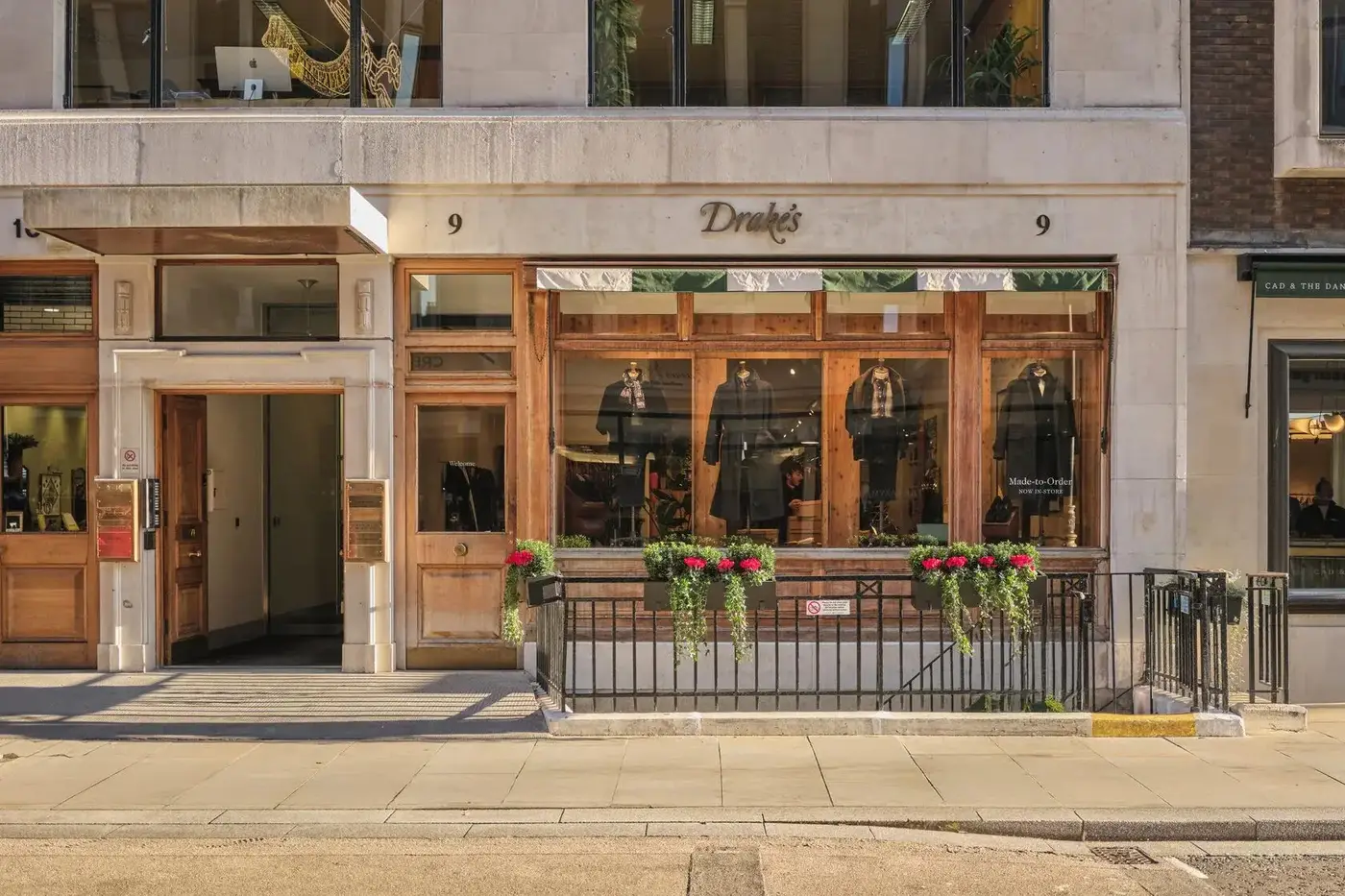
On Savile Row we refitted Drake's flagship store while it kept trading: a new shopfront, bespoke timber fixtures and new lighting in a 120 m² unit, delivered in 12 weeks. The use never changed. The works still had to be planned around consents, neighbours and a shop that couldn't close.
When Class E freedom doesn't apply
Planning conditions
A council can grant permission subject to a condition limiting the use to one part of Class E, for example "E(g)(i) office use only", or removing the freedom to change within the class. If your building has such a condition, you need permission (or a successful application to vary the condition) before changing use. Always read the original permission and every later one, not just the current lease.
Section 106 agreements
A planning obligation can restrict uses in the same way, often in larger mixed-use schemes where a council wanted to protect, say, affordable workspace or a ground-floor retail frontage. Obligations run with the land.
Uses that never became Class E
If the lawful use is a pub or a takeaway, Class E flexibility doesn't apply at all. A former pub needs planning permission to become offices or shops, and London councils often protect pubs through local plan policy.
Proving the lawful use
The freedom only helps if the current use really is a Class E use. If the history is unclear, a certificate of lawful development (existing use) is the formal way to establish it. In England, most breaches of planning control now become immune from enforcement after ten years of continuous use.
Class E to residential: a separate question
Turning a Class E building into homes is a change of use outside the class, so it always needs either planning permission or prior approval under permitted development (Class MA). The two routes have very different tests:
- Permitted development (Class MA): a prior approval application to the council, which looks at a fixed list of matters such as transport, contamination, flooding, noise, natural light and, in conservation areas, the loss of ground-floor commercial use. The use must have been Class E for at least two continuous years. Article 4 directions remove the right in many parts of central London. Our permitted development and prior approval team checks this first.
- Full planning permission: the whole development plan applies, including London Plan housing standards and, on bigger schemes, affordable housing. Our change of use service covers this route.
Every new home created through either route has to meet minimum space standards. We explain those in our guide to nationally described space standards for flats.
Practical checks before you buy or re-let a Class E building
- Read every planning permission on the site, including conditions limiting uses or hours. Councils publish decision notices on their planning registers.
- Check for Section 106 agreements and any restrictions they carry.
- Confirm the lawful use from the planning history, business rates records and evidence of occupation.
- Check the Article 4 map for the exact address if residential conversion is part of the plan.
- Match the building to the use: floor loading for a gym, extraction routes for a restaurant, drainage for a clinic, ceiling heights and daylight for offices.
- Separate use from works: list every external change and check which needs permission or listed building consent.
- Price the fit-out against the new use, not the old one. A shop-to-clinic change can need far more mechanical and drainage work than the use class suggests.
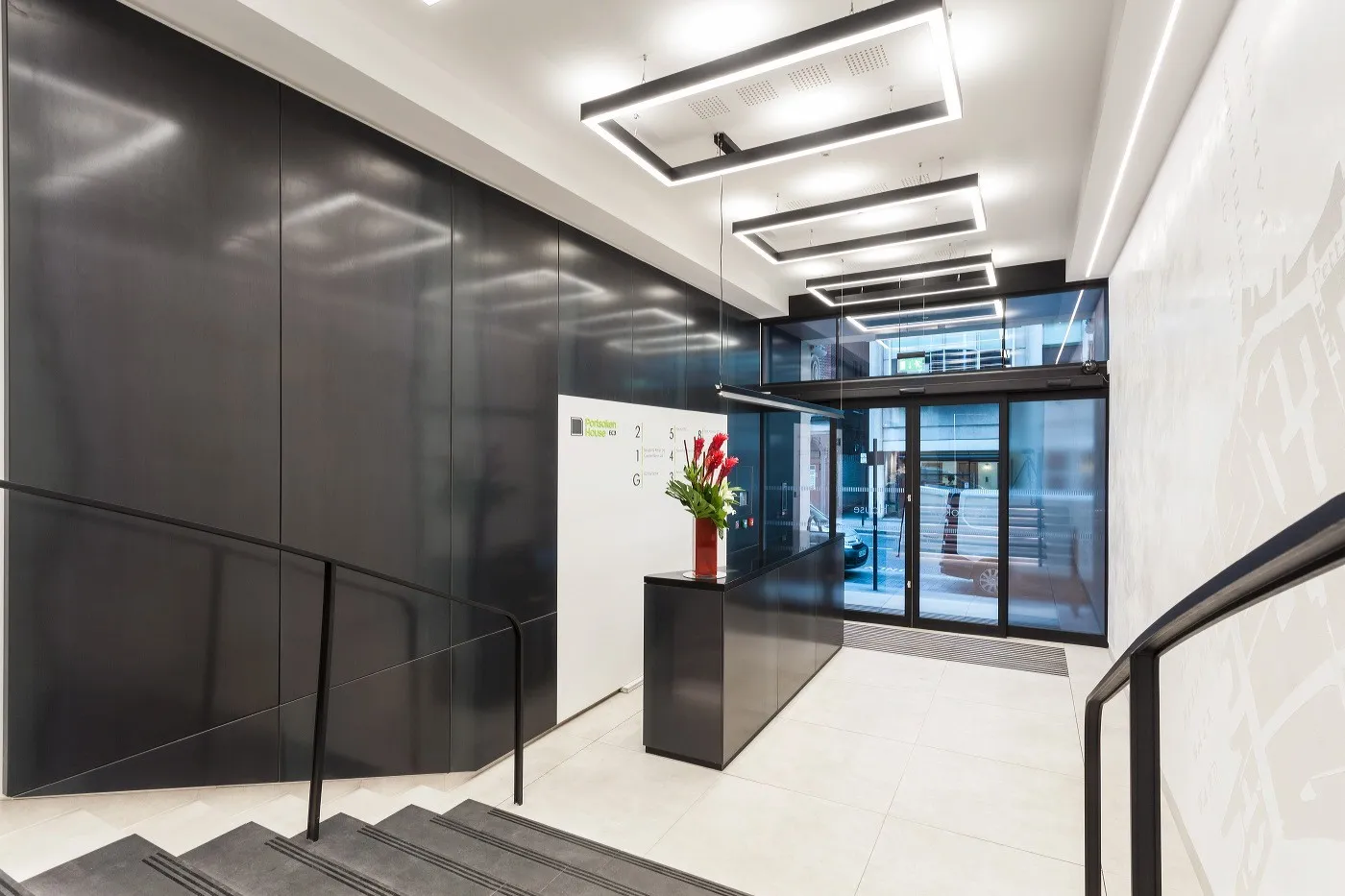
At Portsoken House in Aldgate we turned a former warehouse into 1,550 m² of offices over seven months while the rest of the building stayed let, working nights and weekends. Change of use and occupied buildings go together in London more often than not.
Thinking about changing a building's use, or converting it to homes? Send us the address. We'll check the planning history and tell you which route it is likely to take.
Submit your building for a free appraisal
For the wider picture on reusing commercial buildings, read the future of commercial to residential conversions in London.