Pre-Construction Services Agreement (PCSA): A Developer's Guide
A pre-construction services agreement (PCSA) is a short contract that pays a main contractor to help develop the design, programme and price of a project before the building contract is signed. It is the first stage of a two-stage tender: you appoint the contractor early on agreed overheads, profit and preliminaries, then fix the full contract sum once the design and the subcontract packages have been priced.
For a developer, the point is simple. You buy the builder's knowledge while it can still change the scheme, instead of paying for it later in variations and delay.
How a PCSA fits into a two-stage tender
A traditional single-stage tender asks contractors to price a finished design. That works when the design really is finished. On most London development schemes it isn't: basements, party walls, façade retention, utilities and building control approvals all carry unknowns that only a builder will price honestly.
Two-stage procurement splits the job:
| Stage one (PCSA) | Stage two (building contract) | |
|---|---|---|
| What is agreed | Contractor's overheads and profit percentage, preliminaries (or their basis), the fee for pre-construction services, the programme to reach a contract sum | The full contract sum, programme and risk allocation for the works |
| Contract | A PCSA (the JCT publishes a standard form) or a bespoke agreement | A build contract, often design and build |
| Design status | Developing: concept to technical design | Technical design complete enough to price, with defined contractor's design portions |
| How the price is built | Open book: subcontract packages tendered with you and your cost consultant | Agreed from the stage one tenders |
| Your exit | You can usually stop after stage one and pay only the PCSA fee | Committed to build |
The JCT form is widely used. Many developers write their own instead, or amend the JCT version heavily. Either way, the same few clauses decide whether the agreement protects you.
What a pre-construction services agreement should deliver
The services schedule is the heart of the agreement. If it says "provide pre-construction advice", you have bought nothing you can enforce. Ask for named outputs, with dates.
A useful schedule for a London residential or mixed-use scheme usually includes:
- Buildability reviews of the architect's and engineer's drawings at agreed design stages, with written comments.
- A construction programme that reaches from start on site to completion, with the logistics plan that makes it possible (crane, hoist, deliveries, road closures).
- A cost plan the contractor stands behind, updated at each design stage and reconciled against your own consultant's numbers.
- Subcontract package tenders run open book: shortlist, tender documents, returns and a recommendation for each package.
- Surveys and investigations the contractor commissions or manages: ground investigation, utilities, asbestos, structural opening-up, condition surveys of neighbouring buildings.
- A risk register with owners, costs and the decision each risk needs.
- Input to statutory approvals: building control, the fire strategy, party wall notices, highways licences and the construction logistics plan your council will ask for.
- A stage two proposal: the contract sum, programme, clarifications and exclusions.
That list is longer than many contractors offer. It is also what turns a PCSA from a goodwill exercise into a priced plan.
The terms that matter most
The fee and how it is earned
PCSA fees are paid as a lump sum, a monthly amount or against milestones. Milestones tied to outputs (programme issued, packages tendered, stage two proposal submitted) keep both sides honest. Agree whether the fee is credited against the contract sum if stage two goes ahead. Some contractors offer that; many don't.
Overheads, profit and preliminaries
These are the numbers you are buying certainty on in stage one. Fix the overheads and profit percentage. Fix the preliminaries as a schedule of items with rates, not as a single line, so that a longer programme at stage two can be checked line by line.
Design responsibility
Under a PCSA the contractor comments on design. It should not quietly become responsible for design it never produced. Equally, if the contractor does produce design (temporary works, a basement sequence, a cladding package), the agreement must say so, with the standard of care and professional indemnity cover that goes with it.
Who owns the work product
You need a licence to use everything the contractor produces (programmes, surveys, logistics plans, package tender documents) whether or not you proceed. Without it, walking away at stage two means starting again.
Exit and no obligation to proceed
The agreement should say clearly that you are not obliged to award stage two, and what you pay if you stop. It should also say what happens if stage two simply drifts: a long-stop date, after which either side can end the agreement.
Early works
Demolition, enabling works or a basement dig sometimes need to start before the contract sum is fixed. That is a separate instruction with its own price and scope, never something that "just starts" under the PCSA.
PCSA or letter of intent?
Letters of intent are often used to get people moving before a contract is signed. They are a different tool.
| PCSA | Letter of intent | |
|---|---|---|
| Purpose | Pays for pre-construction services: advice, programme, pricing | Authorises limited works or orders while a contract is agreed |
| Scope | Defined services schedule | Defined works, usually capped by value or time |
| Typical risk | Weak services schedule, unclear design liability | Works run on with no contract and no cap |
| Use it when | You want a contractor's input during design | A long-lead item or early works can't wait |
The common failure is a letter of intent that runs for months, covers far more than its cap, and leaves both parties arguing about what was agreed. If the contractor is going to do real work before the contract, a PCSA plus a separately priced early works instruction is cleaner.
When a PCSA is worth it, and when it isn't
Worth it when the scheme has real construction risk: basements, retained façades, tight urban sites, occupied neighbours, conversions of existing buildings where nobody knows what's behind the plaster, or higher-risk residential buildings that need the Building Safety Regulator's approval before work starts.
Less useful when the design is complete, the building is simple and the market has plenty of contractors who will price it competitively in one stage.
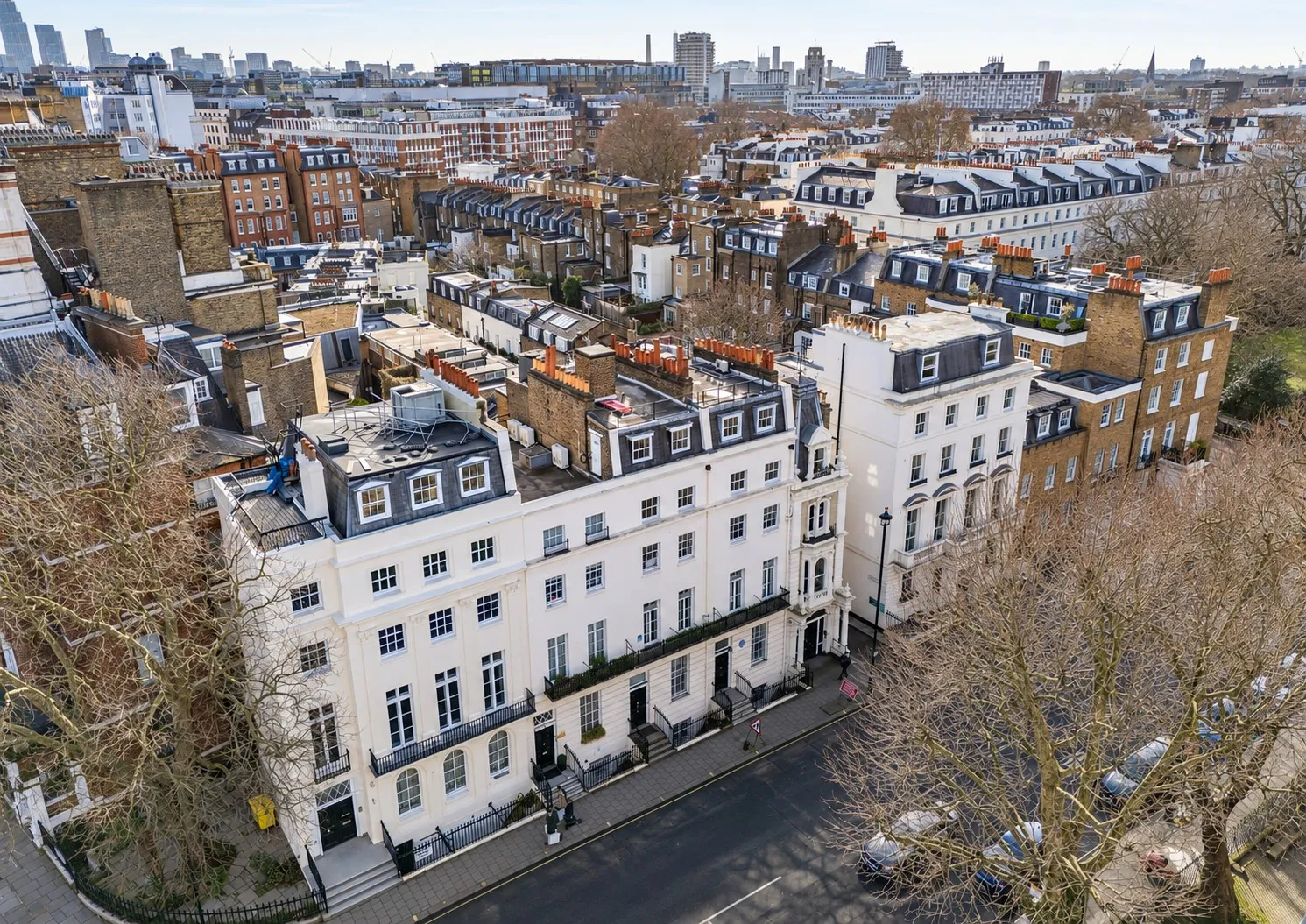
We saw why early builder input matters on Slingsby Place in Covent Garden. The project took a building back to its shell behind retained façades, with a tower crane erected inside the footprint and neighbours on every side. The works were led by Martin Hickey, now Craftex's Preconstruction Director, as Project Director from start to finish. The temporary works design for the façade retention was signed off before demolition. Decisions of that kind only get made in time when a contractor is at the table during design.
Pre-Construction at Craftex
We use the term carefully. At Craftex, Pre-Construction means RIBA Stage 4 technical design: the stage where the design is developed to the level a building can be priced and built from. Earlier advice (whether a site works, what it could hold, how long it could take) sits in a development feasibility and site appraisal.
Because design and construction are under one roof, the team that prices the scheme is the team that builds it. On a design and build route, that removes the gap between what was drawn and what was priced. If you already have a design team, our construction project management service can run the two-stage process on your side.
A checklist before you sign
- The services schedule lists outputs and dates, not general advice.
- Overheads and profit are fixed as percentages; preliminaries are itemised.
- The fee basis, payment triggers and any credit against stage two are written down.
- Design responsibility is clear for each party, with PI cover where the contractor designs.
- You have a licence to use all work product if you don't proceed.
- There's no obligation to award stage two, and there's a long-stop date.
- Open-book tendering of packages is described: who sees the returns, how they're compared.
- Early works, if any, are instructed separately with their own price.
For the bigger picture of how a project moves from brief to completion, read our construction project planning guide. If your scheme includes taller residential floors, our guide to Gateway 2 and the second staircase rule explains the approval periods to build into the stage one programme.