Development Monitoring Surveyor Explained: What They Check and Why It Matters
A development monitoring surveyor is an independent construction professional appointed by a lender or investor to protect its money on a building project. Before funding, they review the scheme's costs, programme, contracts and risks; during the build, they visit the site each month, check the work and the costs, and tell the funder how much it is safe to release.
The role goes by several names: monitoring surveyor, project monitor, lender's monitoring surveyor, funder's monitor. The job is the same. The monitoring surveyor works for the funder, not for the developer, even though the developer usually pays the fee. That independence is what makes the role useful.
This guide explains what the monitoring surveyor does at each stage, what they will ask the developer and the contractor for, and how to keep drawdowns flowing. It is written from the contractor's side, because that is where most of the information comes from.
Who appoints a monitoring surveyor
- Development lenders, on almost every development loan. See development finance explained.
- Forward funders, who pay for a scheme during construction and own the finished building.
- Equity investors and family offices, who want independent eyes on a scheme run by a partner.
- Joint venture partners who are not running the scheme day to day.
The monitoring surveyor is different from the developer's own cost consultant, project manager or employer's agent, who act for the developer. On a well-run scheme the two sides share the same information but report to different people.
Stage 1: the initial report
Before the funder commits, the monitoring surveyor prepares an initial (or pre-funding) report. It typically reviews:
| Area | What the monitoring surveyor checks |
|---|---|
| Build cost | Is the cost plan or contract sum realistic for the scheme? Are there gaps, provisional sums or exclusions? |
| Total development cost | Are fees, statutory costs, finance and contingency all in the appraisal? |
| Programme | Is the construction period realistic? Is there time for approvals, utilities and the unexpected? |
| Planning | Is the consent in place, and which conditions must be cleared before work starts? |
| Building regulations and building safety | Is the route to approval clear? For higher-risk residential buildings, are the Building Safety Regulator's gateways in the programme? |
| Procurement and contract | Which contract form, what amendments, what security for the funder (warranties, step-in rights, bonds)? |
| The contractor | Track record, financial standing, insurance, resources |
| The professional team | Appointments, scope, professional indemnity insurance |
| Site risks | Ground, existing structures, party walls, asbestos, neighbours, access |
| Contingency | Is it enough for the type of work? |
The initial report often lists conditions that must be met before the first drawdown: signed contracts, warranties in place, certain planning conditions discharged, insurances evidenced.
Stage 2: monthly monitoring and drawdowns
During construction, the cycle usually runs every month:
- The contractor submits a valuation of the work done to date, line by line against the contract.
- The developer's cost consultant or employer's agent checks it and certifies the amount due.
- The monitoring surveyor visits the site, looks at the work, reviews the valuation, changes, programme and risks.
- The monitoring surveyor reports to the funder, recommending how much to release and flagging any concerns.
- The funder releases the money, usually to pay the certified amount.
The report usually covers progress against programme, cost against budget, the cost to complete, changes and their effect, quality concerns, health and safety observations and risks. The key question each month is simple: is there still enough money to finish the building?
Stage 3: practical completion and after
At the end of the build the monitoring surveyor confirms that practical completion has been reached, that the required certificates and sign-offs are in hand, and that the funder's documents, such as warranties, are complete. On schemes with retentions, they may also track the release of retention money at the end of the defects period.
What the contractor is asked for
Funded schemes run on information. A contractor working with a monitoring surveyor should be ready to provide, from the start:
- The full contract, with the priced schedule, programme and payment terms.
- Monthly valuations that tie back to the contract sum and show work done, materials on site and changes.
- An updated programme each month, with the critical path and any delays explained.
- A change register showing every instruction, its cost and its effect on time.
- Insurance certificates: public liability, employer's liability and contract works.
- Collateral warranties or third-party rights in favour of the funder, and step-in rights.
- Health and safety documents, including the construction phase plan required under the CDM Regulations 2015.
- Photos and site access for the monthly visit.
When this information arrives late or does not reconcile, drawdowns slow down, the contractor is paid late, and the programme suffers. A contractor that reports clearly protects the scheme's cash flow as much as the developer's.
How to keep drawdowns flowing
- Agree the reporting format at the start. The monitoring surveyor, the developer's team and the contractor should use the same cost structure.
- Submit valuations on a fixed date each month, with supporting evidence.
- Raise changes early. A change that appears for the first time in a valuation will be questioned.
- Keep the contingency visible. Show how much has been used and on what.
- Be honest about delays. A monitoring surveyor who learns about a problem from the programme trusts the team more than one who learns about it on site.
Who pays the monitoring surveyor
The developer or borrower usually pays the monitoring surveyor's fees, including the initial report and each monthly visit, even though the surveyor acts for the funder. The cost should be included in the development appraisal as part of the finance costs. Fees vary with the size and length of the scheme.
Where Craftex fits
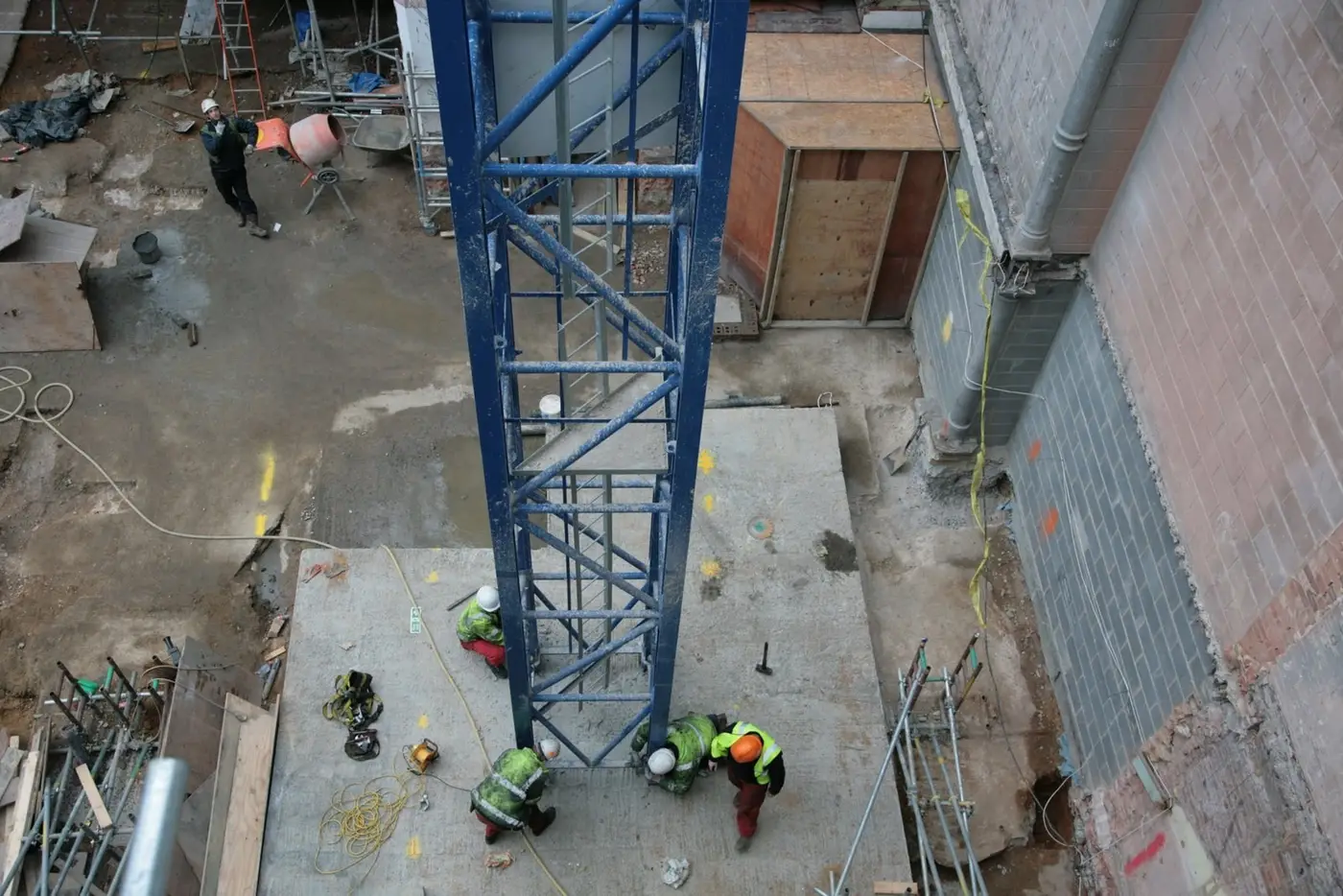
On a funded scheme, our job as contractor is to give the monitoring surveyor everything in the list above, on time and in a form that reconciles. On schemes we run as development manager, we also prepare the developer's side of the information. Our in-house construction project management team tracks every cost, supplier and milestone, and we hold public liability and employer's liability insurance of £10,000,000 each, with professional indemnity available on request. On Slingsby Place in Covent Garden, a strip-out and structural job behind retained façades led by our Preconstruction Director Martin Hickey as Project Director, the logistics had to work on one of the tightest sites in central London. See the Slingsby Place case study.