Family Office Property Development in London: How the Routes Compare

Short answer: a family office can develop property in London in four ways: buy and build through its own company, partner with a developer in a joint venture, forward-fund a scheme someone else delivers, or keep the land and appoint a development manager to run it. The right route depends on how much control the family wants, how much risk it is willing to hold, and whether it has a team of its own.
Most families that come to development already own property. They hold let buildings, a few sites bought years ago, perhaps a commercial asset that has gone quiet. Development is the step from owning buildings to making them, and it changes almost everything: the timescales, the people involved, the way money goes out before it comes back.
This guide is written from the builder-developer side of the table. It explains the routes, what a family's investment committee should settle before the first appraisal, and what makes London harder than most places. It is general information, not financial, legal or tax advice, and it is not an invitation to invest in anything.
The four routes, side by side
| Route | Who owns the land | Who runs the scheme | Family's risk | Family's control |
|---|---|---|---|---|
| Direct development | The family (usually through a new company per scheme) | The family's own team or appointed consultants | All of it | Full |
| Joint venture | Shared, or the family's vehicle with a developer partner | Usually the developer partner | Shared as agreed | Shared through reserved matters |
| Forward funding | Often transferred to the funder at the start | The developer, under a funding agreement | Mainly cost and delivery protections in the agreement | Through approvals and monitoring |
| Development management | The family | A development manager, for a fee | All of it, with professional management | Full, with day-to-day work delegated |
Direct development
The family buys or already holds the site and carries the scheme itself. Every decision is the family's, and so is every overrun. This works where the family already has people who have run development before, or is prepared to hire them. Without that experience, direct development is where most first schemes go wrong: not on the big decisions but on hundreds of small ones made too late.
Joint venture
A developer brings the know-how and runs the scheme; the family brings land, equity or both. Profit is shared under an agreed formula. The detail lives in the joint venture agreement: who decides what, how extra money is called, what happens in deadlock and how the parties exit. We cover those terms in our guide to joint venture agreement key terms.
Forward funding
The family funds a scheme that a developer delivers, normally buying the land at the outset and paying for the build in stages. The developer usually earns its profit on completion or letting. This suits families that want a finished, income-producing building rather than a development business, but it needs careful documents and an independent monitoring surveyor.
Development management
The family keeps the land and the upside and appoints a team to run the scheme for a fee: appraisal, planning, design, procurement, construction and handover. This is the route most families pick when they want to stay owners rather than become developers. See how our development management service works and how development management fees are structured across the market.
Settle the governance before the first appraisal
Development decisions come fast and cost money when they wait. A family office that has not agreed its rules in advance will find itself convening the family for a ceiling grid. Before the first site is appraised, write down:
- The mandate. Which kinds of scheme (residential, commercial, mixed use, conversion), what size, which parts of London, and the maximum equity in any one scheme.
- Who decides what. What the investment committee approves (land purchase, planning strategy, the build contract, the budget, the exit) and what is delegated to the team or the development manager.
- Risk appetite. Whether the family will take planning risk, or only buy sites with consent. Whether it will borrow, and how much of the cost it is willing to fund with debt.
- The holding structure. One company per scheme is common, so that one scheme's problems stay with that scheme. Tax structure is a question for the family's own tax advisers before heads of terms are signed; our guide to inheritance tax, property and family offices explains why development and letting are treated so differently.
- Reporting. What the family wants to see each month: cost against budget, programme against plan, risks and the cash forecast.
- Conflicts. Whether family members, their businesses or existing advisers may be appointed on the scheme, and on what terms.
What makes London different
London rewards patience and punishes assumptions. A scheme that would be routine elsewhere can take a year longer here because of planning, neighbours and logistics.
Planning policy is layered
Every scheme sits under the London Plan and the borough's own local plan, and often a conservation area or a neighbourhood plan as well. Residential schemes of ten homes or more are tested against the London Plan's affordable housing policy: schemes that meet the threshold (35 per cent on most sites) can follow the fast-track route without a viability assessment at application stage, and schemes below it must prove their viability. Many central boroughs have also used Article 4 directions to remove permitted development rights in some areas, so a conversion that needs only prior approval elsewhere can need full planning permission here.
Charges are known only at the end of planning
Most schemes pay the Mayoral Community Infrastructure Levy and a borough levy, and larger schemes sign a Section 106 agreement with their own obligations. These are real costs that belong in the appraisal from day one, not discoveries after consent.
Building safety adds gates for taller residential schemes
Under the Building Safety Act 2022, a building of at least 18 metres or seven storeys with at least two homes is a higher-risk building. Construction cannot start until the Building Safety Regulator approves the building control application, and the building cannot be occupied until the regulator signs off completion. For a family, that means programme time and design detail that must be in the plan before a contractor is appointed.
The site itself is the hardest constraint
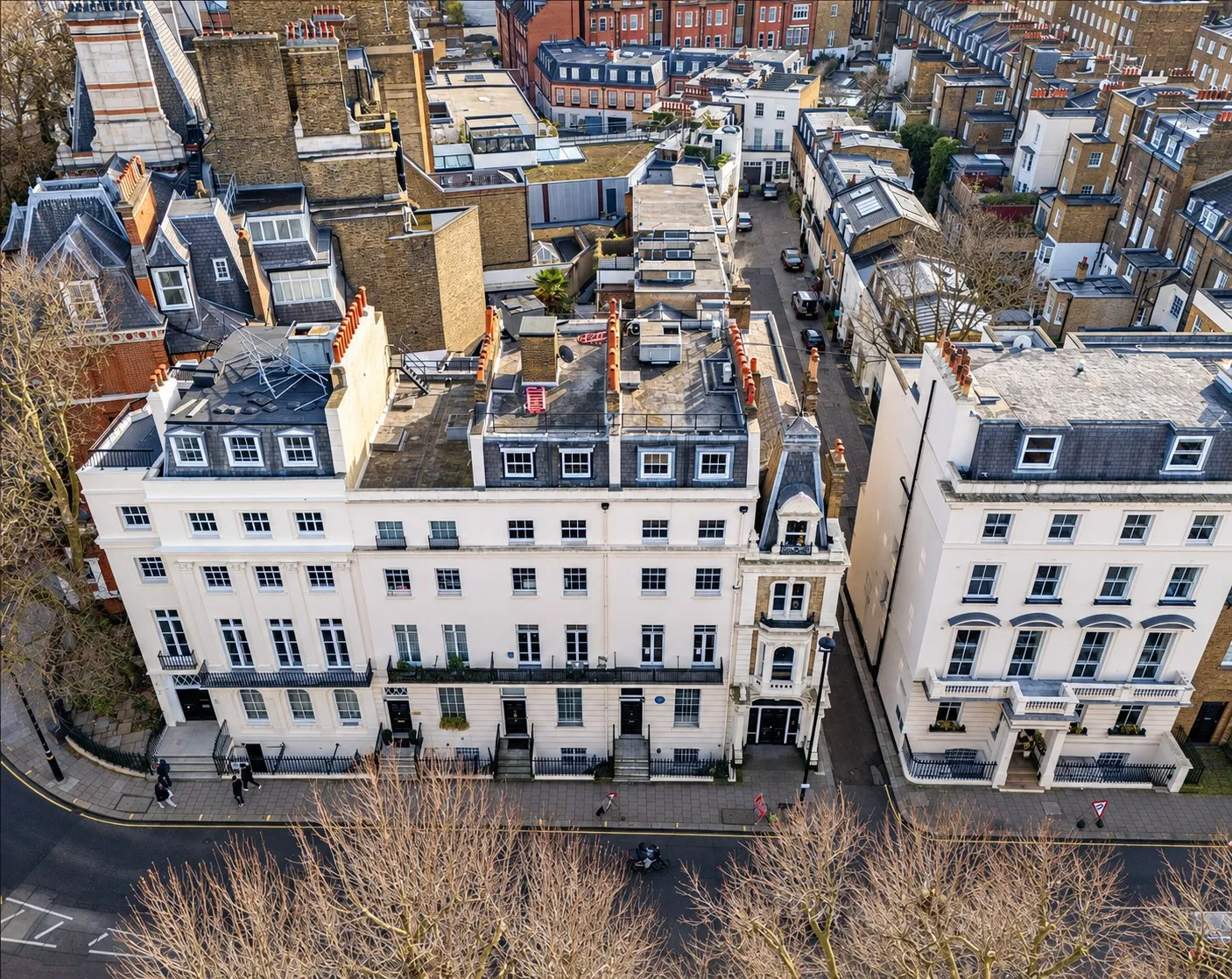
Tight streets, party walls on three sides, basements next door, deliveries limited to certain hours, and a borough that may ask for a construction logistics plan. On Slingsby Place in Covent Garden, a strip-out and structural job behind retained façades led by our Preconstruction Director Martin Hickey as Project Director, the logistics were as much a part of the job as the structure. Read the Slingsby Place case study.
From appraisal to exit: the stages a family will live through
- Appraisal. What could be built, what it would be worth (the gross development value), what it would cost and what the land is worth to the scheme. Our guide to GDV and residual land value walks through the arithmetic.
- Feasibility and design options. Testing several schemes against planning policy and the numbers. At Allitsen Road in St John's Wood, our feasibility study tested four design options for a vacant corner building in a conservation area, showing up to seven apartments were possible. See the Allitsen Road feasibility study.
- Planning. Pre-application advice, the application, the decision, and any agreement on obligations.
- Funding. Equity and, if used, debt. Lenders will appoint their own monitoring surveyor (see development finance explained).
- Technical design and procurement. Fixing the design and the price, and choosing the contract.
- Construction. The longest and most expensive stage, where cost control matters most.
- Exit. Sale, letting and holding, or occupation by the family itself.
Questions an investment committee should ask about any scheme
- What has to be true for this scheme to work, and how sure are we of each of those things?
- What happens to the numbers if values fall, costs rise or the programme slips by six months?
- Who carries planning risk, and what do we lose if consent is refused?
- Which costs in the appraisal are quotes, which are estimates and which are guesses?
- Who is the single person accountable for the scheme day to day?
- How do we get our money out, and how long could that take?
- If the development partner fails, who finishes the building?
Mistakes that cost families most
- Starting design before the appraisal is honest. Drawings create attachment. Test the numbers first.
- Treating planning as a formality. In London it is often the longest stage.
- Buying the cheapest build price. A low tender with long exclusions is a future claim. Compare scope, not totals.
- Too many separate consultants with no one in charge. Gaps between appointments are where time and money leak.
- No contingency for the unknown. Existing buildings hide things until they are opened up.
Where Craftex fits
Craftex is a London property development and construction partner, founded in 2016, with construction as an in-house department. Depending on the stage of a project we can co-invest, take 100 per cent of the risk, or work on a percentage or fee basis, and we run development schemes from £3M to £150M GDV. Our Development Director, Rob Barton, previously delivered more than 4,000 homes and acquired over £225M of land as a housebuilding managing director. For families, the practical difference is one team from appraisal to keys, so nobody has to coordinate the gaps. Read more on investment opportunities in redevelopment projects and how to choose a development partner.