For developers and clients setting a budget
How Much Contingency Should a Construction Project Have? A Guide by Stage

Sviatoslav JerdetchiiCEO & Founder of Craftex. Updated , 4 min read
The short answer
We usually advise 5% to 10% of construction cost, depending on complexity. How much contingency a construction project should have depends on what is still unknown.
- Contingency should be largest at feasibility and shrink as design and surveys firm up.
- Public-sector guidance (HM Treasury) allows up to 24% for standard and 51% for non-standard public buildings at the earliest stage.
- Contingency is not a provisional sum and not the builder's risk allowance.
- Hold it yourself, spend it only on genuine unknowns, and record every draw.
Most budgets have a contingency line. Too often it is a round number someone picked, or it is cut to make the scheme stack up. Then the project spends it, and the client calls it an overrun.
So how much contingency should a construction project have? It depends on what is still unknown. We usually advise 5% to 10% of construction cost, depending on complexity. Where your project sits in that range depends on the risks in your building.
This guide shows how to size it by stage, who should hold it and how to spend it. Not sure your contingency is big enough? Book a site visit and we will look at the building with you.
Contingency, provisional sums and risk allowance
Three different things are often called "contingency". They behave very differently.
| Allowance | Who sets it | What it covers | Who keeps what is not spent |
|---|---|---|---|
| Client contingency | You | Genuine unknowns and your own changes | You, if you hold it |
| Provisional sum | The quote | A named item that cannot be priced yet | Adjusted to actual cost at the end |
| Contractor's risk allowance | The contractor, inside its rates | Risks it carries under the contract | The contractor |
A provisional sum is not contingency. It is an allowance for a specific item, and it moves to the real cost. Our guide to provisional sums in construction explains how they work and where they hide risk.
Why one fixed percentage is wrong
A flat 10% on every job sounds prudent. It is too much for some projects and far too little for others.
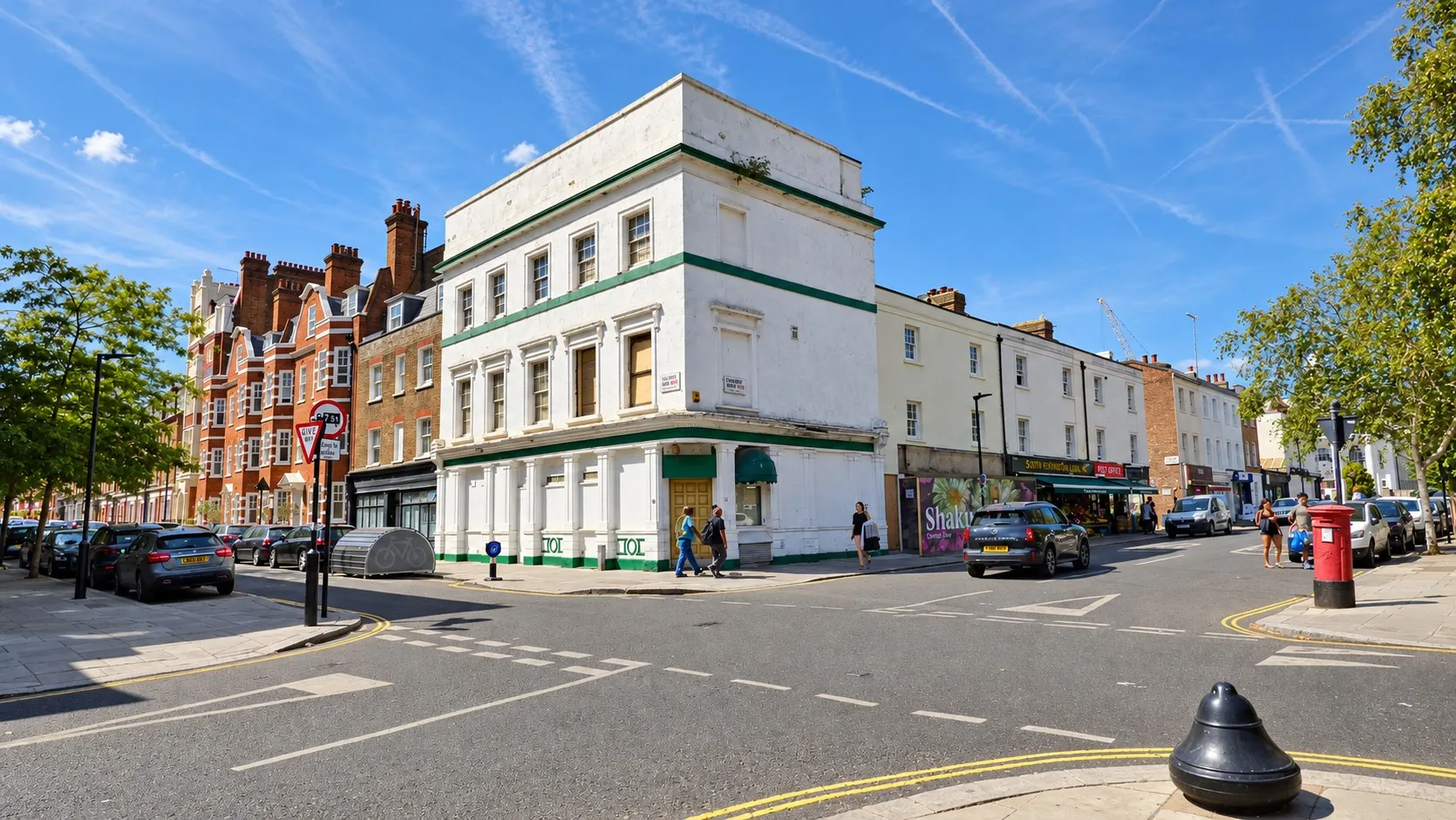
A new building on a cleared site, with a finished design and full surveys, carries little unknown risk. A Victorian building in London with no drawings, no surveys and a design still at sketch stage carries a lot. Using the same percentage for both makes no sense.
The other problem is behaviour. Clients cut contingency to make a scheme stack up. Then the risks arrive anyway, and the "overrun" is just the contingency that was never budgeted. Our guide on why construction projects go over budget shows how that happens.
How much contingency a construction project should have, by stage
Contingency should shrink as the project moves forward and the unknowns are removed. Here is how the drivers change at each stage.
| Stage | What is still unknown | Contingency should be |
|---|---|---|
| Feasibility study (before planning) | Design, scope, planning outcome, structure, services | At its largest |
| Planning | Planning conditions, detailed design, surveys | Still large |
| Pre-construction (RIBA Stage 4) | Technical design gaps, survey findings, tender prices | Reducing as design is completed |
| On site | Hidden conditions, late changes | Smallest, held for genuine unknowns |
We usually advise 5% to 10% of construction cost, depending on complexity. Simple, well-surveyed jobs sit at the low end. Old, complex or unsurveyed buildings sit at the top. In general, a budget set at feasibility stage carries more uncertainty than one for a priced design.
Public-sector guidance is a useful comparison. The Treasury's Green Book guidance on optimism bias, as reproduced in NHS Wales guidance, sets capital-cost uplifts for early estimates of public projects. The upper bounds are 24% for standard buildings and 51% for non-standard ones. Where risks have been fully managed, the lower bounds are 2% and 4%.
Those figures are for public projects, not a rule for private jobs. But they show how large early uncertainty can be.
Refurbishment and old buildings need more
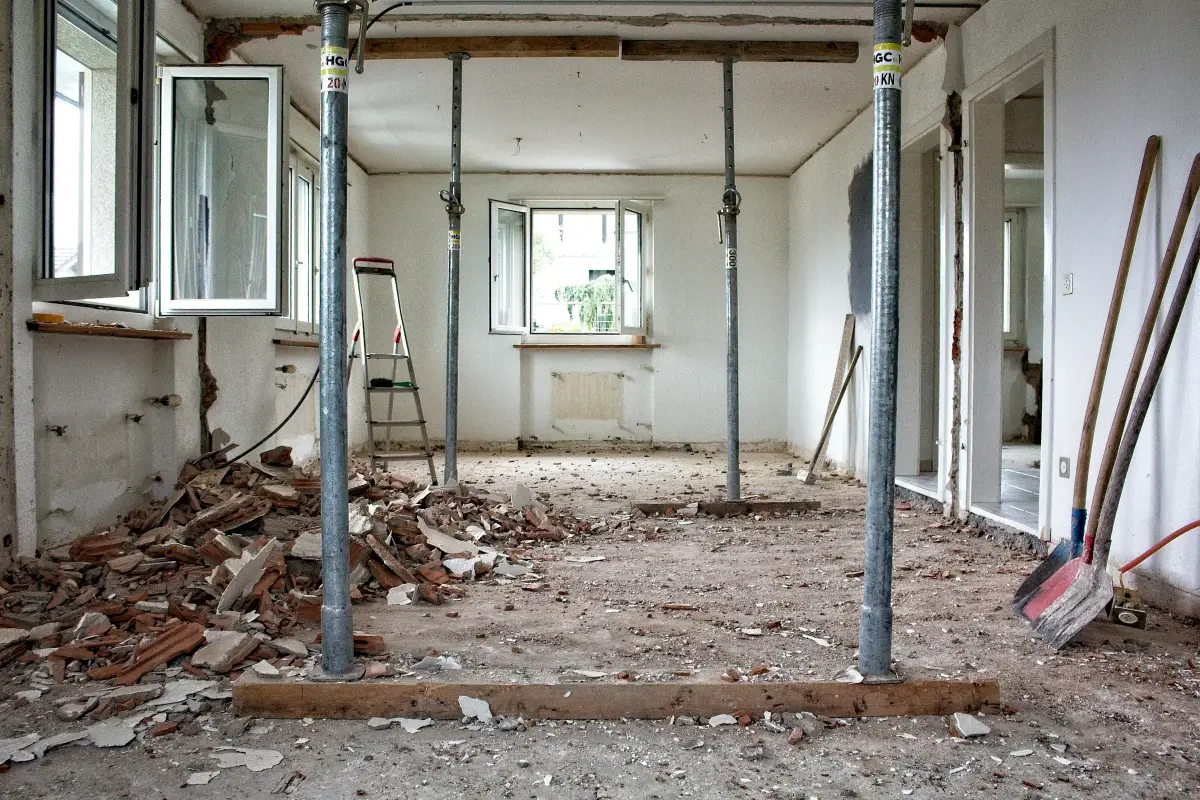
Existing buildings are where contingency gets spent. You cannot see inside walls and floors until you open them.

What usually drives the spend on a refurbishment:
- structure that is damaged, undersized or not as drawn;
- damp and rot behind finishes;
- wiring and pipework that cannot be kept;
- asbestos in older materials;
- floors and walls that are out of level or square.
The best way to reduce this contingency is to buy information early. Measured surveys, a structural survey, drainage and asbestos surveys, and opening-up works in key places. They cost money, but they cost less than finding the same problems with the builder on site.
Who should hold the contingency
Who holds the money changes how it is spent.
- Held by you. It stays yours if it is not spent. You decide what it pays for.
- Inside the contractor's price. It becomes the contractor's margin if risks do not happen.
- Shared. Some contracts share savings and overruns against a target, so both sides gain from control.
If you hold your own contingency, separate from the contract sum, every draw is a decision you make, with a reason recorded.
How to spend contingency, and what it is not for
Contingency is not a second budget for upgrades. Once it pays for a better kitchen, it is gone when the rotten joist turns up.
Contingency is not where known site problems belong. Price those as abnormal costs on their own lines.
To keep cost and time under control on site, read our guide to construction project management on time and on budget.
Lenders and contingency
If the project is funded by a development loan, the contingency is not only your decision.
In our experience, development lenders look closely at the contingency in your appraisal. Their monitoring surveyor reviews the cost plan and the risks before the loan is drawn. An unrealistically low contingency can weaken the case for the loan. Our guide to the development monitoring surveyor explains what they check.
Contingency also flows through your appraisal. It reduces the profit and the residual land value. Our guide to development appraisal, GDV and residual land value shows how the numbers fit together.
A contingency sized to your actual risks is the cheapest insurance in a building project. Planning a project? Book a site visit and get a price built from your building, not a rule of thumb.
Rules for spending contingency
- Spend it only on genuine unknowns or agreed risks, not on upgrades.
- Approve every draw in writing, with the reason and the amount.
- Keep a running total: budget, spent, committed and left.
- Report it monthly, next to the programme.
- Release contingency only as the risks behind it are closed out.
- Treat any change you choose to make as a change, priced and agreed, not a contingency draw.