
For businesses moving warehouse or factory
Warehouse Moving Services: Relocation and Lease Exit

Sviatoslav JerdetchiiCEO & Founder of Craftex. Updated , 4 min read
The short answer
A warehouse relocation is two projects that must meet on one date: fitting out the new unit and handing back the old one. Plan them together, start early, and keep dispatch running throughout.
- Start 9 to 12 months out: the lease, the new unit, racking and the exit works.
- Fit out the new unit first, so stock moves straight onto working racking.
- Decide early what racking, mezzanines and machinery move, sell or strip.
- Price the old unit's dilapidations before you agree anything with the landlord.
Warehouse moving services usually cover the lorries and the labour. A warehouse relocation needs far more. It needs a new unit fitted out, an old unit stripped and handed back, and dispatch running throughout.
Treat it as two projects that meet on one date. The new unit must be ready before the stock arrives. The old unit must be empty and reinstated before the lease ends.
This guide covers when to start, racking and machinery, fitting out first, the old unit's warehouse dilapidations and keeping orders moving. We run both ends as one programme. Planning a move? Plan your warehouse move.
When to start planning
Start earlier than feels necessary. A typical warehouse move needs 9 to 12 months from first decision to keys. Larger units, with high-bay racking, mezzanines or machinery, need longer.
| Months before the move | New unit | Old unit |
|---|---|---|
| 12 to 9 | Find and agree the lease | Read the lease, break and reinstatement terms |
| 9 to 6 | Design the layout, racking and offices | Price the likely dilapidations |
| 6 to 3 | Fit out: racking, offices, power, welfare | Agree with the landlord what can stay |
| 3 to 1 | Commission and test | Plan the strip-out around the move |
| Move month | Stock in, dispatch live | Strip-out, reinstatement, handback |
Fix the hard dates first: the old lease end or break, and when the new unit can be accessed. Everything else is planned back from those.
Racking, mezzanines and machinery
The heavy kit drives the programme and much of the cost. Decide early what moves, what is sold and what is stripped.
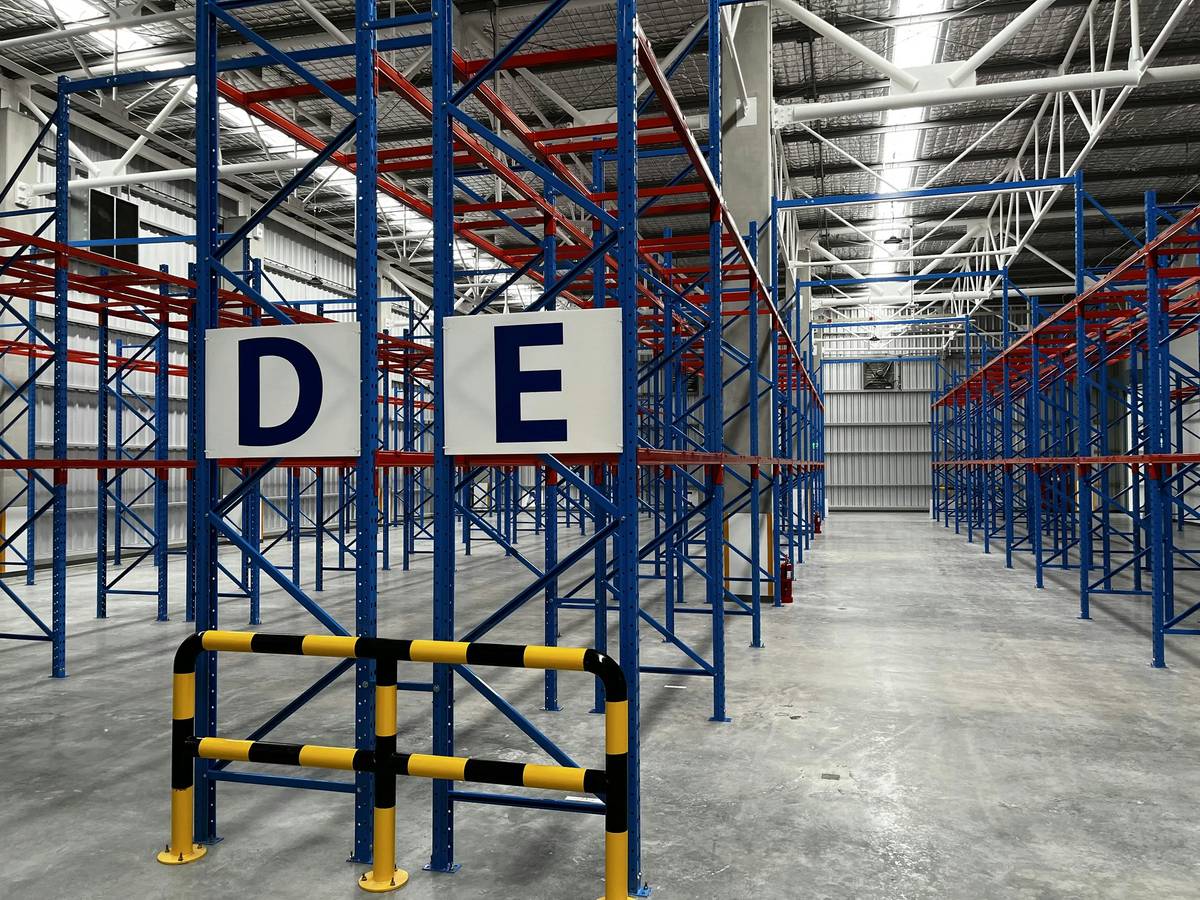
- Pallet racking. Often reusable if it suits the new building's height, floor and layout. It should be dismantled, re-erected and inspected by competent installers, with damaged parts replaced.
- Mezzanine floors. Sometimes movable, often better sold or left by agreement. The new building's floor and fire strategy decide.
- Offices and welfare cabins. Modular units can usually move; built-in offices usually cannot.
- Machinery and plant. Moved by specialists, with power, bases and access ready in the new unit first.
Anything left behind may be argued to break vacant possession. Our guide to vacant possession covers what must leave the old unit.
Factory and machinery relocation
A factory relocation adds production to the problem. Every day a machine is in transit is a day it is not making anything.
Plan machinery moves in this order:
- Survey both sites. Weights, sizes, access routes and floor loadings at each end.
- Prepare the new site. Bases, power, compressed air, extraction and permits ready before the machine arrives.
- Phase the move. Move one line at a time where you can, so production never stops completely.
- Commission and test. Each machine is reconnected and tested before the next one leaves.
We plan and coordinate the move with specialist machinery movers. We prepare the new unit and strip out the old one, so the two ends meet.
Fitting out the new unit first
The smoothest moves have the new unit ready before a single pallet leaves. Racking up, offices built, power and data live, welfare working.
That way stock moves straight onto working racking. Pickers start in the new building on day one. The old unit can then be cleared and stripped without holding up orders.
Drake's is a good example. Its warehouse had become too big and too costly, so it moved into a 500 sq m railway arch in Bethnal Green. We designed and built the new space in 8 weeks and handed it over early. We also did the dilapidation works at the old warehouse and the full move.
Craftex carried out a warehouse fit-out for us, and I couldn’t be happier with the outcome. The space has been completely transformed into a highly organized and efficient environment that makes our daily operations much smoother. The team was professional but also very approachable — I always felt comfortable asking questions or giving feedback. They came up with smart, practical solutions that worked perfectly for our setup, and everything was explained clearly along the way. The best part was how they stuck to the agreed timeline, finishing on schedule without cutting corners. It’s rare to get both quality and reliability, but Craftex delivered both.
The old unit's dilapidations
The old unit's lease decides what must come out. A warehouse schedule of dilapidations often asks for a bare shell: racking out, mezzanines down, offices and services removed, floor repaired.
Some of that the lease requires. Much of it can be argued, priced down or left in place by agreement. A landlord re-letting the unit may want the racking or the mezzanine kept.
| Item | Usually | Worth asking |
|---|---|---|
| Pallet racking | Remove | Will the landlord or next tenant keep it? |
| Mezzanine floor | Remove and make good | Would it help the re-let? |
| Offices and welfare | Remove | Could they stay as a feature? |
| Floor slab | Repair damage | What was its state at the start? |
| Services you added | Remove and cap | Which are worth leaving? |
Repair damages are capped by section 18 of the Landlord and Tenant Act 1927 at the fall in the value of the landlord's interest. Removal and reinstatement sit outside that cap, so the lease wording matters more for those items.
One team, one point of contact: our own RICS-qualified quantity surveyor prices the schedule line by line. We negotiate with your landlord, and our own crews strip out and reinstate.
Keeping dispatch running while warehouse moving services work
The move is a success if customers never notice it. That means stock, people and systems moving in an order that keeps orders going out.
- Run both sites for a short overlap. Slow movers go first, fast movers last.
- Move the systems early. Warehouse management, data and printers live in the new unit before stock arrives.
- Plan around peaks. Avoid moving in your busiest weeks.
- Keep the old unit safe. Strip-out starts only in cleared zones.
At Banbury, we built a 148 sq m block inside a working warehouse in four weeks, around live operations. The same approach keeps dispatch moving during a relocation.
Moving in the next year? Plan your warehouse move with the new fit-out and the old unit's exit on one programme.
Warehouse relocation
- Fix the old lease end and the new unit's access date.
- Price the old unit's dilapidations early.
- Decide what racking, mezzanines and machinery move.
- Fit out the new unit before the stock moves.
- Plan the move in phases around your peaks.
- Strip out and reinstate the old unit before the end date.


