Build to Rent in London: A Developer's Guide to Planning, Design and Delivery

Build to rent (BTR) is purpose-built housing designed to be rented out, usually all of it, and held in single ownership with professional management. In London it has its own planning policy, London Plan Policy H11, which lets a qualifying scheme provide its affordable housing as discounted rent within the same building instead of homes for a housing association.
That one difference changes the appraisal, the design, the build programme and who you sell to. Here is how the rules stand in October 2026, and what they mean on site.
What counts as build to rent in London
National policy describes BTR as purpose-built housing that is typically 100% rented, can be part of a wider multi-tenure scheme, and is professionally managed in single ownership and management control.
London asks for more. To use Policy H11, a scheme (or a block or phase of it) must meet these tests:
| London Plan H11 test | What it means in practice |
|---|---|
| At least 50 units | Boroughs can set their own threshold, but the operating standards still apply |
| Held as BTR under a covenant for at least 15 years | Secured in the Section 106; selling homes off breaks it |
| A clawback mechanism | A payment if the covenant is broken, so there's no financial reason to sell early |
| All units self-contained and let separately | No shared-living clusters within the BTR element |
| Unified ownership and management | Private and discounted homes managed together |
| Longer tenancies with tenant break clauses | Now overtaken by the Renters' Rights Act (see below) |
| Rent and service charge certainty for the tenancy, formula-linked increases | Explained to the tenant before signing |
| On-site management | Not necessarily full-time staff, but daily presence and prompt fixes |
| Complaints procedure and ombudsman membership | Required of the provider |
| No up-front fees | Other than deposits and rent in advance |
Affordable housing on BTR: the 2026 routes
Under H11, the affordable housing in a qualifying scheme can be Discounted Market Rent (DMR) at genuinely affordable rents, preferably London Living Rent, secured in perpetuity. That keeps one landlord, one management team and one building.
| Route | Affordable requirement | Tenure | Viability |
|---|---|---|---|
| Fast Track (London Plan H11 / H5) | At least 35% (50% on public land and industrial land appropriate for housing) | At least 30% of DMR homes at a rent equivalent to London Living Rent; the rest at a range of genuinely affordable rents | No viability assessment; early-stage review if not implemented in time |
| Viability Tested | Below the threshold | As agreed | Full viability assessment, with reviews |
| Time-limited route (2026 London emergency measures) | At least 20% social and affordable (by habitable room) on private land | For BTR: intermediate rent, 30% at or below London Living Rent or Key Worker Living Rent, 70% at a range of genuinely affordable rents | No viability assessment; early-stage review if the agreed build-out milestone (default: first-floor slab within 30 months) is missed |
The time-limited route is open to applications validated by 31 March 2028. Outside London, national guidance uses 20% affordable private rent at a discount of at least 20% as its benchmark, but in London the London Plan's routes are the ones that matter.
The proposed temporary borough CIL relief for London schemes delivering at least 20% social and affordable housing also gives BTR its own test on tenure. We explain the relief and how it's calculated in CIL and Section 106 explained.
The Renters' Rights Act and BTR
From 1 May 2026, most new and existing private tenancies in England became assured periodic tenancies under the Renters' Rights Act 2025. For BTR that means:
- Fixed terms are gone. H11's "longer tenancies" test is effectively replaced by periodic tenancies that the tenant can end and the landlord can only end on legal grounds.
- Rent increases go through the section 13 process: once a year, on a set form, with at least two months' notice.
- Section 106 agreements signed before 1 May 2026 that require an abolished tenancy type aren't breached by letting on assured periodic tenancies.
- Operators can't evict a tenant from a discounted home because their income has risen above the threshold. Planning guidance (updated May 2026) says the Section 106 should let the operator re-designate that home at market rent and allocate an equivalent one as affordable instead.
If you're negotiating a BTR Section 106 now, make sure that reallocation mechanism is in it.
How BTR changes design and construction
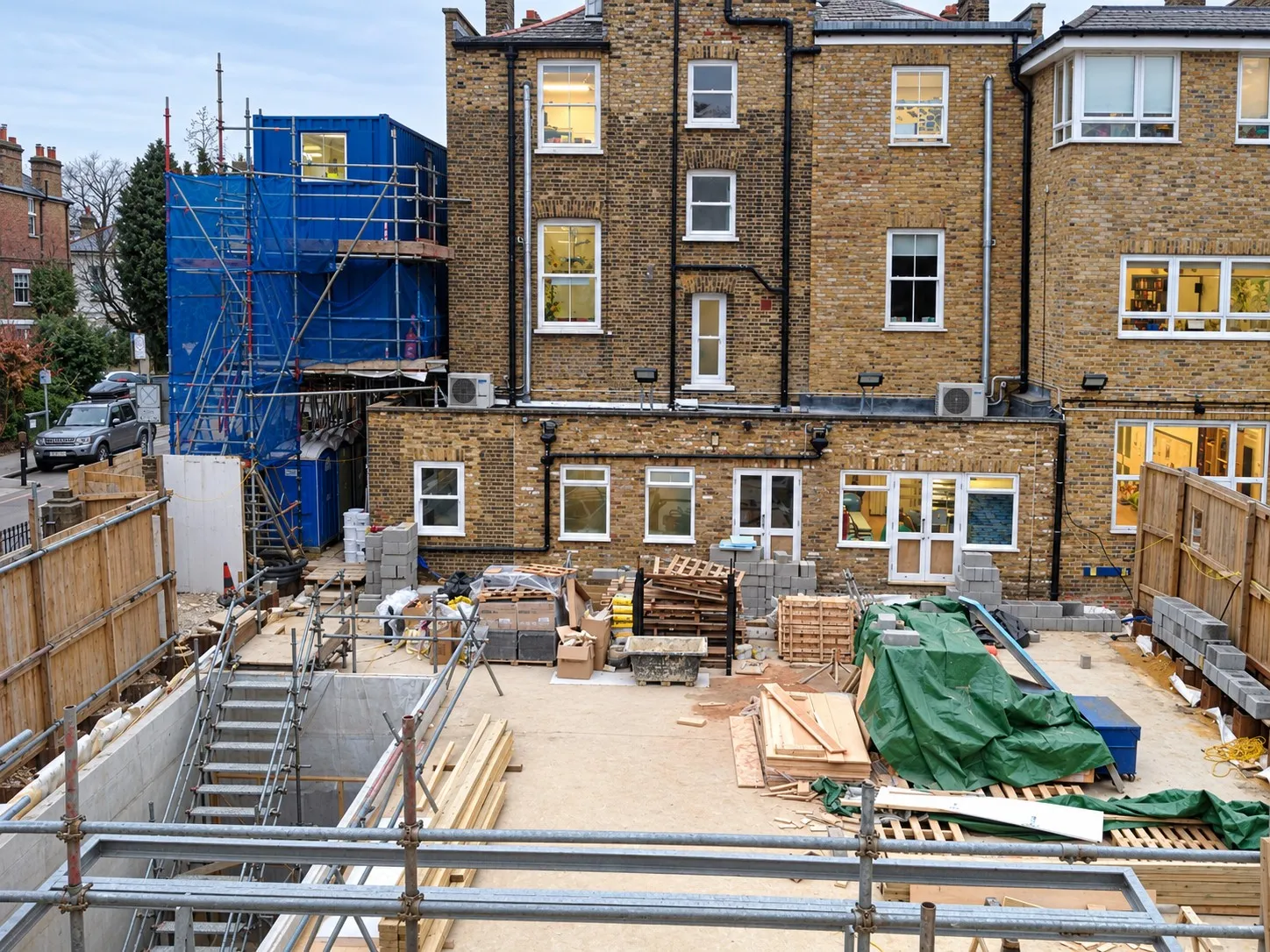
Building for one long-term owner is different from building homes to sell one by one. The differences we would build into a BTR brief from day one:
Lifecycle over first cost
The owner pays for every repair for decades. Finishes, ironmongery, sanitaryware, flooring and plant are chosen for durability and easy replacement, and the cost plan should show whole-life cost, not just capital cost.
Repeatable units
A small number of unit types, repeated, makes design, procurement and maintenance simpler. It also suits off-site and modern methods of construction. Our traditional and MMC contractor page covers when each makes sense.
Amenity and back of house
Resident lounges, co-working rooms, gyms, roof terraces, parcel rooms, bike stores, refuse strategy and a management office are part of the product. They need floorspace, servicing and fire strategy like any other use.
Services for an operator
Metering, heating strategy, connectivity and building management systems are decided with the operator, because the operator runs them. Late changes here are expensive.
One completion, not a phased sale
A for-sale scheme can hand over homes floor by floor. A BTR scheme generally completes as a whole and starts letting, so the programme, the snagging and the handover information have to be ready for the whole building at once.
Height and building safety
Many London BTR schemes are 18 m or seven storeys and above. They need the Building Safety Regulator's approval at Gateway 2 before work starts, a completion certificate before residents move in, and, for new applications since 30 September 2026, a second staircase where a storey is at 18 m or more. Read our guide to Gateway 2 and the second staircase rule. As a major residential development, a BTR scheme is also liable for the Building Safety Levy introduced on 1 October 2026.
Space standards
Every BTR home still has to meet London Plan space standards. See nationally described space standards for flats.
Funding and exit
BTR is usually sold to, or funded by, an institutional investor or operator before or during construction. Whatever the structure, the investor will scrutinise the same things: the covenant and clawback in the Section 106, the affordable housing mix and how it can be managed under the new tenancy rules, the specification against their own standards, and the construction programme and contract.
That makes the early decisions (planning route, unit mix, specification, procurement) part of the investment case, not just the design.
Where Craftex fits
We don't have a completed BTR scheme to show you, and we won't pretend otherwise. What we bring to a BTR development is the team and the method:
- One team from site to keys. Feasibility, planning, design, Pre-Construction (RIBA Stage 4 technical design) and construction under one roof, so the scheme that gets consent is the one that gets priced and built. See our development management and design and build services.
- Development leadership. Our Development Director, Rob Barton, previously a regional managing director at Berkeley Homes, leads our partnerships with landowners and investors.
- Purpose-built residential experience. Craftex took part in the project team on Leicester One, a £3.9M, 56-room student residence in Leicester city centre: around 2,000 m² delivered on a 36-week programme, where compact rooms had to work hard without losing quality.
- Flexible partnership. Depending on the stage of the project, Craftex can co-invest, take on the full risk, or work on a fee or percentage basis. More on our investment opportunities in redevelopment projects page.
Our development work starts at schemes of £3M GDV and runs to £150M.
Have a London site that could suit rented homes? Send us the address. We'll look at the planning route and what the site could hold.