What to Do With an Empty Office Building in London
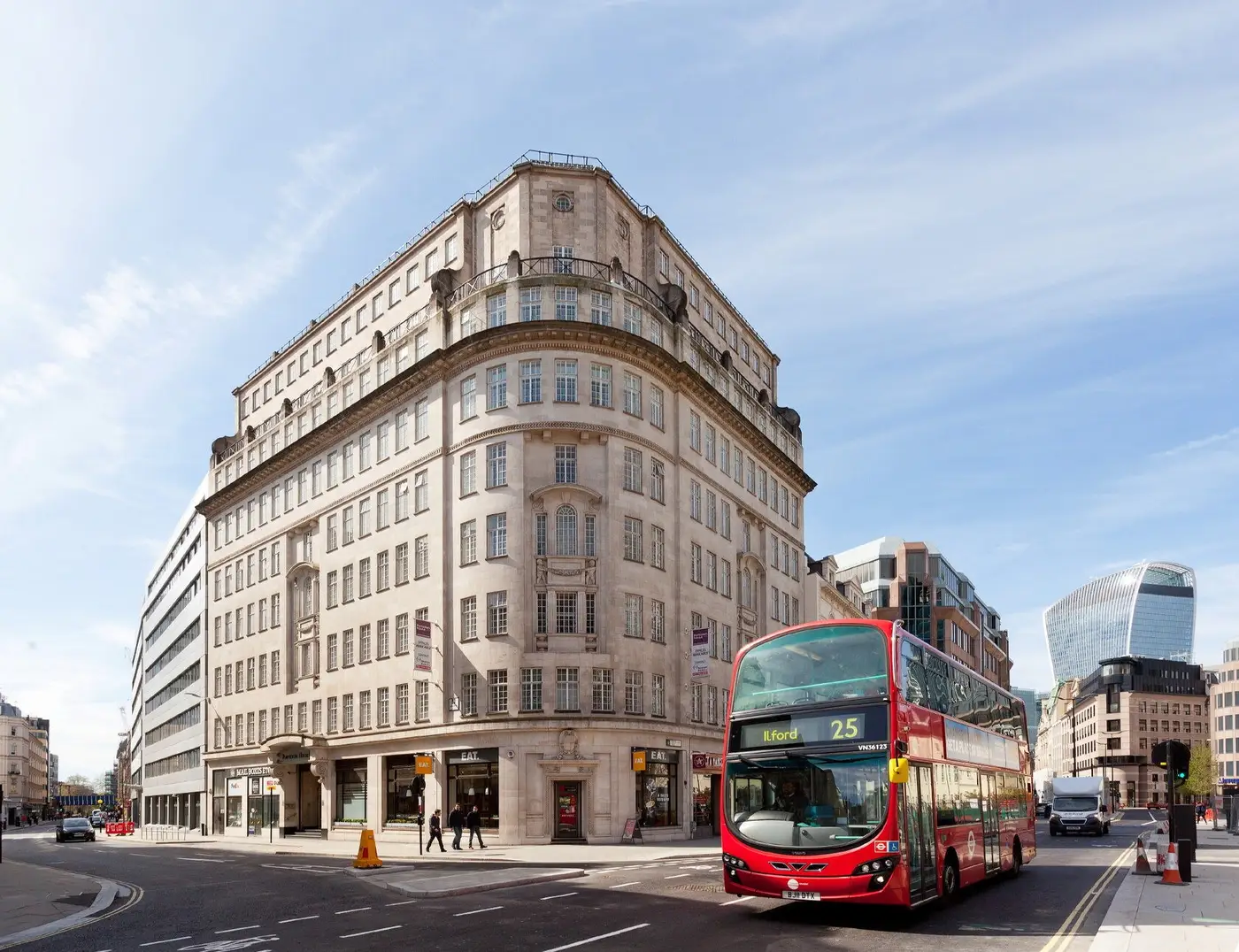
An empty office building in London has six possible futures: refurbish it and relet it as offices, reposition it for a different kind of occupier, convert it to homes or another use, add floors, knock it down and rebuild, or sell it. Which one is right depends on why it's empty, what planning will allow at that address, the state of the structure, and how much time and capital you have. The worst option is usually the default one: leaving it empty while you decide.
What an empty building is costing you
Here's the problem with waiting.
An empty office still costs money every month. After a short initial relief period, empty commercial buildings normally pay full business rates. Insurers attach unoccupancy conditions (regular inspections, services drained down, security). Service charges that tenants used to cover now fall on you. And an empty building deteriorates: roofs leak unnoticed, plant seizes, and every month makes the eventual refurbishment bigger.
There's a regulatory clock too. Since April 2023 a commercial landlord can't continue to let a building with an EPC below E without a registered exemption, and the government has proposed EPC B by 2031 for rented commercial buildings over 1,000 m². An empty building with a poor EPC isn't just unlet. It may be unlettable until it's upgraded. We explain the rules in MEES and EPC B for commercial landlords.
So the first question isn't "what's the perfect use?". It's "how fast can we find out?".
The six options at a glance
| Option | Capital needed | Planning | Time to income | Best when |
|---|---|---|---|---|
| Refurbish and relet as offices | Moderate | Usually none, or minor | Shortest | The location still lets; the building is just tired |
| Reposition (flexible, better amenity, different occupier) | Moderate to high | Sometimes | Short to medium | Demand exists, but not for what you have today |
| Convert to homes or another use | High | Class MA prior approval or full planning | Medium | Offices don't let here, and the floor plates suit flats |
| Add storeys | High | Prior approval or full planning | Medium to long | The structure has capacity and the street allows height |
| Redevelop | Highest | Full planning | Longest | The building is beyond economic repair or far below the site's potential |
| Sell | None | None (or sell with planning) | Immediate | You'd rather recycle the capital |
Most real decisions combine two of them. Refurbish the lower floors and add homes on top. Sell with a planning permission rather than as an empty office.
1. Refurbish and relet
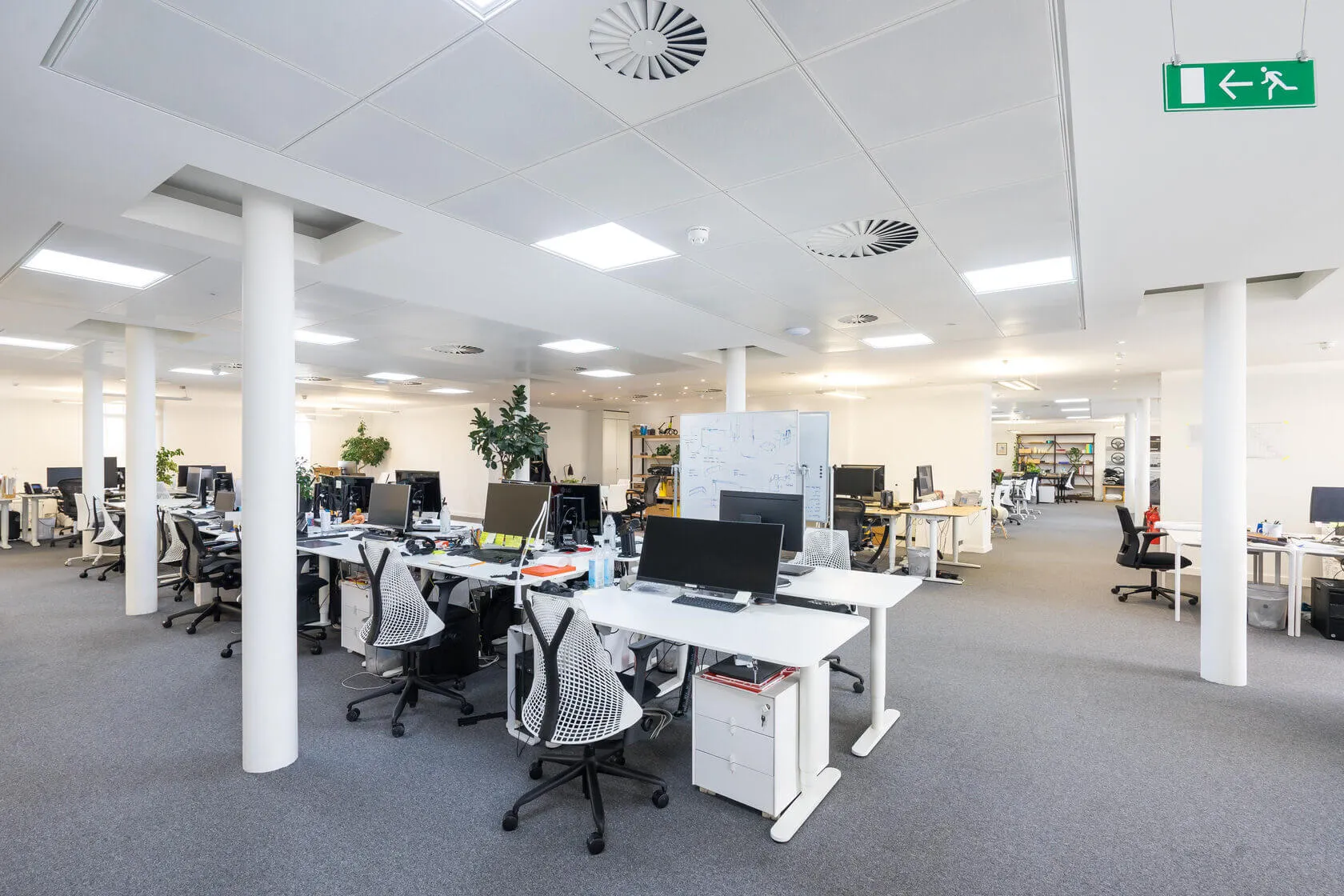
If the building is empty because it's dated rather than because nobody wants offices in the area, a refurbishment is the fastest route back to rent. That usually means a Cat A fit-out (ceilings, lighting, heating and cooling, raised floors, toilets, a better reception) and an EPC upgrade at the same time.
The opportunity: London occupiers are moving to better buildings. A tired building in a decent location, properly refurbished, competes for those tenants. See Cat A, Cat A+ and Cat B fit-outs for what each level includes.
2. Reposition
Sometimes the building is fine, but it's aimed at the wrong occupier. Repositioning means changing the offer: smaller suites, fitted and ready-to-go floors, shared amenity, end-of-trip facilities, or a mixed-use ground floor. It's an investor's play, and it starts with asking agents who is actually taking space in your area and what they want.
3. Convert
Where offices genuinely don't let, conversion is the bigger step. To homes, there are two routes:
- Class MA prior approval, for buildings that have been in commercial (Class E) use for at least two years, aren't listed, and aren't covered by an Article 4 direction. The council checks specific matters such as natural light, noise and transport. See Class MA and permitted development.
- Full planning permission, for everything else, including much of the Central Activities Zone, where several boroughs protect office space. See change of use.
The building itself has to suit flats. Deep floor plates leave a dark middle. Every new home needs its own risers, drainage and ventilation through slabs designed for offices. Taller buildings bring the building safety regime with them. Our commercial to residential conversion guide walks through it, and the cost guide covers budgets.
Homes aren't the only conversion. Offices can become clinics, education, hotel or other uses, each with its own planning position.
4. Add storeys
If the structure has spare capacity and the street can take height, new floors on the roof add value without touching the existing building's use. Some commercial buildings outside conservation areas can add homes on top under permitted development; most central London buildings need full planning. We cover the tests in our airspace guide.
5. Redevelop
When the building is past economic repair, or the site could carry far more than it does, demolition and a new building may be the answer. It's the longest and most capital-hungry route, and London policy increasingly asks owners to justify demolition over reuse. Keeping a frame saves time, carbon and the cost of demolition, so the existing building should always be tested first.
6. Sell
Selling is a legitimate answer, not a defeat. But there's a big difference between selling an empty office and selling an empty office with planning permission for something better. The second buyer isn't paying for planning risk, so you keep more of the uplift. See sell your commercial property.
How to choose: four questions
- Why is it empty? Wrong building, wrong location, or wrong time? Agents and recent lettings nearby will tell you.
- What will planning allow at this exact address? Article 4 directions, conservation areas and local office policy narrow the options fast.
- What can the structure do? Floor depth, floor-to-ceiling height, cores and spare load capacity decide what's physically possible.
- What are your time and capital? A refurbishment pays back sooner. A conversion or extension can create more value, but ties up money for longer.
Answer these on paper, with costs from people who build, before you commit to any one route.
A London example: Portsoken House, Aldgate
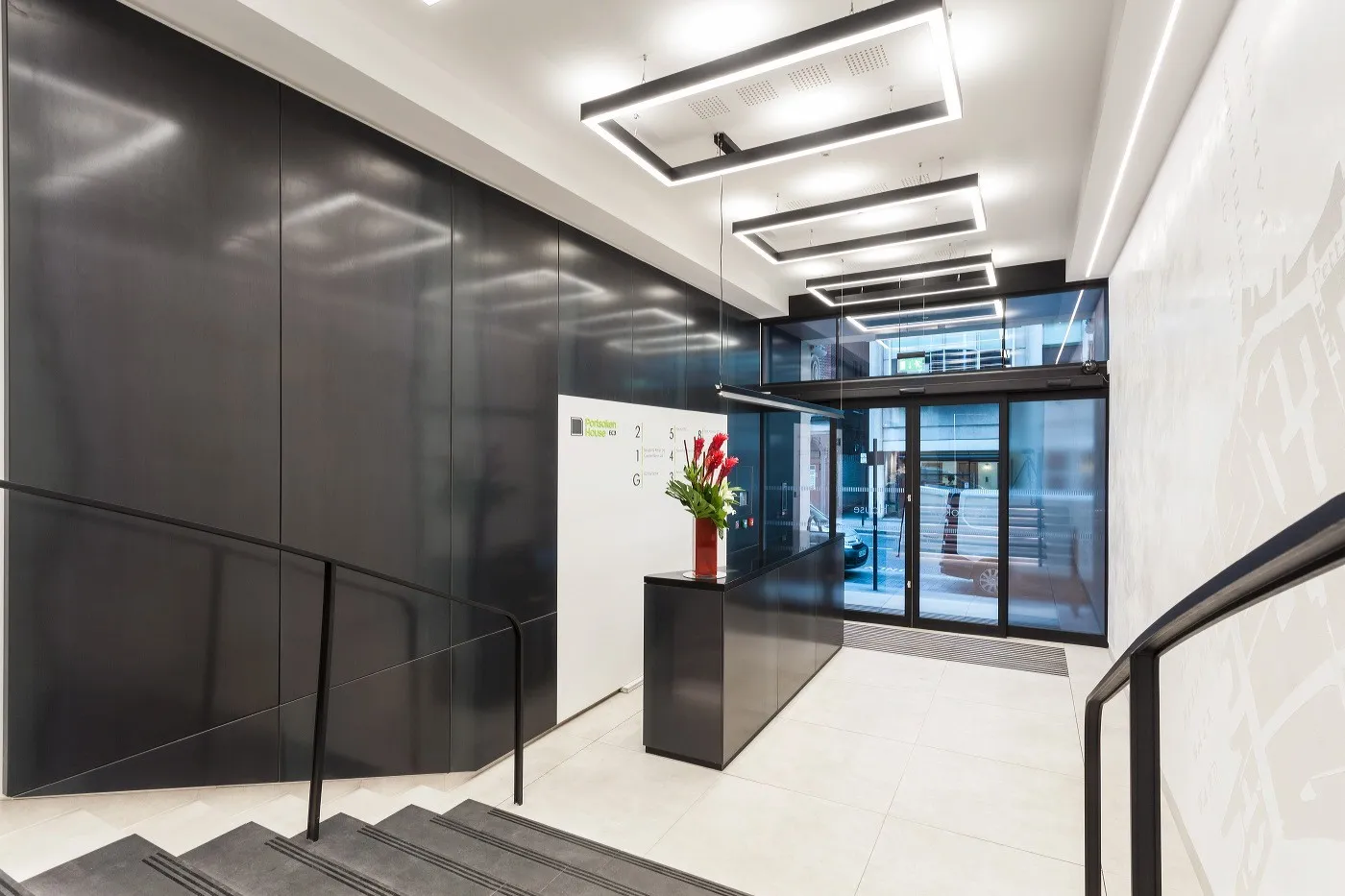
Portsoken House shows a building given a new life. Designed by our in-house team, it turned an abandoned warehouse into premium offices across two floors in Aldgate: 1,550 m², a £2.2M project, delivered in seven months. The rest of the building was already let, so we worked nights and weekends to keep the tenants undisturbed, and rebuilt the reception to match the new floors. Read the Portsoken House case study.
How we can help
We look at an empty building as a developer and a builder at the same time. Our free appraisal compares refurbishing, converting, extending, redeveloping and selling, with costs from our own construction team. If you go ahead, we take it from appraisal to keys: around 70% of our labour is in-house, and every project we've delivered has finished ahead of programme and on budget.
We take construction projects from £100,000 to £10M+, and development schemes from £3M to £150M GDV.