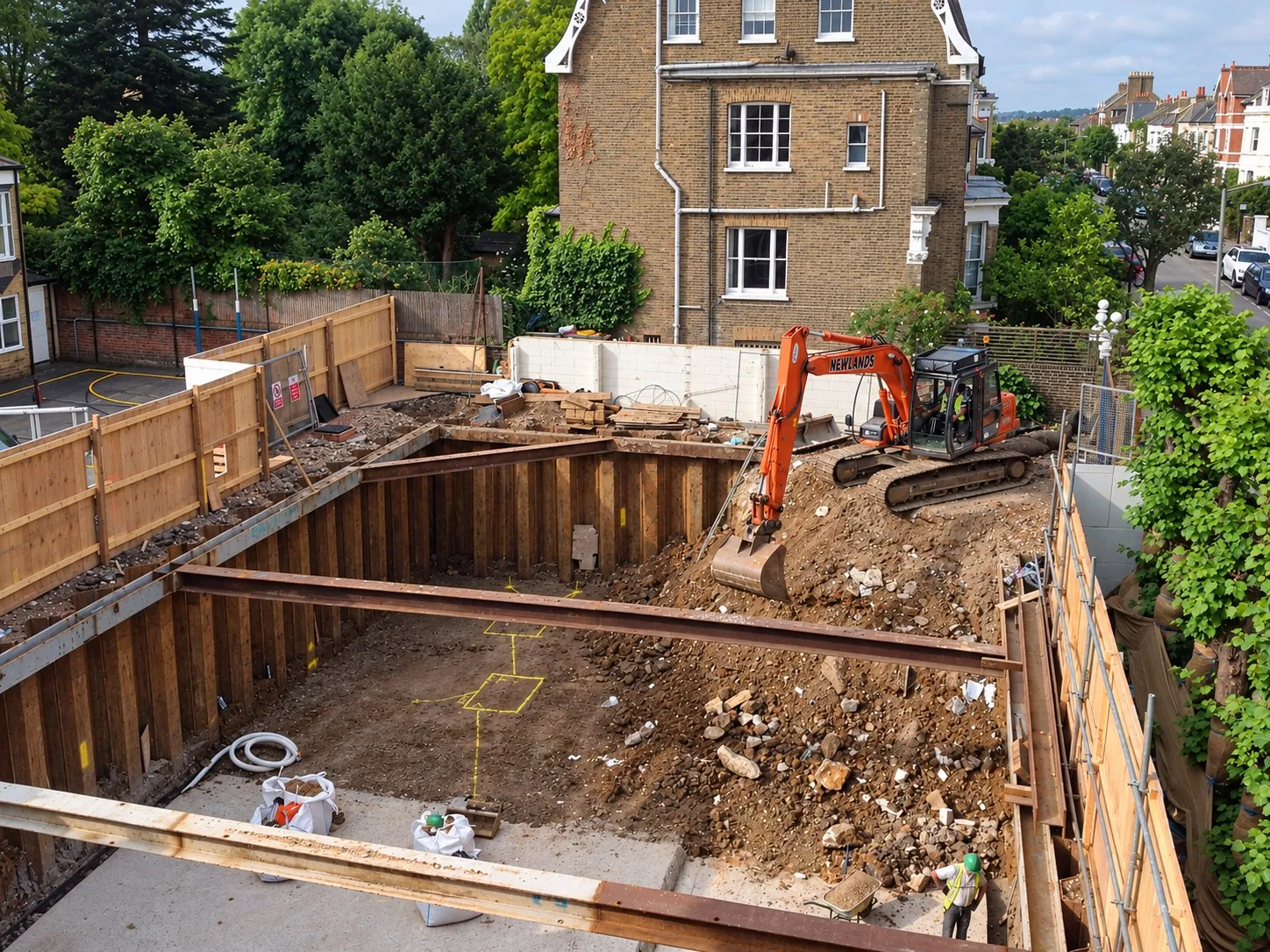
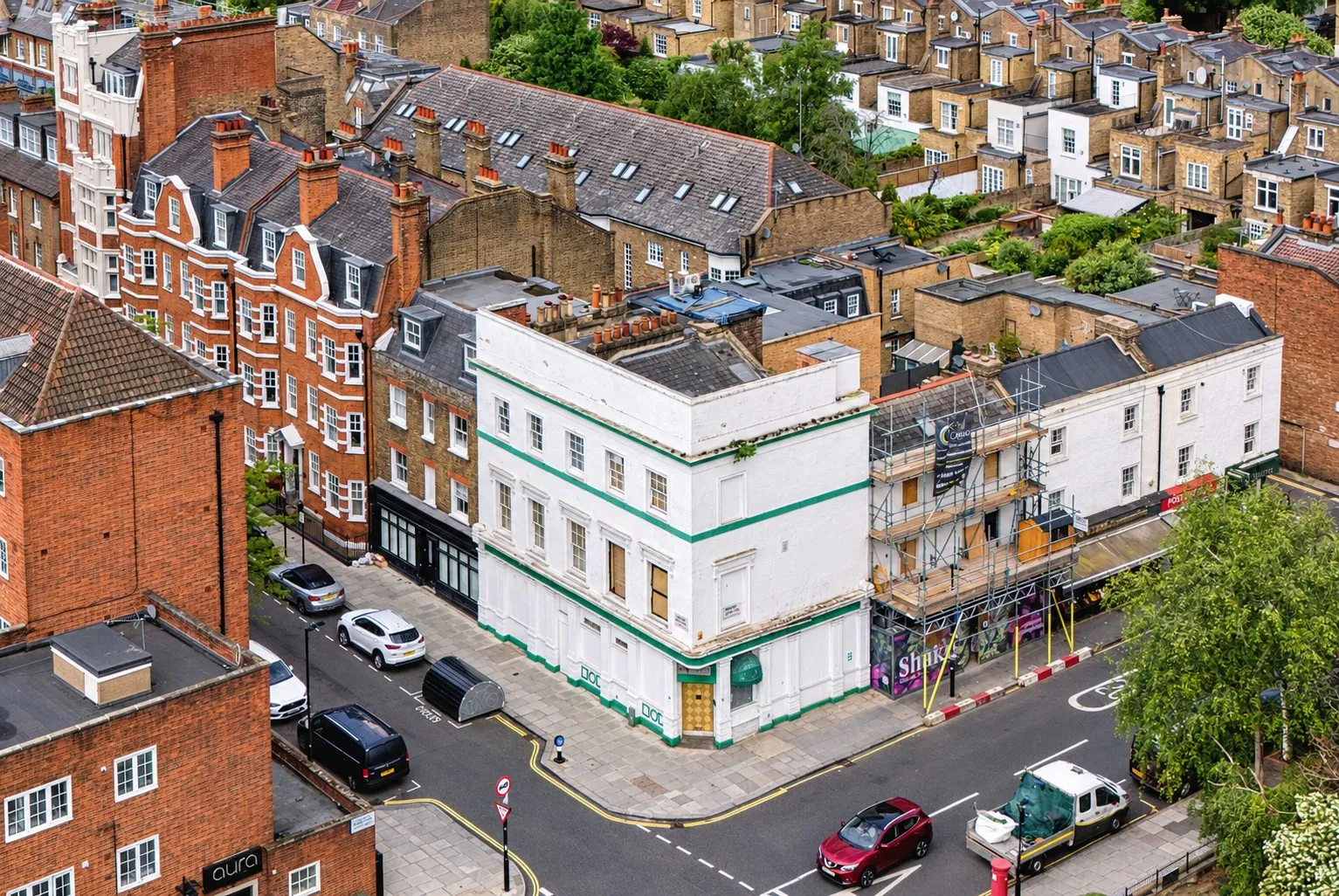
For developers and site buyers
Development Viability: Why Planning Permission Does Not Mean a Site Will Make Money

Sviatoslav JerdetchiiCEO & Founder of Craftex. Updated , 6 min read
The short answer
Development viability means the scheme can be built and sold for a fair profit. Planning permission only says the council accepts it; it says nothing about cost.
- Consents are designed for planning, not priced for building.
- Conditions, Section 106, the Community Infrastructure Levy (CIL) and building safety rules add cost and time after the grant.
- In England, a full permission usually lapses if work has not begun within three years.
- Test viability with a builder's cost plan before you buy or build.
"It's got planning." In land deals, those three words do a lot of selling. They suggest the hard part is done and the profit is waiting.
It is not that simple. Our team plans, designs and builds schemes in London, and we are regularly shown consented sites that cannot make money as approved. This guide explains development viability: why planning permission and profit are different things, and how to test a site before you commit.
Holding a consent that doesn't stack up? Book a site visit and we will cost it with you.
Development viability in one sentence
A scheme is viable when its sales value pays for everything else and still leaves a fair profit. That means the land, the build, the fees, the finance, the planning obligations and the sales costs.
National planning guidance says 15% to 20% of gross development value may be considered a suitable developer return for plan making. Lenders and investors will set their own targets. But the principle is the same: the profit is what is left at the end, so it is the first thing to vanish.
Planning permission answers a different question. It asks whether the council accepts the use, the size and the design. It does not ask whether the scheme can be built for the money.
Why planning permission is not the same as viability
The design was drawn for planning, not for building
Planning drawings show what a building looks like and how it sits on the site. They usually do not show the structure, services, fire strategy or construction details. Those come later, and they cost money that nobody priced at planning stage.

Conditions and obligations arrive with the consent
Most permissions come with conditions. Some must be discharged before any work starts. Many come with a Section 106 agreement and a Community Infrastructure Levy bill. Our guide to CIL and Section 106 explains how both are worked out.
The rules move after the grant
Building regulations and safety rules keep changing. A consent granted earlier may not reflect them.
- Building Safety Regulator approval. Residential buildings at least 18 metres or 7 storeys high, with at least two homes, need it before work starts.
- A second staircase. From 30 September 2026, new building control applications must follow the guidance calling for a second staircase. It covers blocks of flats with a storey at 18 metres or more.
- The Building Safety Levy. It applies to building control applications made from 1 October 2026 for schemes of 10 or more homes in England, charged per square metre.
Costs and values move too
Build costs and sales values both change while you wait. Material prices are still rising, and sales values can fall as well as rise.
How small changes break a consented scheme
| As appraised | Build cost +10% | Build +10%, values −5% | |
|---|---|---|---|
| Sales value (GDV) | £10,000,000 | £10,000,000 | £9,500,000 |
| Land | £2,000,000 | £2,000,000 | £2,000,000 |
| Build cost | £5,000,000 | £5,500,000 | £5,500,000 |
| Fees, obligations, finance, sales | £1,500,000 | £1,550,000 | £1,550,000 |
| Profit | £1,500,000 | £950,000 | £450,000 |
| Profit as % of GDV | 15% | 9.5% | 4.7% |
A 10% rise in build cost cut the profit by more than a third. Add a 5% fall in values, and less than a third of the profit is left. The land price was fixed on day one, so it cannot absorb any of it.
That is the whole problem in one table. Our guide to development appraisal and residual land value explains each line.
The time limit on your permission
A permission is not forever. In England, the rules are set by the Town and Country Planning Act 1990.
- Full permission. Development must usually begin within three years of the grant, unless the council sets another period.
- Outline permission. Reserved matters must be applied for within three years of the outline grant. Work must then begin within two years of the final approval.
- Pre-commencement conditions. These must be dealt with before a lawful start. Councils cannot impose them on a full permission without the applicant's written agreement.
If a site is close to its deadline, the clock is part of the price. A buyer may have to rush design and conditions, or start a token amount of work, just to keep the consent alive. Ask the seller for proof of any claimed start.
Signs a consented scheme may not be viable
- The consent is several years old and nobody has built it.
- The design has never been costed by a contractor.
- The scheme is tall enough to need Building Safety Regulator approval, and the design pre-dates the second staircase rules.
- The Section 106 agreement includes affordable housing or large contributions.
- The site has a basement, poor ground, a party wall or a listed neighbour.
- The appraisal uses one build cost per square metre for the whole scheme.
- The seller has tried to sell before, at a higher price.
None of these mean the site is bad. They mean the price must come from real costs.
What to do if your consent does not stack up
Owning an unviable consent is common. There are usually options.
- Cost it properly first. Many schemes are written off on a rough number. A builder's cost plan may show it works, or show exactly where it doesn't.
- Value-engineer the design (simplify the design to cut cost). Simpler structure, repeated layouts and standard details can cut cost without hurting value.
- Change the scheme. A different mix, a different use, or one more or one fewer floor can change the numbers. That may need a new or amended application.
- Renegotiate obligations, carefully. Where obligations make a scheme unviable, a viability case can be made to the council. National guidance is clear that the price paid for land is not a reason on its own.
- Change the structure of the deal. A partner who builds at cost plus a small margin and takes a share of the profit can change the risk on a tight scheme.
- Sell, with the facts. If the scheme does not work for you, it may work for a buyer with a different cost base. Price it honestly.
At Allitsen Road in St John's Wood, we tested four design options for a conservation-area building to find buildable, policy-compliant options. See the Allitsen Road feasibility study.
How to test development viability before you buy
The full checklist is at the end of this guide.
Work through our full due diligence checklist for buying a development site as well. The cost plan is where most consented schemes are won or lost. Our guide to abnormal costs in construction covers what usually goes missing. For buying decisions, read buying land with or without planning permission. For how lenders look at the numbers, see development finance explained.
Where we come in
Our team covers planning, design, development management and construction. We cost a consent the way we would build it, then tell you whether it works. If it does not, we look for a version that does. Our development feasibility and site appraisal service is built for exactly this decision.
Planning permission is a step, not a result. The result is a scheme that can be built and sold at a profit. Before you buy or build a consent, book a site visit and we will test it with you.
Before you buy a consented site
- Read the decision notice, every condition and the Section 106 agreement.
- Confirm the time limit and the status of any start on site.
- Check whether building safety rules apply to the height and use.
- Get a cost plan priced element by element, with abnormal costs.
- Add a contingency, usually 5% to 10% of construction cost.
- Model the full programme and the finance on it.
- Run the appraisal with realistic sales values for each unit.
- Stress-test it: build cost up, values down, programme longer.