Best Property Development Partners in London and the UK: How to Choose, and Where Craftex Fits

The best property development partner for your site is the one that has delivered schemes like yours, gets paid in a way that matches your outcome, and can carry the scheme from planning to completion without handing it between firms. In practice that means comparing a handful of partner types on the same seven criteria, and checking the people, not just the logo.
This is a buyer's guide, so it doesn't rank anyone. We're one of the options, and further down we say plainly where Craftex isn't the right choice. If you only want the checklist for vetting a single partner, our guide on how to choose a development partner goes question by question. This page compares the types of partner side by side.
The 7 criteria that decide a development partnership
1. Track record on schemes like yours, held by named people
A partner that has built 40 houses on open fields may struggle with a conversion behind a retained façade in a London conservation area, and the reverse is just as true. Ask for completed schemes of a similar type, size and planning context. Then ask who actually ran them. Development experience sits with individuals, and good people move between firms, so check whether a track record belongs to the company or to directors in their previous jobs. Both count, but they are not the same thing.
2. Planning judgement
Outside London, planning often decides the timetable. Inside London, it decides the value. A good partner reads the local plan, the London Plan and the site's designations before promising a number of homes, and is honest about which version of the scheme a borough is likely to accept.
3. How they get paid
A fee on build cost rewards a bigger build. A share of profit rewards the result. A fixed fee rewards sticking to scope. A land discount rewards a low land price. None of these is wrong, but you should know which one you're buying. Our guide to development management fees explains the common models.
4. Money and risk
Some partners bring money, some bring only expertise, some will take the whole risk and buy you out. Ask what the partner will actually put in, at which stage, and what happens if the scheme needs more funding halfway through.
5. Who builds it
This is where many partnerships come apart. If one firm plans the scheme and another builds it, the cost plan and the contractor's price can be very different numbers, and you sit in the gap. Ask who prices the construction, when, and who carries the risk if the tender comes in high.
6. Reporting and control
Agree what you will see every month (cost against budget, programme, risks, cash flow) and which decisions come back to you. In a joint venture these are the reserved matters; with a development manager they are the approvals in the appointment.
7. The exit
How does the scheme end: sale, letting, refinancing or holding? And how does the partnership end if it goes wrong: deadlock, default, step-in, buy-out? Partners who have planned for failure tend to manage it better.
Development partner types compared
There are five common types of partner for a landowner or investor. Most schemes could be done by more than one of them. The table shows the typical pattern, not a rule for every firm.
| Volume housebuilder | Joint venture developer | Development manager (fee only) | Main contractor | Craftex | |
|---|---|---|---|---|---|
| Typical role | Buys the land, builds and sells its own homes | Shares risk and profit with you | Runs the scheme for you on a fee | Builds to someone else's design | Planning, design, development and construction in one team |
| How the money works | You sell the land; they keep the development profit | Agreed land value plus a share of profit | You pay a fee; you keep the profit | You pay the contract sum | Co-invest, take 100% of the risk, or a percentage or fee, depending on the stage |
| Planning | In-house land and planning teams, usually for larger sites | Varies by firm | Appoints and manages consultants | Not usually involved | In-house design and planning, led by our Head of Design & Planning |
| Construction | In-house, often to standard house types | Usually tendered to a contractor | Tendered to a contractor | In-house or subcontracted | In-house construction department, around 70% of labour our own |
| Your control | Low once sold | Shared through the JV agreement | High: you approve the key decisions | High on build, none on planning | Set by the structure you choose |
| Scheme size fit | Often larger, greenfield or estate-scale sites | Wide range | Wide range | Wide range | £3M to £150M GDV |
| Watch for | Price discounts for planning risk; standard design on sensitive sites | Profit waterfall and who funds overruns | A gap between the fee-earner's cost plan and the contractor's price | Design and planning risk stays with you | Check we have done your type of scheme; ask for the people who will run it |
If you're a landowner choosing between selling, an option, a promotion agreement or a joint venture, read option vs promotion agreement vs joint venture first. It decides which column you're really shopping in.
Read your site the way a housebuilder's land team would
Every developer who makes you an offer has run your site through an appraisal. The quickest way to judge partners is to know what that appraisal looks like from the buyer's side of the table.
That side of the table is where our Development Director, Rob Barton, spent his previous career. Over 20 years he held managing director and land director roles at plc housebuilders, including Berkeley Homes as a regional managing director, Countryside and St Modwen. In those roles he was directly responsible for delivering more than 4,000 homes (over 3,000 private, 1,000 affordable and 750 build-to-rent), taking planning for more than 10,000 homes and acquiring over £225M of land. His previous schemes include Acton Gardens (2,340 homes), St Andrew's Park in Uxbridge (1,340 homes) and the Old Vinyl Factory in Hayes. These are his past roles, not Craftex projects, and none of those companies is a Craftex client.
What a housebuilder's land team checks before it bids, and what you should expect any serious partner to show you:
- What can realistically be consented. Not the maximum the site could take, but the number of homes or square metres the planning authority is likely to approve, with the affordable housing that comes with it.
- The exit value per unit, from comparable evidence, and how fast the homes will sell or let.
- Build cost and the abnormals: demolition, basements, contamination, party walls, rights of light, utilities.
- Planning obligations and levies. CIL and Section 106 can change a land price by a large margin. Our guide to CIL and Section 106 covers how they're set.
- Finance and programme: how long until the first sale, and what the money costs in between.
- The residual land value that falls out at the bottom. Our development appraisal guide shows how it's built.
A partner who shows you this working, line by line, is easier to trust than one who leads with a headline figure. Rob also served as a non-executive director of three housing associations and two private housebuilders, so he has sat on the board side of these decisions as well as the deal side.
The rest of the team
A development partnership is only as good as the people running the scheme day to day. Ours, as stated on our team pages:
- Sviatoslav (Sviat) Jerdetchii, CEO and Founder, mechanical engineering background. Founded Craftex in 2016.
- Robert (Rob) Barton, Development Director, above.
- Joe Crawford, Operations Director: 37 years in construction, on projects of up to £135M in his previous roles, including the Dior flagship on Bond Street.
- Martin Hickey, Preconstruction Director: more than 50 years in construction.
- Rafael Porzycki, Head of Design & Planning: 15 years.
- Konstantin Jegorovs, Projects Director: 16 years, Oxford Brookes construction management graduate.
What our own work shows
- Allitsen Road, St John's Wood. A vacant corner building in a conservation area, opposite two Grade II listed properties, with 458 m² of existing floor space. We developed four design options, from a light-touch conversion to a seven-apartment scheme using the roof and basement, each tested against Westminster and London Plan policy, structure and viability.
- Portsoken House, Aldgate. A £2.2M warehouse-to-office conversion: 1,550 m² delivered in seven months while the rest of the building stayed let, with night and weekend working.
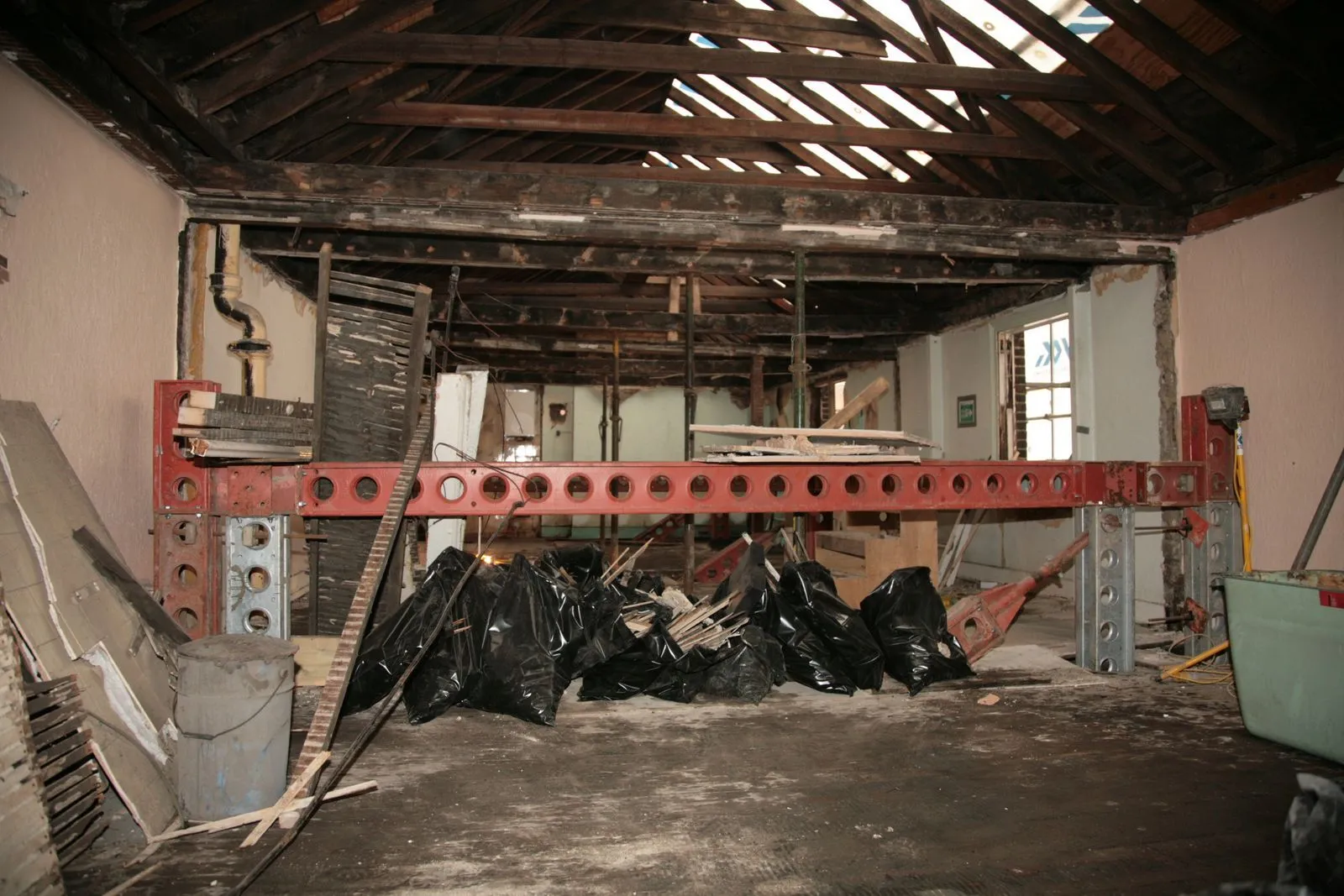
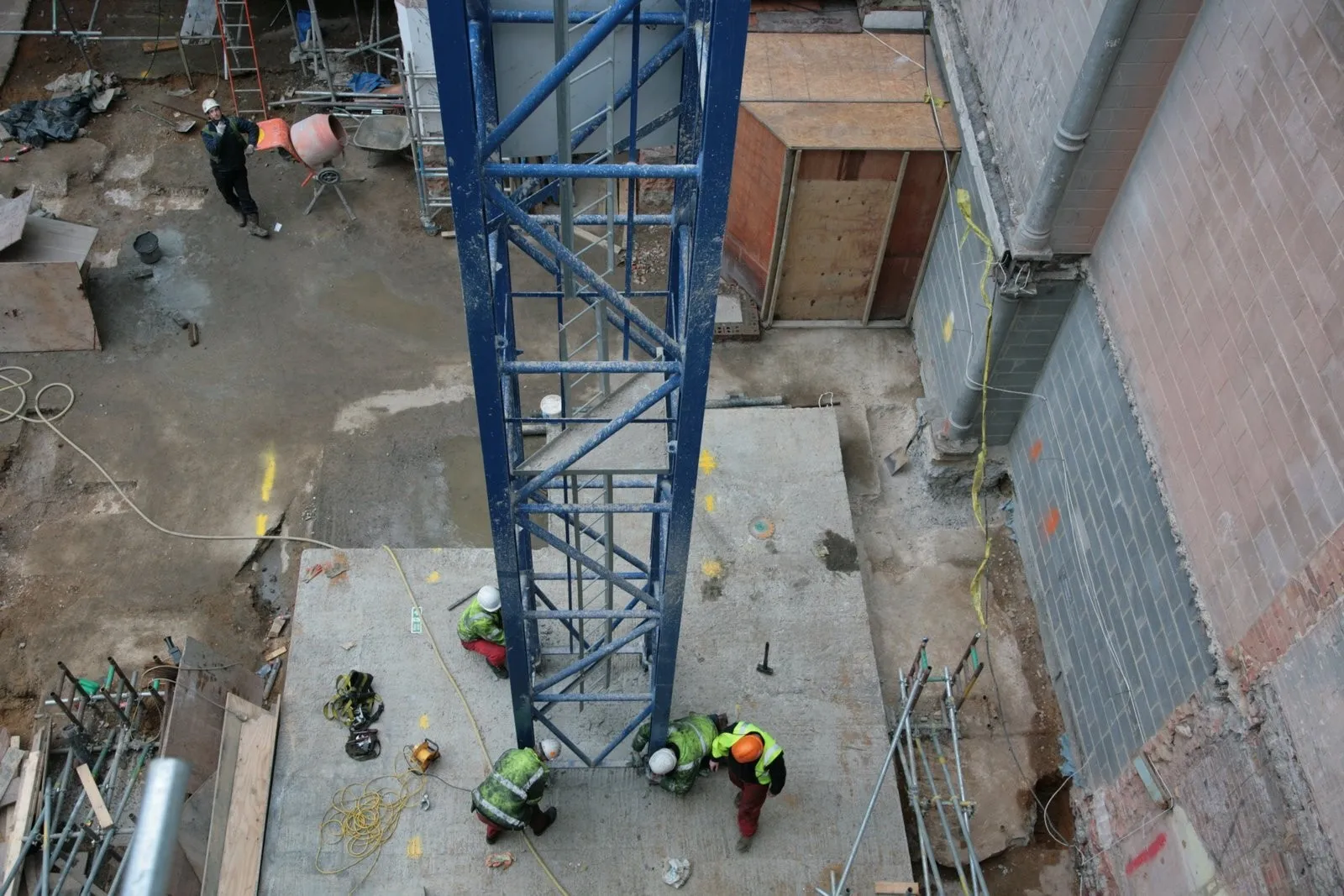
- Slingsby Place, Covent Garden. Strip-out and structural works behind retained façades, with a tower crane erected inside the footprint, led by Martin Hickey as Project Director.
Where Craftex is not the right fit
- Schemes below about £3M GDV. Our development work starts at £3M GDV. For a single plot or a small extension, a local developer or builder will usually be a better match.
- You want a quick sale at today's value, with no planning. Then you need a land agent and a buyer, not a development partner.
- You want the cheapest possible fee-only manager and will tender the build yourself. We can work on a fee, but our advantage is planning, design and construction in one team. If you don't want that, you're paying for something you won't use.
- You need a partner who will commit to a price before anyone has looked at the site. We don't. Every number we give follows an appraisal.
How to shortlist in four steps
- Write one page: the site, what you want from it, how involved you want to be, your timescale and your appetite for risk.
- Pick three to five partners of at least two different types from the table, so you can compare structures, not just prices.
- Ask each for an initial view of the site and for the appraisal behind it. How a partner handles a free first look tells you how it will run the scheme.
- Meet the people who will run it, check references and filed accounts, and take legal advice before signing heads of terms.
See our property development services and development management for how we work at each stage.