Office Refurbishment While Occupied: How to Keep the Business Running
Short answer: you can refurbish an office while your people keep working in it by splitting the works into phases, moving teams into decant space while their area is done, doing the noisy, dusty and disruptive work out of hours, and keeping the working areas physically separated, safe and fully serviced throughout. It takes longer and costs more than an empty-building refurbishment, but you keep trading, and with the right plan the disruption stays small and predictable.
Closing the office for three months isn't an option for most businesses. Neither is spending those months on calls with a drill running next door.
Occupied refurbishments succeed or fail on planning, not on site. This guide explains how the work is organised, what it means for your staff, the legal duties that come with it, and what we've learned delivering office and commercial refurbishments in buildings that never stopped working.
Four ways to refurbish without closing
| Approach | How it works | Best for | Trade-off |
|---|---|---|---|
| Phased, floor by floor or zone by zone | Teams move out of one zone into decant space; the zone is refurbished and handed back; repeat | Multi-floor offices, full refurbishments | Longer overall programme; decant space needed |
| Out-of-hours working | Disruptive work at nights and weekends; the office works normally in the day | Receptions, common parts, short noisy tasks | Higher labour cost; strict clean-up every morning |
| Temporary relocation of some teams | Part of the business moves to swing space nearby for the duration | Large refurbishments with limited spare space | Rent and moving costs for the swing space |
| Hybrid | Phasing plus out-of-hours for the worst tasks | Most real projects | Most planning effort, least disruption |
The right mix depends on how much spare space you have, how much noise your business can tolerate, and when you can't afford disruption at all (quarter-end, trading peaks, client events).
What it looks like in practice
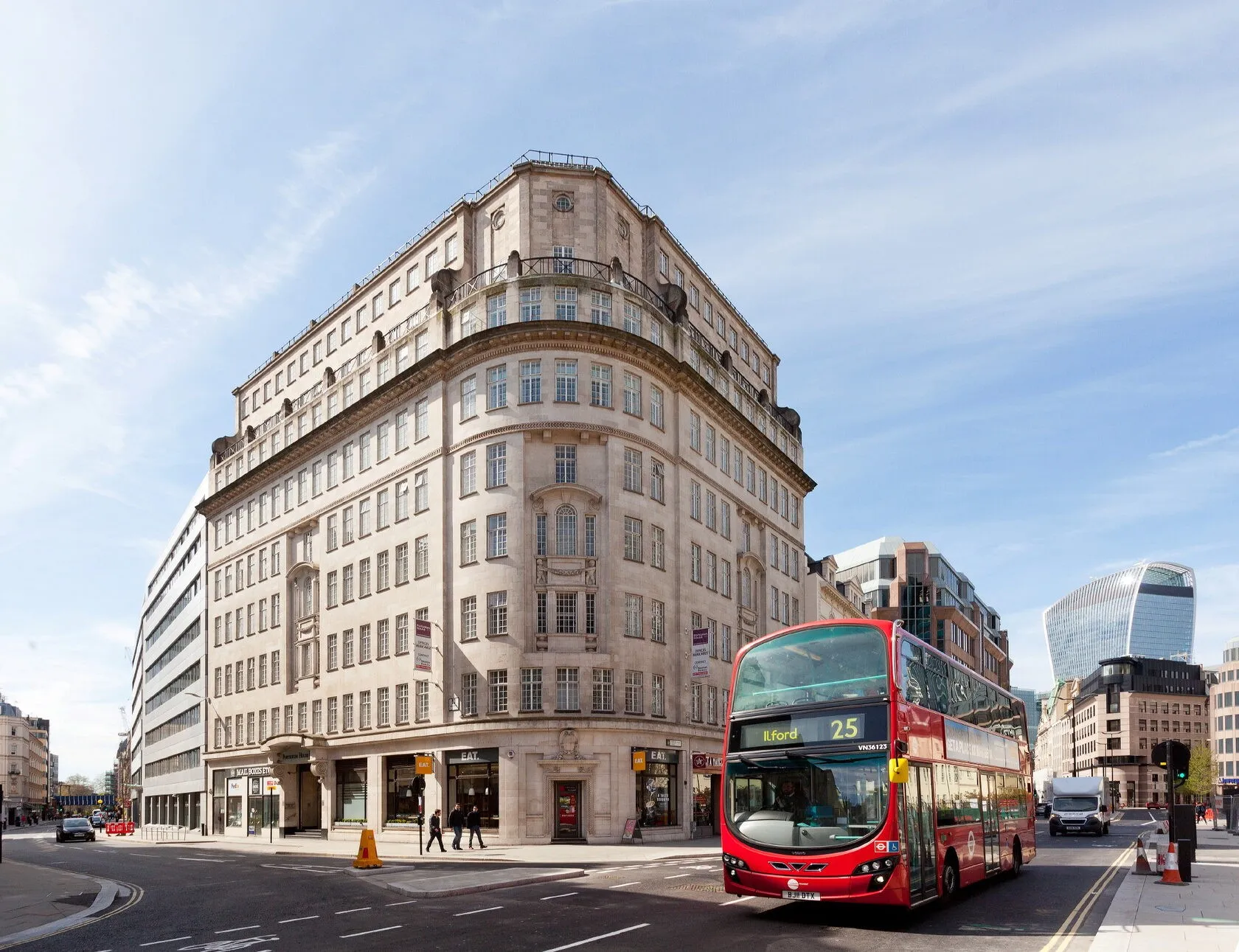
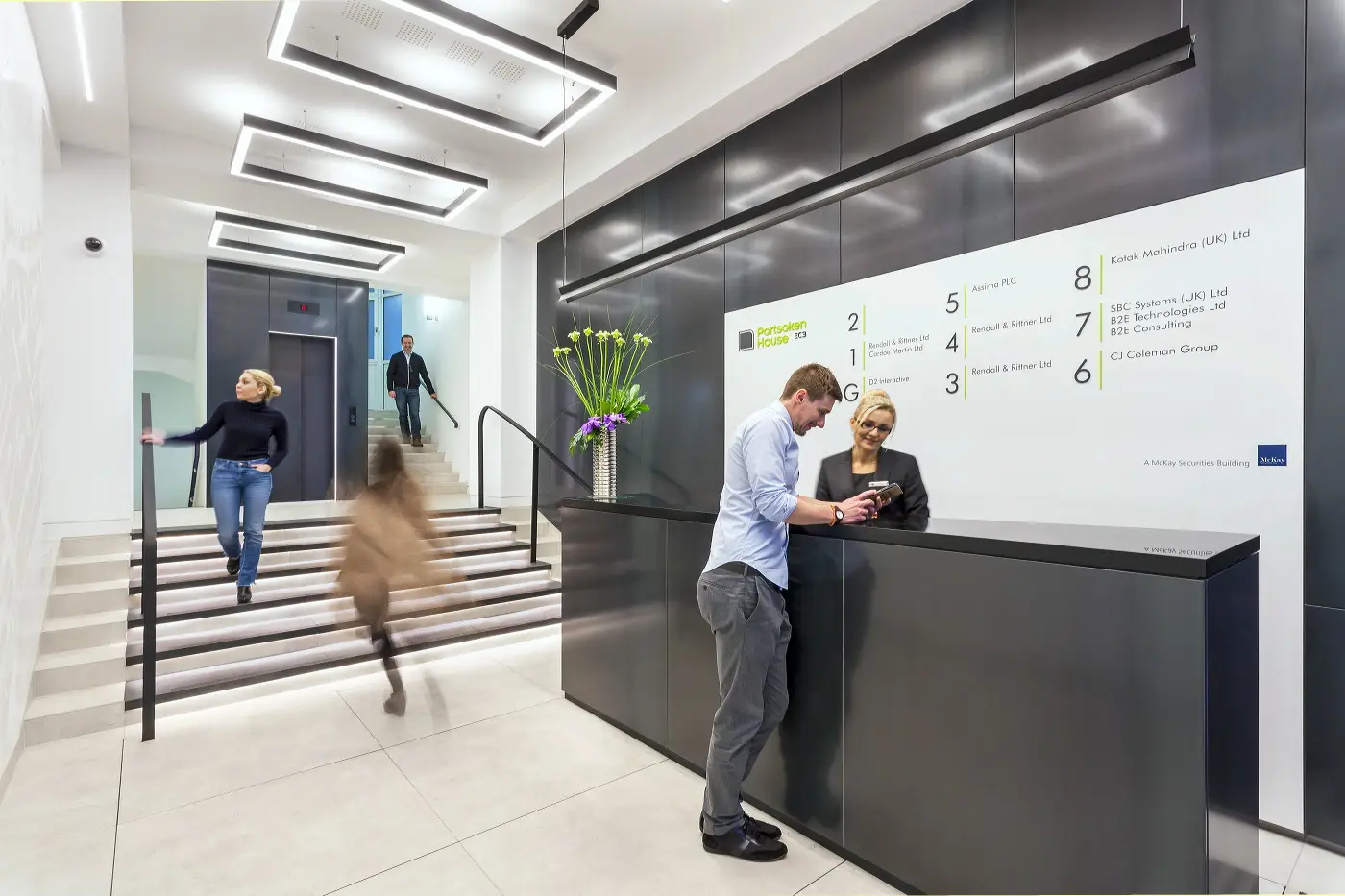
Portsoken House, Aldgate. We refurbished offices on the second and eighth floors of Portsoken House while the rest of the building was already leased, then rebuilt the reception: 70 sq m in 12 weeks, working outside office hours, through the night and at weekends, so the building's tenants were never interrupted. Our project team worked with the supply chain to get materials delivered quickly, which kept the turnaround tight with little disruption.
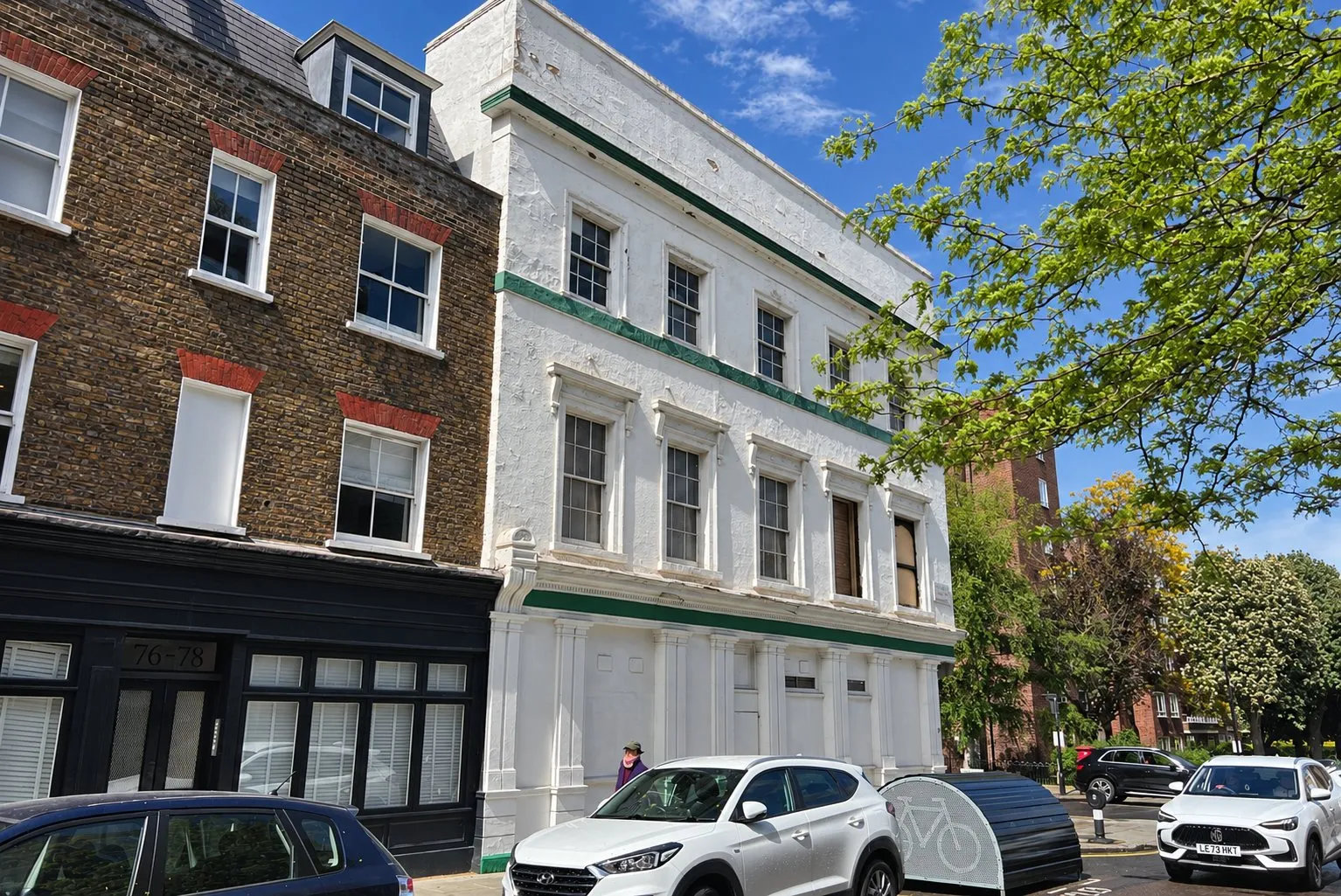
Beaumont House, Kensington. At Beaumont House we refurbished 750 sq m of offices in three weeks while other businesses in the building kept working. The building's management team were particularly happy with how noise, waste and deliveries were handled. That's what other occupiers notice first, and what makes the next project in the building possible: the same client later hired us for a second office refurbishment in the building, valued at £1.3 million.
Drake's, Savile Row. Not an office, but the same discipline: we refitted Drake's flagship store, 120 sq m over 12 weeks, while it stayed fully open, with every delivery and work schedule planned so the store and its neighbours weren't affected.
Step by step: planning an occupied refurbishment
1. Survey the building and the business
- How the building works: services routes, risers, plant, fire alarm zones, goods lift, loading.
- How the business works: who sits where, which teams can move, which can't, peak periods, IT dependencies.
- What's hidden: an asbestos refurbishment and demolition survey of the areas to be worked on, if the building dates from before 2000.
2. Design the phases before the finishes
Phasing is a design decision. The order of zones, the decant moves, the temporary services and the temporary fire strategy all need drawing before the finishes are chosen. Typical rules:
- every phase keeps escape routes, toilets, kitchens and accessible routes available to staff;
- the works area has its own access and, ideally, its own lift or stair;
- services (power, data, heating, cooling, fire alarm) to occupied areas never depend on something being stripped out in the works area.
3. Agree working hours and noise rules
Write down what can happen when: quiet works during office hours, noisy and dusty works out of hours, deliveries at set times. London boroughs control construction noise, commonly limiting noisy works to weekday daytime and Saturday mornings, and multi-let buildings add their own rules. Night and weekend work has to fit both the borough's controls and the neighbours.
4. Separate the site properly
- Full-height, sealed dust screens or hoardings, not plastic sheeting taped to the ceiling.
- Locked doors and signage; no staff shortcuts through the works.
- Dust control at source, protection of floors and lifts, and daily cleaning of shared routes.
- Ventilation arranged so dust and fumes from the works don't reach occupied areas through the air conditioning.
5. Keep fire safety intact every day
The building's responsible person must keep the fire risk assessment current under the Regulatory Reform (Fire Safety) Order 2005, and an occupied refurbishment changes it phase by phase. Practical controls include keeping escape routes clear and signed, managing fire alarm isolations so detection is never off in occupied areas, hot works permits with fire watches, and reinstating fire stopping before each zone is handed back.
6. Communicate before staff ask
A short weekly note does more than any hoarding. Tell people what's happening next week, which areas move when, what noise to expect and who to contact. Give them a name, not a generic inbox.
Your legal duties as the client
Running a refurbishment around your own staff adds legal duties to the build.
- CDM 2015. Your business is the client. You must make suitable arrangements for managing the project, provide the information you hold (including the asbestos survey), and appoint a principal designer and principal contractor where more than one contractor is involved. The construction phase plan must deal with how the works are separated from your workforce. See our guide to CDM 2015 client duties on a fit-out.
- Your duties as an employer continue in full for staff working next to the site: safe workplace, welfare, risk assessments.
- Asbestos. If the building is older, the survey has to come before the work, and the plan must say how any asbestos found is dealt with.
- Building regulations. Phased or not, the works need building control approval where they're building work; see our guide to building regulations for office fit-outs.
- Your lease. If you're a tenant, the landlord's consent and building rules govern hours, access and noise. See the licence for alterations.
IT and the weekend cut-over
Data and power are the services staff notice most. Plan the network, cabling and comms room works so each team moves into a zone that is fully live on its first morning. Weekend cut-overs work well for the critical moments. On a data centre project for a fintech client, Craftex staged the works to minimise disruption to the adjacent offices and completed the critical systems commissioning over a single weekend, aligned with the client's network maintenance schedule. The same thinking applies to an office comms room.
Cost and programme: what changes when the office stays open
An occupied refurbishment usually costs more and takes longer than the same scope in an empty building, because of:
- out-of-hours labour;
- temporary works: screens, protection, temporary services and fire arrangements;
- repeated mobilisation for each phase;
- decant moves and, if needed, swing space;
- slower progress in confined, shared buildings.
Set that against the cost of closing: lost productivity, temporary offices, client impact. For most businesses the occupied route wins, provided it's planned properly from the start.
A checklist before you start
- Decide which business periods are off-limits for disruption.
- Map teams, decant moves and phases on drawings.
- Commission the asbestos survey early.
- Agree working hours with the landlord, managing agent and neighbours.
- Design the temporary fire strategy and services for each phase.
- Plan IT moves and cut-overs.
- Appoint the principal designer and principal contractor in writing.
- Set up the staff communication plan.
- Book goods lift, loading and waste routes.
- Clean and hand back each zone ready to work the next morning.
If you're also considering a move rather than a refurbishment, our office relocation checklist helps compare the two, and our guide to office layout types helps decide what the new space should look like.