
For owners, landlords and tenants
Soft Strip Demolition: What Goes, What Stays

Sviatoslav JerdetchiiCEO & Founder of Craftex. Updated , 7 min read
The short answer
Soft strip demolition means taking out everything inside a building that does not hold it up. It is done before a refurbishment, or before the building is knocked down.
- Ceilings, partitions, floor finishes, fittings and old services go. The frame, floor slabs, roof and outside walls stay.
- HSE says the client must give the contractor a refurbishment or demolition asbestos survey.
- Waste must be sorted, taken away by a registered carrier and recorded on a waste transfer note.
- We do not publish strip-out prices. Your fixed figure comes after a survey.
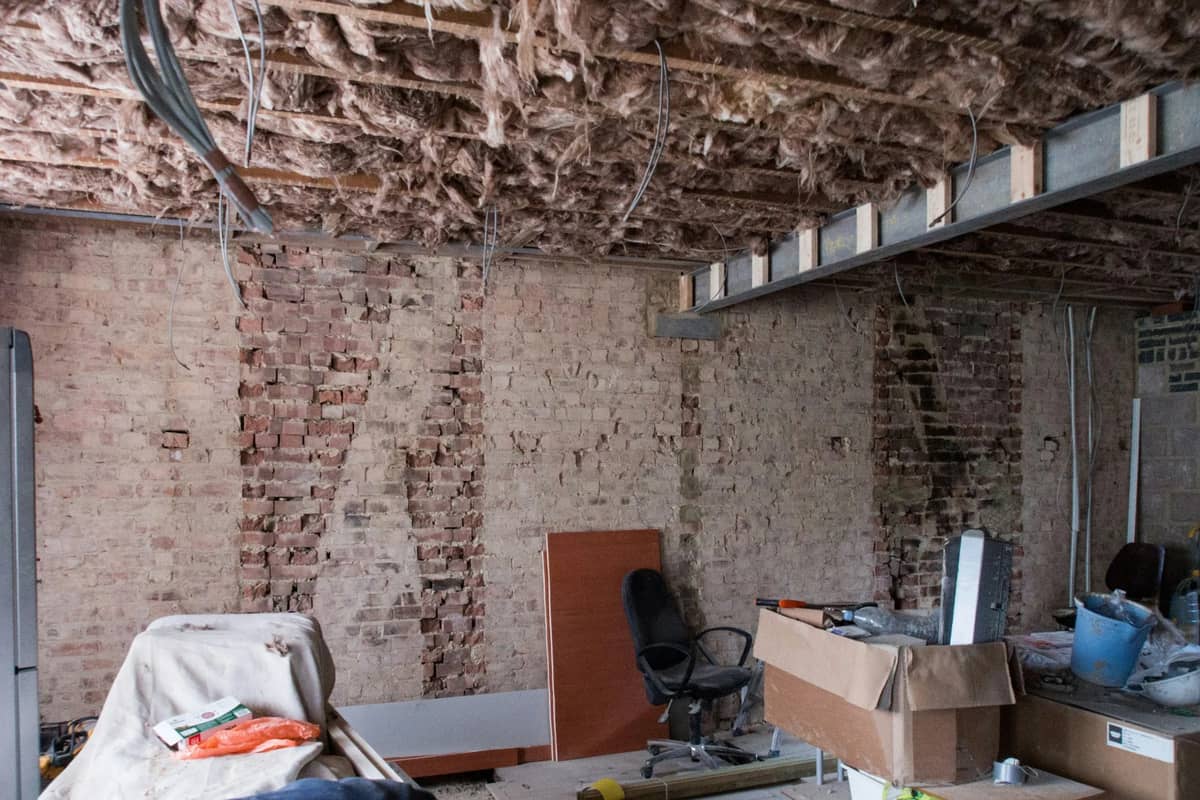
Soft strip demolition is the careful removal of everything inside a building that does not hold it up. Ceilings, partitions, floors, fittings and old services come out. The structure stays. It is the first job before a refurbishment or a full demolition.
This guide explains what goes and what stays, the checks that come first, and what sets the cost. It is written by the team that does the work. Craftex are strip out contractors in London and the South East, for whole floors and whole buildings.
Have a building to clear? Send us your floor plans and photos. We price the strip-out, and the refurbishment after it if you need one.
What soft strip demolition means
"Soft strip" is a trade term, not a legal one. Builders use it for removing the parts of a building that are not its structure.
You may also see it called a soft strip out or strip out works. The words change, the job is the same: clear the inside and keep the building standing.
There are two reasons to do it:
- Before a refurbishment. The old fit-out is cleared so the new one can go in.
- Before a demolition. The inside is cleared first. Then the structure comes down.
What a soft strip removes and what stays
A soft strip takes out everything that is not the building itself. A full strip goes further, back to the slab, the columns and the core.
| Part of the building | Soft strip | Stays |
|---|---|---|
| Finishes | Carpets, vinyl, tiles, wall linings | The floor slab and the walls behind |
| Ceilings | Suspended ceilings and their grids | The slab or roof above |
| Walls | Partitions, doors, glazed screens | Structural walls, columns and the core |
| Fittings | Joinery, counters, kitchens, toilets, signs | Stairs and lifts that serve the building |
| Services | Lights, cables, ducts and pipes that served the old fit-out | Incoming mains and anything serving other occupiers |
The last row needs care. Services are isolated and recorded before anything is cut. Say in the scope which systems serve your neighbours, so nobody cuts a live fire alarm.
Asbestos survey before the soft strip
The asbestos survey comes before any strip-out work. HSE says there is a legal requirement for asbestos to be removed, as far as reasonably practicable, before major refurbishment or demolition.
The right survey is a refurbishment or demolition survey. HSE says the client must give it to the contractor, and a competent surveyor must carry it out.
Three things to know about this survey:
- It is intrusive. The surveyor opens up walls, floors and ceilings to find hidden asbestos.
- The area must be empty. HSE says the area must be vacated during the survey.
- A management survey is not enough. That survey is for a building in normal use.
If asbestos is found, the plan of work must say it comes out before other major works begin. That is the rule in the Control of Asbestos Regulations 2012. You must also decide whether a licensed contractor has to do the removal.
HSE strongly recommends using an accredited surveying organisation. Book the survey as soon as you have a date. What it finds sets the order of the work.
We recently hired Craftex for a commercial office fit-out project in Central London, and overall, we’re really happy with the result. There was a delay on our side with a custom glass partition supplier, but the Craftex team managed the construction schedule very professionally and kept everything on track. Their guys worked clean, respected our workspace and IT setup, and kept the site tidy throughout. If you're looking for a reliable office refurbishment company in London, I’d definitely recommend Craftex. Would use them again without hesitation.
Safety rules for strip out works
HSE says demolition work is treated in law like any other construction work. So the Construction (Design and Management) Regulations 2015 apply to a soft strip. Our guide to the CDM regulations explains the client's duties.
Under those rules, demolition or dismantling must be planned so that it prevents danger. The plan must be written down before the work begins.
Before work starts, HSE asks the client to give the contractor what is known about:
- asbestos in the building
- how stable the structure is, and the buildings next to it
- any past alterations
- live services below the ground
If the building is then coming down, there is one more step. HSE says you must give the council at least 6 weeks' notice before demolition starts. Planning rules can also apply: see our guide to prior approval for demolition.
Waste and recycling from a soft strip
A strip-out makes a lot of waste, and the law says who must look after it. GOV.UK counts waste from construction and demolition as business waste.
GOV.UK says a business must:
- Keep waste down. Prevent, reuse, recycle or recover it, in that order.
- Sort and store it safely. Keep different materials apart and secure.
- Use a registered carrier. Check the carrier is registered before it takes a load.
- Record every load. Complete a waste transfer note for each load that leaves the site.
Asbestos is hazardous waste, and hazardous waste has extra rules.
On our sites, waste is sorted as it comes out and every load is recorded. What can be reused, sold or recycled leaves the building first.
Sequence of a soft strip, step by step
A soft strip follows the same order on every job. This is how we run ours.
- Survey and isolation. The asbestos survey is done. Services are isolated and recorded.
- Strip plan and reuse list. We write down what comes out, what stays, and what is reused, sold or recycled.
- Asbestos removal. Any licensed asbestos work is done by a licensed contractor before our crews start.
- Strip and sort. Our crews strip in sequence. Waste is sorted and recorded as it leaves.
- Make good and clean. Fixings are removed, the slab and walls are made good, and the space is cleaned.
- Handover. You get the keys back on the date, or the fit-out starts the next day.
Warehouse and industrial soft strip, then refurbishment
Warehouses and industrial units leave different things behind than offices do. A soft strip of a unit clears what the last occupier added and keeps the shell.
| What comes out | What stays |
|---|---|
| Racking, shelving and barriers | The steel or concrete frame |
| Mezzanine floors and their stairs | The roof and the cladding |
| Offices and stores built inside the unit | The floor slab, repaired where fixings came out |
| Old plant, and the pipes and ducts that served it | Loading doors, unless they are being replaced |
| Lighting, cables and trunking from the old layout | Incoming power, water and drainage |
Ask the asbestos surveyor to cover the whole unit: the roof, the cladding and the plant, not only the offices.
The strip-out is the first stage of what comes next:
- A new occupier or a new layout. We strip the unit, then refurbish the warehouse under the same contract: offices, welfare, power, lighting and floors.
- The end of a lease. The unit goes back as the lease asks. See warehouse dilapidations.
- A change of process. Old plant comes out and the unit is set up again as an industrial fit-out.
One team for both stages saves a handover. Nothing is stripped that the new design needs, and the fit-out starts the day after the strip ends.
At Banbury we added changing rooms, storage and racking inside a working warehouse, and operations never paused. We work on units across London and the South East, including warehouse refurbishment in Surrey.
Soft strip out of offices and shops
In an office, a soft strip takes out partitions, ceilings, floor finishes and comms rooms. At the end of a lease, the lease decides how far the strip goes. Our guide to an office strip out covers the lease questions and the Central London benchmark.
At Beaumont House in Kensington we stripped out and rebuilt a 750 sq m office in three weeks.
In a shop or a bank, the shopfront, signs, joinery and counters come out, and the front is made good. See retail dilapidations. At Medusa in Knightsbridge, four floors of the old salon were fully stripped out before the new fit-out.
Some jobs go further than a soft strip. At Slingsby Place in Covent Garden, the strip-out and structural works sat behind the kept fronts. The job was led by Martin Hickey, now our Preconstruction Director, as Project Director.
What affects the cost of a soft strip
We do not publish strip-out prices. Each building is different, so a rate per square metre would mislead you. Six things set the price.
| What moves the cost | What we do |
|---|---|
| Floor area and number of floors | We plan the sequence floor by floor |
| Soft strip or full strip to shell | We price only what the lease or the design needs |
| Services to isolate and remove | We isolate and record before anything is cut |
| Asbestos found in the survey | Licensed work is done before our crews start |
| Access, lifts and working hours | We plan out-of-hours work in occupied buildings |
| Waste, reuse and recycling | We reuse, sell or recycle before anything is skipped |
Our in-house quantity surveyor prices the strip against the lease or the fit-out drawings. You get a fixed figure after a survey, not before.
Ready for a price? Send us your floor plans, the asbestos register if you have one, and your date.
Before you ask for a soft strip price
- Floor plans, or a sketch with rough sizes
- Photos of each area, including the ceiling void and plant
- The asbestos register or any earlier survey
- The lease and any licence for alterations, if it is a lease-end job
- What happens next: refurbishment, handback or demolition
- Your date, and any limits on working hours


