
For businesses, landlords and developers
Commercial Construction Companies in London: 10 Things the Best Have in Common

Sviatoslav JerdetchiiCEO & Founder of Craftex. Updated , 7 min read
The short answer
The best commercial construction company for your project is one that has built jobs like yours, prices from a survey and controls its own labour. Fame and turnover matter far less than fit.
- Shortlist companies whose usual project size matches yours.
- Ask for case studies with floor area, value and programme.
- Check insurance, accreditations and who will be principal contractor.
- Get a written, itemised price only after a site visit.
Commercial construction companies in London range from national main contractors to specialist fit-out firms and mid-size design and build contractors. The right one for your office, shop, restaurant, clinic or warehouse is not the biggest. It is the company that has built jobs like yours, prices from a survey and controls its own labour.
Search for the top commercial construction companies and you get league tables ranked by the value of work won. This isn't a ranking, and we don't name competitors. It's the 10 things the best have in common, and how to check each one before you sign. It also shows what commercial design and build firms do differently.
We're a design and build commercial construction company in London, so we've written it from the builder's side of the table. Have a building in mind? Book a site visit and test us against the list.
Match the commercial construction company to your project size
The biggest firms are built for the biggest jobs. A small office fit-out is rarely a priority for them. A general builder may be the opposite: keen, but stretched by a live City building. Start by matching the type of company to the project.
| Type of company | Usually best for | Watch out for |
|---|---|---|
| Large main contractor | New towers, major schemes, big public projects | Smaller jobs get less senior attention |
| Mid-size design and build contractor | Fit-outs, conversions and refurbishments in occupied buildings | Check they have done your sector before |
| Specialist fit-out company | Office interiors on a landlord's finished floor | May not handle structure, façades or full M&E |
| General builder | Small shops and minor alterations | Limited design, programme and compliance support |
We sit in the second row. We take on construction projects from £100,000 to £10M+. If your project is far outside that range, we'll tell you so on the first call.
Commercial construction services in London: what one contractor covers
Most commercial projects need more than a builder. Someone has to design the work, get it approved, build it and sign it off. With one contractor, those steps sit under one contract and one programme.
These are the commercial construction services a design and build contractor should cover on its own:
- A cost and buildability review of your drawings and brief, before any contract.
- Design, approvals and construction under one contract sum.
- Main contractor and principal contractor under CDM 2015.
- Building control, planning conditions and party wall awards, through to the completion certificate.
- Phasing around tenants, staff and neighbours who stay in the building.
- Handover with test certificates, manuals, as-built drawings and the health and safety file.
Our commercial construction services cover all six, for offices, warehouses, conversions and whole-building refurbishments. If a firm covers only some of them, ask who holds the rest.
10 things the best commercial contractors have in common
These are the checks we would make if we were hiring a contractor ourselves. Each one comes with a way to test it.

1. They show you finished work like yours
Glossy renders prove nothing. Ask for case studies with the floor area, the value and the programme. Then ask to speak to the client, or to see a building in use.
Our case studies as office fit out contractors are published with those three numbers. For example, Beaumont House in High Street Kensington was 750 sq m, £350K and three weeks.
2. They price from a survey, not a phone call
A price given before anyone has seen the building is a guess. The real costs hide in the existing services, the structure and the landlord's rules. A good contractor visits first. Then they give you a written, itemised price against a clear scope.
If a firm quotes a firm figure from a floor plan alone, ask what they have assumed. The answer usually explains the extras later. Our commercial construction team reads your drawings and walks the building before it prices anything.
3. They give you a programme you can test
Every contractor promises to finish on time. Ask for the programme as a document. Then ask which three activities would delay it, and what they would do about each one.
At Beaumont House the client had five weeks left on their old lease. More than 150 staff had to move. Other contractors quoted at least 12 weeks. We were on site two weeks after the first call and handed over in three weeks, with zero snags.
That is the test to put to any commercial fit out contractors you shortlist: a programme on paper, and a finished job that proves it.
4. They carry the right insurance and accreditations
Ask for the certificates, not a logo strip on a website. Check the public liability and employers' liability limits against the size of your project. Check the expiry dates too.
Look for independent health and safety and quality schemes. We hold £10 million public liability and £10 million employers' liability cover. Professional indemnity is available on request. We are ISO 9001, 14001 and 45001 certified, with CHAS, Constructionline Gold, SafeContractor, FMB and TrustMark.
5. They can act as principal contractor
Most commercial projects have more than one contractor on site. Under the CDM Regulations 2015, the client must make sure the right dutyholders are appointed. Since October 2023, the Building Regulations go further on those projects. The client must appoint a principal designer and a principal contractor in writing.
The client must also take reasonable steps to check they are competent. So ask who will hold each role, and for proof they have done it before.
Our guide to CDM 2015 client duties on a fit-out explains what that means for you.
6. They control their own labour
A contractor that subcontracts everything is a manager of other people's diaries. When a trade fails to turn up, your programme slips. Ask what share of the workforce is directly employed or directly managed.
Craftex started in 2016 as a carpentry and joinery company. Around 60% of our labour is still in-house. That keeps the joinery, the finishes and the pace under our own control.
Delivery, contracts and repeat clients
The last four traits show up once work starts. They decide whether the project feels calm or chaotic.

7. They can work around people
Most London projects sit in buildings that stay in use. Neighbours, tenants and staff all need access, quiet and clean routes. Ask how the contractor will handle noise, dust, deliveries and working hours.
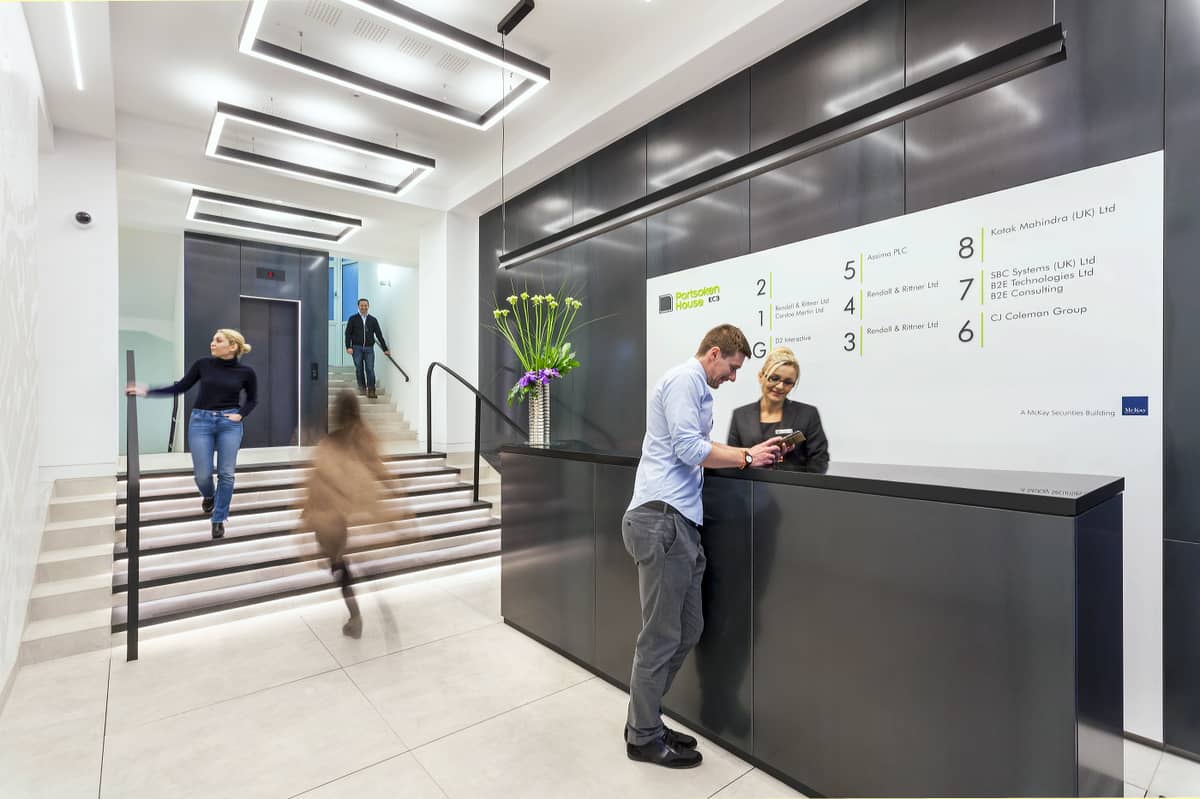
At Portsoken House in Aldgate we fitted out 1,550 sq m of offices. The rest of the building stayed let throughout. We rebuilt the Portsoken House reception working only at nights and weekends, so no tenant was disrupted. Read how we refurbish offices while they stay occupied.
8. They design and build under one contract
When the designer and the builder are separate, every gap between them becomes your problem. With design and build, one team owns both. Design and cost develop together, so the price stays accurate.
That is how we priced Portsoken House. Keeping design and build under one roof gave the client accurate pricing and real savings. See how turnkey contracting works.
9. They put everything in writing
You need a written contract, a written scope and a written programme before work starts. Ask how changes will be priced and approved. Ask how payments link to progress.
10. Their clients come back
Repeat work is the hardest proof to fake. Ask how many clients have hired the firm twice.
After Beaumont House, the same client hired us for a second refurbishment in the building, valued at £1.3 million. Drake's has hired us twice. We refitted its Savile Row flagship in 8 weeks on site with the shop open every trading day. It also hired us to fit out its 500 sq m railway-arch warehouse in Bethnal Green.
I’m really pleased with my experience working with Craftex. As a commercial construction firm, they handled everything from start to finish without any unnecessary stress on my side. What impressed me was how they suggested practical ideas that improved the design while also keeping things realistic. The communication was always clear, so I never felt out of the loop. The project ran smoothly, deadlines were met, and the end result is exactly what I was hoping for — a space that feels both functional and modern. It’s not easy finding contractors who are this reliable, but Craftex definitely proved they can be trusted.
Questions to ask at the first meeting
A short meeting tells you more than a long brochure. Take these questions with you and write down the answers.
Our guide on how to brief a contractor for a commercial project helps you prepare the other side of that meeting.
Red flags that should end the conversation
Some answers are enough to walk away. Treat these as warning signs.
- A firm price with no site visit.
- No case studies with real numbers, or none you can verify.
- Reluctance to show insurance certificates.
- A large deposit before any work or materials.
- No written contract, or a scope that says "as discussed".
- Nobody can name the person who will run your project.
What Craftex brings to a commercial project
We're a London design and build contractor for offices, shops, restaurants, clinics, warehouses and conversions. One team takes your project from survey and design through to handover.
We would rather lose a project at the first meeting than win one we can't deliver. So we tell you early if the budget, the building or the date doesn't work.
Need a whole building built, converted or refurbished? Start with our design and build commercial construction service. For interiors in an existing shell, see our commercial fit-out and refurbishment page.
If you're comparing commercial construction companies in London now, book a site visit. We'll walk the building with you, flag the risks and give you an itemised price.
Ten questions for any commercial contractor
- Which three past projects are most like ours, and can we speak to those clients?
- Will you visit the building before you price it?
- Who will run our project day to day, and how many projects do they run now?
- What share of your labour is your own?
- Who will be principal contractor and principal designer?
- Can we see your insurance certificates and accreditations?
- What are the three biggest risks to our programme?
- How will you price and approve changes?
- How will you protect neighbours, tenants and staff?
- What happens after handover if something goes wrong?


