
Freehold blocks and roof space
Sell the freehold of your block
Own the freehold of a block of flats in England? You can sell the freehold, sell the roof space above it, go into a joint venture with us, or keep it and let us build new flats on the roof for you.
Craftex is a London-based property development and construction company. We take on schemes from about £3M GDV. Most are between £3M and £150M GDV, and larger schemes are welcome, with no upper limit: sites for 100, 500 or 1,000+ homes are exactly what we want. 50+ homes is our preference.
We reply within one hour, Monday to Saturday, 8am to 6pm.
What blocks do we look for?
| What | |
|---|---|
| Size | Schemes from about £3M GDV. We typically take on £3M–£150M GDV. Larger schemes are welcome: there is no upper limit. GDV is what all the finished homes or buildings would sell for. |
| Best fit | 50 or more homes. Large schemes of 100, 500 or 1,000+ homes are welcome. |
| Where | England only. |
| Planning | With planning permission or without it. Refused or expired permission is fine too. |
| What | Land, buildings and roof space. |
| Who can send a site | The owner, an agent, an introducer, a receiver or a lender. |
| The roof | Blocks with a flat roof, or a roof that can take new floors. |
| Other buildings | Commercial or mixed-use buildings too, such as flats above shops. |
Is this your block?
Five example blocks, so you can spot your own. They are examples, not our finished projects.
-
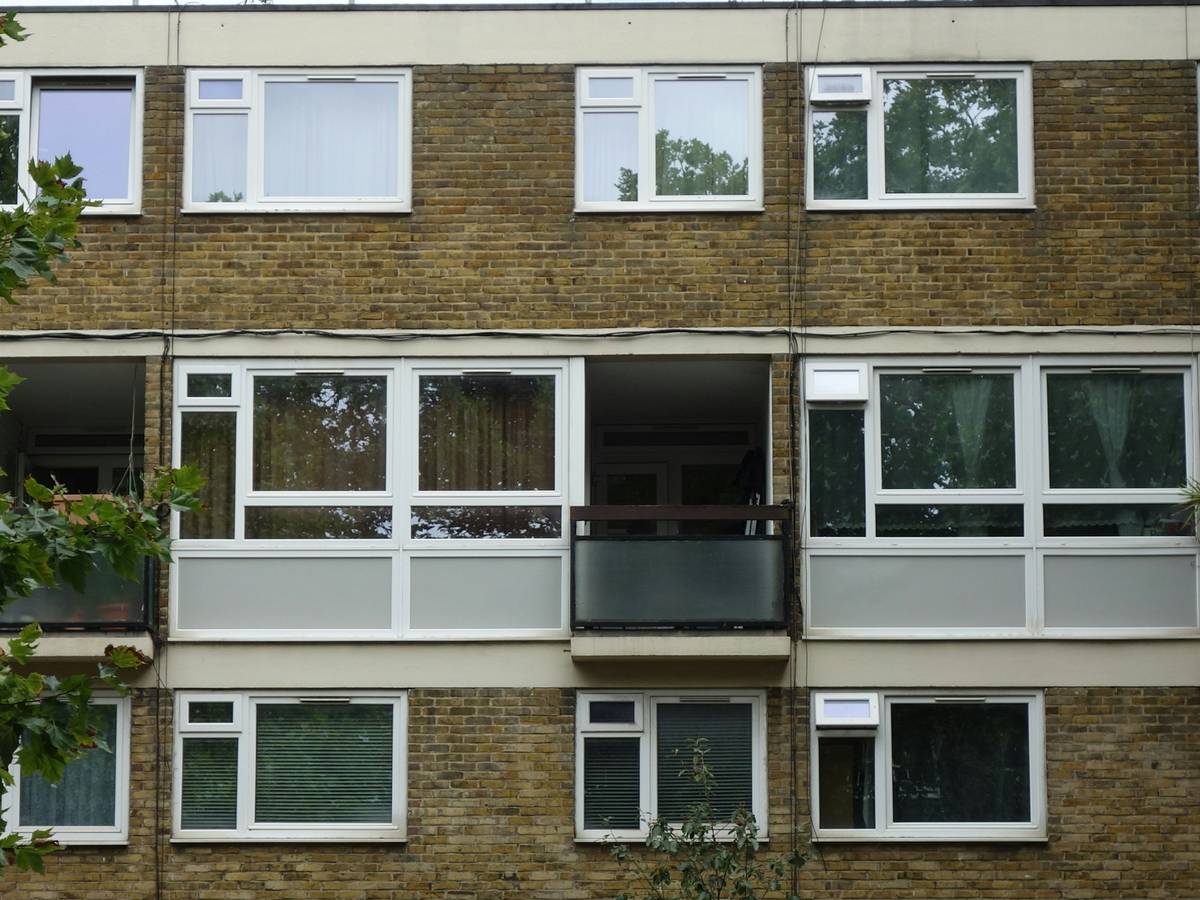
A 1960s block with a flat roof
Three or four storeys of flats. Two more storeys could go on top.
-
A block you bought as an investment
You hold the freehold and the ground rents. You have been told the roof space could be sold.
-
Several blocks on one estate
One freeholder, several roofs. Together they make one larger scheme.
-
Flats above shops
A mixed-use building with a flat roof and room to go up.
-
A block with garages or a car park
The land around the block could take new homes as well.
Three ways to work with us
We buy the freehold or the roof space. Or we go into a joint venture with you. Or you keep the block and we build the new flats for you.
| We buy it | Joint venture | We do it for you | |
|---|---|---|---|
| In plain words | You sell us the land or building. | You put in the land. We put in the work. We share what the scheme makes, as agreed. | You keep the land. We run planning, building and sales for you as a turnkey service. |
| Who pays for planning | We do. | Shared, as agreed. | You do. We run it. |
| When you are paid | On completion of the sale, or when planning is granted if the sale is subject to planning. | From the scheme's profit, as agreed. | You keep the profit. We are paid a fee. |
| Who carries the risk | We do. | We share it, as agreed. | You do. We manage it for you. |
| Who keeps the upside | We do. Your price is agreed first. | Both of us, as agreed. | You do. |
| What you do | Send the site. Agree the sale with your solicitor. | Agree the plan and the big decisions with us. | Approve the key decisions. We do the rest. |
More on a joint venture and on development management, which is the route where we do it for you. We can also buy through an option or promotion agreement.
Can new flats be built on your roof?
Often, yes. Our page on airspace development explains how it is done.
-
Up to two more storeys
National rules allow up to two extra storeys of flats on top of some purpose-built, detached blocks of flats. This is called a permitted development right (legislation.gov.uk).
-
Which blocks
The block must have three or more storeys and have been built between 1 July 1948 and 5 March 2018. With the new floors it must be no higher than 30 metres.
-
The council still checks it
The work needs prior approval from the council first. The council looks at things like transport, flooding and how the new floors will look.
-
Where this right does not apply
Listed buildings, and land in places such as conservation areas and National Parks. Those blocks need a full planning application. We do both.
What leaseholders and the law may need
This is general information, not legal advice. Ask your solicitor.
-
Leaseholders may come first
When a landlord sells a building with flats, the law can give the leaseholders the right to buy it first. This is in the Landlord and Tenant Act 1987 (legislation.gov.uk).
-
When that applies
It applies where two or more flats are held by qualifying tenants, and those tenants hold more than half of the flats in the building. There are exceptions.
-
Notices before a sale
The landlord must serve a notice on those leaseholders before the sale. Selling without it is a criminal offence. Your solicitor handles the notices.
-
The leases and the roof
Each lease says who owns the roof and what the landlord may build. A solicitor must read the leases before any deal.
What can stop a rooftop scheme
We check these early. None of them is a reason not to send your block.
-
The structure
The block must be able to carry the new floors. An engineer checks this at the start.
-
Tall blocks
A block with 7 or more storeys, or 18 metres or higher, needs approval from the Building Safety Regulator before any building work starts (GOV.UK).
-
People living below
The flats stay lived in while we build. That needs safe access, limits on noise and clear notice to residents.
-
Size
One small roof on its own may be below about £3M GDV. Several blocks, or a roof plus land around the block, can reach it.
What happens after you send your block
01
Send the address
Fill in the short form: the address or postcode, and a line about the site.
02
We reply
We reply within one hour, Monday to Saturday, 8am to 6pm.
03
We look and call you
We look at planning, size and value. Then we call you.
04
You get the routes in writing
We set out which of the three routes fits your site, in writing.
Send us your site
Tell us where it is and what it is. All enquiries are confidential.
Tell us about your site in the message box: address, what it is, what you have in mind. You can send plans by email or WhatsApp afterwards.
Other sites we buy
Or see everything we take on: sell your land or building.
-
Farmland, fields and barns
Arable land, pasture, paddocks and farm buildings, often on the edge of a town or village.
-
Green belt and grey belt land
Fields, yards or used land inside the green belt.
-
Brownfield, yards and industrial sites
Factories, depots, garages and land that has been built on before.
-
Offices, shops, pubs and hotels
Empty or trading. Churches and care homes too.
-
Large gardens and backland
Several plots sold together, or land behind houses with its own way in.
-
Land with planning permission
Owners and developers: a site with consent that you do not want to build out yourself.
-
A portfolio of sites or buildings
Investors and funds: several assets that need one team to plan, build and sell.
-
Problem site?
A stalled or half-built scheme, planning refused or expired, a site that is not selling, or a lender pressing.
Craftex
10 years on the market,trading since 2016
Combined team experience
- 11,127homes taken through planning
- £228Mland acquired for development
- 561major construction projects delivered
- 834design projects delivered
Who you will talk to
Sviatoslav Jerdetchii, our founder, and Robert Barton, our Development Director, look at the sites that come in. Our Development Director's record: 3,985 homes delivered. Work in hand: a rooftop scheme on an occupied block in Islington, now at pre-application.
- in
Sviatoslav is a self-made entrepreneur with a degree in mechanical engineering and over 10 years of hands-on experience in the UK construction industry. Starting as a demolition labourer and carpenter on London job sites, he personally worked through every stage of the building process — from groundwork and fit-out to project planning, estimating, procurement, and full-scale management.
This unique, bottom-up experience allows him to run projects with maximum efficiency, clear communication, and minimal friction — both on site and with clients.
Under his leadership, Craftex has delivered high-end residential and commercial projects across London, known for their snag-free finishes, smooth execution, and strong pre-construction planning.
Today, Sviatoslav oversees the company's operations and delivery teams while spearheading its expansion into design & build and high-value commercial sectors, including office fit-outs, data centres, and property development ventures.
Clients value his deep technical insight, clear leadership, and relentless focus on delivering clean results — on time, on budget, and to the highest standard.
-
Rob leads Craftex's development partnerships with landowners, investors and family offices.
Over 20 years he has held Managing Director and Land Director roles at plc housebuilders, including Berkeley Homes, Countryside and St Modwen, and has been directly responsible for delivering more than 3,000 private homes, 1,000 affordable homes and 750 build-to-rent homes. His schemes include Acton Gardens (2,340 homes), St Andrew's Park, Uxbridge (1,340 homes) and the Old Vinyl Factory, Hayes.
Rob has served as a non-executive director of three housing associations and two private housebuilders. He holds a first-class engineering degree, a postgraduate diploma in financial strategy from Oxford, an MBA from London Business School and a Master of Studies from Cambridge, where his research focused on AI in construction.
-
Joe has 37 years of experience working on both the commercial and operational side of construction. His previous works cover multiple sectors, including high-end residential refurbishments, new build construction, and commercial property renovations. Examples include the fit-out of Dior’s flagship store on Bond Street and residential developments in Belgravia. Budgets have also varied, with projects ranging from £100K to £135M. This experience and the transferrable skills gained enable Joe to successfully manage any project, regardless of type, style, or value.
At Craftex, Joe is responsible for ensuring the smooth operation of all designs and builds. With a collaborative approach and strategic thinking, he ensures our high standards and happy customers are maintained. He is heavily involved in developing and implementing innovative procurement solutions, as well as envisaging any potential problems along the way for proactive and preventative project management. Joe also takes on the role of influencing the design process and supporting development in others, passing on his wealth of skills and knowledge to the team.
-
Martin has over 50 years of experience in construction having started in the industry as a labourer at the age of 16. Since then, he progressed to site manager before running his own company from 1987 to 1996. Turning to contracts management shortly after, Martin now has 18 years of experience in the role. During this time, he has led multiple high-quality building projects, with a particular passion for sustainable methods and technological advancements in construction.
At Craftex, Martin is responsible for preconstruction and project management, offering innovative solutions and ensuring all aspects of the projects run smoothly. He is also pivotal in the implementation of digital solutions and SaaS tools, enabling more efficient project management and process analysis, besides pushing us closer to our 100% paper-free pledge.
-
With a unique set of skills honed over the past 16 years in the retail and commercial sector both in the UK and overseas, Konstantin Jegorovs brings a wealth of experience, insights and knowledge to his role as Craftex’s Projects Director.
A graduate of construction management from Oxford Brookes university, Konstantin has led flagship projects of up to £5 million in value for commercial banks, complex fit outs of occupied commercial office premises, innovative and challenging aparthotels and high-end residential projects for the UAE Royal Family.
Overseeing every single element of each project from the initial consultation to delivery phase, Konstantin is intrinsic to Craftex’s customer service and collaboration offering, thanks to a proactive and forward-thinking approach. He deploys his experience in the development and improvement of policies, processes and strict adherence to ISO business management systems to ensure the flawless delivery of Craftex projects, with an unwavering commitment to quality that ensures each client gets the maximum return for their investment.
Fluent in both Russian and English and with a plethora of industry-relevant qualifications, Konstantin is a valuable asset to the Craftex team and committed to helping our clients see their visions become reality.
Agents and introducers
Have a client with land or a building in England? Send us the site, or register the introduction first.
On land, a building or a development deal, you earn 5–10% of the deal value, paid on exchange.
Guides for freeholders
-
How much is a freehold worth?
What a buyer pays for in a block of flats, and what lowers the value.
-
Airspace development guide
Who owns the space above a building, and how a rooftop scheme works.
-
Sell a commercial or mixed-use building
For buildings that are mostly shops, offices or a pub.
-
Selling a commercial freehold or a pub
The steps when the freehold is a shop, a pub or another business building.
Selling a freehold: your questions
Can I sell the freehold of my block of flats?
Yes. A freeholder can sell the freehold of a block. In many blocks the leaseholders have a legal right to be offered it first, so the sale must follow set steps and notices. Your solicitor runs that part. Tell us about the block, and we will tell you which of our three routes fits: we buy it, a joint venture, or we build for you.
How much is my freehold worth?
It depends on the ground rents, how long the leases have left to run, and what could be built on or around the block. We do not publish a price. We agree terms block by block. For a formal figure, ask a RICS registered valuer.
Can I sell just the roof space and keep the freehold?
Often, yes. The space above the roof can be sold, or let on a long lease, so that new flats can be built there. You keep the freehold of the block below. It depends on what the existing leases say about the roof, so a solicitor must check them first. Send us the address and we will look at what could be built.
Do the leaseholders have to agree?
Not always, but they have rights. If you sell the freehold, in many blocks the leaseholders must be offered it first under the Landlord and Tenant Act 1987. If you build on the roof, the leases decide what you may do. We cannot give legal advice, so speak to a solicitor before you agree a sale.
Do you buy ground rents?
Only where the block also has room to build: on the roof, or on land around it. We are a developer, not a ground rent investor. If your block has a flat roof, garages or spare land, send it.
My block is 18 metres or taller. Does that stop it?
No, but it adds a step. Tall blocks of flats are classed as higher-risk buildings, and the national regulator must approve the design before we can start on site. We plan for that step from the first day.
People live in the block. Can you still build on top?
Yes. Rooftop flats are built above people who stay in their homes, so the work is planned around them. Our current rooftop scheme in Islington is on a block like that.
Do you buy land without planning permission?
Yes. Most sites we see have no planning permission yet. We can buy the land outright, agree to buy it once planning is granted (a sale subject to planning), or take an option, which is a right to buy it later. In those cases we pay for the planning work. You can also keep the land and have us run the planning for you.
Is my site big enough?
We take on schemes from about £3M GDV. That means the finished homes or buildings would sell for about £3M or more in total. Most of our schemes are between £3M and £150M GDV, but that is not a cap: larger sites, for hundreds of homes or 1,000+, are welcome. Our best fit is 50 homes or more. A smaller site can still work if neighbouring plots are sold together. If you are not sure, send it.
Do you buy sites outside London?
Yes. Our office is in London, and we buy and develop sites across England: towns, villages, city edges and open land. Send us the address or postcode and we will tell you if the site fits.
Can I keep my land and still develop it?
Yes. That is our third route. You keep the land. We run the planning, the design, the building and the sales for you as one team, and we are paid a fee. You keep the profit and you approve the key decisions. It suits owners who want to keep the land and the result without running the scheme themselves.
What does it cost me to send a site?
Nothing. There is no fee to send us a site and no fee for our first look at it. You do not have to sign anything to ask. If the site fits, we set out the routes in writing and you decide whether to go further.
Is my enquiry confidential?
Yes. All enquiries are confidential. Your details are used only to answer your enquiry, as our privacy notice says. We do not make your site public.
I am an agent or introducer. Is my introduction protected?
Yes. Register the introduction with us in writing before we contact the owner. It is then registered to you for 12 months. What you earn and when it is paid are set out on our page for land agents and in the referral terms.
Not sure if your site fits? Send it anyway.
It costs nothing to ask. We tell you plainly which route fits, or that none does.